

A good garden salad is not an afterthought. It is not the bowl of limp lettuce that sits untouched at the end of the table while everyone reaches for the bread. A good salad is fresh, crisp, and bright, with vegetables that actually taste like something, and a dressing that makes you want to eat more. This simple garden salad is that salad. It takes fifteen minutes, it uses vegetables you probably already have, and the lemon dressing is so good that you will find yourself making it for other salads, for grilled vegetables, and for anything that needs a little brightness.
I make this salad several times a week, especially in spring and summer, when the vegetables are at their best and the garden is giving more than we can eat. It is the salad I make when I have not planned a side dish, because it comes together from whatever is in the fridge. Lettuce, tomatoes, cucumber, a little red onion, some herbs, and a lemon. That is all it takes. The key is not the list of ingredients, but the way you treat them. Wash the lettuce properly, dry it well, cut the vegetables evenly, and dress the salad just before you serve it. Those four habits will give you a salad that is crisp and fresh, rather than soggy and sad.
What I love about this recipe is how adaptable it is. If you have radishes, add them. If you have carrots, add them. If you have a handful of herbs, add those too. The dressing stays the same, and the salad changes with the season and with what is in your fridge. It is also a salad that goes with everything. Chicken, fish, steak, pasta, soup, sandwiches, all of them are better with a fresh salad alongside. And because the dressing is homemade, with real lemon juice and good olive oil, it tastes clean and bright in a way that bottled dressing never does.
This is a side dish that deserves a little attention, because it is the one that makes the rest of the meal feel fresh and balanced. A rich main course needs something light beside it, and a simple main course needs something colourful. This salad does both. For guidance on washing produce safely, the USDA guide to washing fresh produce is a useful read, and The Kitchn guide to homemade vinaigrette explains the basic ratio that makes any dressing work.
Ingredients
For the salad, you will need one large head of lettuce, such as romaine, butter lettuce, or a mixed leaf salad, torn into bite-sized pieces, two medium tomatoes cut into wedges or chunks, one cucumber halved lengthways and sliced, half a small red onion thinly sliced, one carrot peeled and cut into thin ribbons or grated, and a small handful of fresh herbs such as parsley, dill, or basil, roughly chopped. You will also want a handful of radishes, thinly sliced, if you have them, and a quarter of a cup of crumbled feta or shaved parmesan if you like cheese in your salad. The cheese is optional, but it adds a salty, creamy note that works well with lemon.
For the lemon dressing, you will need a quarter of a cup of extra-virgin olive oil, three tablespoons of fresh lemon juice, one teaspoon of lemon zest, one teaspoon of Dijon mustard, one small clove of garlic finely grated or minced, half a teaspoon of honey, half a teaspoon of fine salt, and a quarter of a teaspoon of black pepper. The honey is optional, but it balances the acidity of the lemon and rounds out the flavour. If you prefer a sharper dressing, leave it out. If you like a sweeter dressing, add a little more.
Use the freshest vegetables you can find. A salad is only as good as its ingredients, and there is nowhere to hide a tired tomato or a limp cucumber. Look for lettuce that is crisp and bright, not wilted or brown at the edges. Look for tomatoes that are fragrant and heavy for their size, with a deep colour. Look for cucumbers that are firm and dark green, not soft or yellowing. If your vegetables are not perfect, the dressing will help, but it cannot fix a salad made from vegetables that are past their best.
A note on lettuce: wash it well, in a large bowl of cold water, and dry it thoroughly. Wet lettuce will dilute the dressing and make the salad soggy. A salad spinner is the easiest way to dry lettuce, but you can also lay the leaves on a clean towel and pat them dry, or roll them gently in a towel. Dry lettuce holds the dressing properly, and the salad stays crisp. It is a small step, but it makes a big difference.
How to Make Simple Garden Salad with Lemon Dressing
Start by making the dressing, because it benefits from a few minutes for the flavours to come together. In a small bowl or a jar with a lid, whisk together the lemon juice, lemon zest, Dijon mustard, garlic, honey, salt, and pepper. Slowly drizzle in the olive oil while you whisk, until the dressing is emulsified and slightly thickened. The mustard helps the oil and lemon juice come together and stay together, so do not skip it. Taste the dressing and adjust it to your liking. It should be bright and lemony, with a balance of salt, acid, and richness. If it tastes too sharp, add a little more oil or a pinch more honey. If it tastes flat, add a squeeze more lemon juice or a pinch more salt. Set the dressing aside while you prepare the salad.
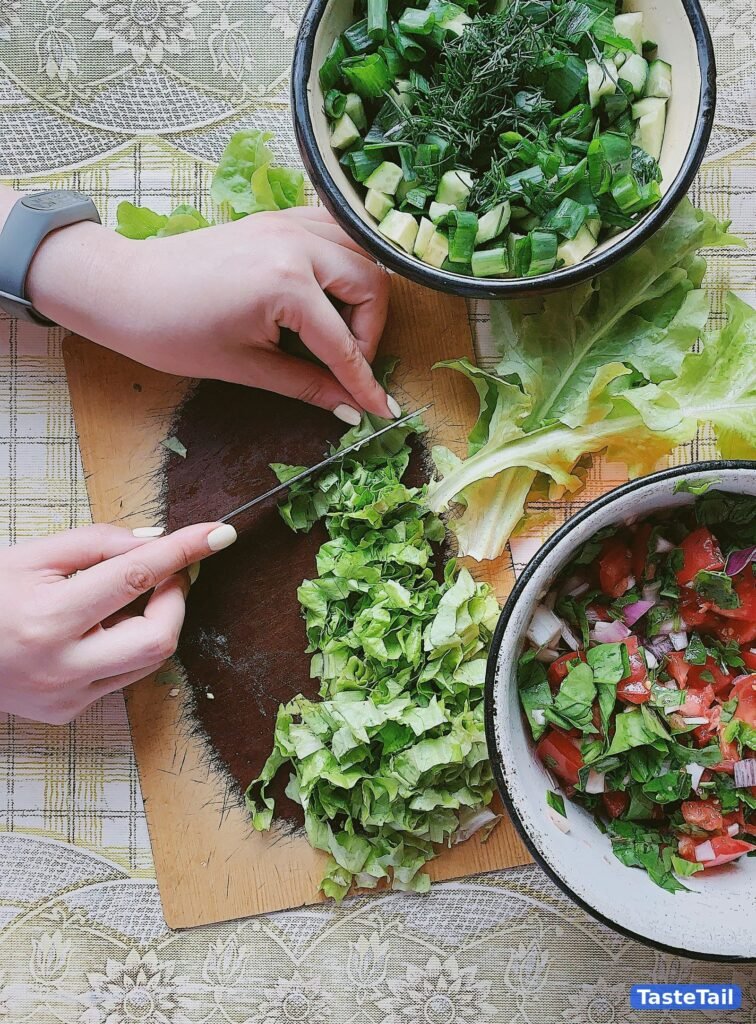
Wash the lettuce in a large bowl of cold water, lifting the leaves out of the water rather than pouring the water off, so the dirt stays at the bottom of the bowl. Repeat if the water is very dirty. Dry the lettuce thoroughly in a salad spinner or with clean towels. Tear the leaves into bite-sized pieces and put them in a large, wide salad bowl. A wide bowl is better than a deep one, because it gives you room to toss the salad without crushing the leaves. The lettuce should be the base of the salad, but it should not be the only thing in the bowl.
Prepare the other vegetables. Cut the tomatoes into wedges or chunks, depending on their size. Halve the cucumber lengthways, scoop out the seeds if they are large and watery, and slice it into half-moons. Thinly slice the red onion. If the onion tastes very sharp, soak the slices in cold water for ten minutes, then drain them. This will take the edge off the onion without losing its crunch. Peel the carrot and cut it into thin ribbons with a vegetable peeler, or grate it coarsely. Slice the radishes thinly if you are using them. Chop the herbs roughly.
Add the tomatoes, cucumber, onion, carrot, and radishes to the bowl with the lettuce. Sprinkle over the herbs and the cheese if you are using it. Do not dress the salad yet. A dressed salad will start to wilt within minutes, and you want to serve it crisp. Wait until everyone is at the table, or until the main course is ready, then drizzle over the dressing, a little at a time, and toss the salad gently with clean hands or salad servers. Toss just until the leaves are lightly coated. You do not need to use all the dressing. Start with half, toss, taste, and add more if you need it. A lightly dressed salad is better than a soggy one, and any leftover dressing will keep in the fridge for a few days.
Serve the salad immediately, in the bowl you tossed it in, or on individual plates. It should look fresh and colourful, with the vegetables evenly distributed and the dressing glistening lightly on the leaves. Pass extra dressing at the table, in case anyone wants more. A good salad is a simple thing, but it is a simple thing done well, and that is what makes it special.
Tips for the Best Garden Salad
Dry the lettuce properly. This is the single most important tip for any salad, and it is the one that makes the difference between a crisp salad and a soggy one. Wet lettuce dilutes the dressing, weighs down the leaves, and makes the salad taste watery. Use a salad spinner if you have one, or dry the leaves with clean towels. Take the time to do it properly, and the salad will be noticeably better.
Dress the salad just before serving. Dressing a salad too early is the fastest way to ruin it. The acid in the lemon juice will wilt the lettuce, the salt will draw water out of the tomatoes and cucumber, and the whole salad will go limp. Make the dressing ahead, prepare the vegetables ahead, but do not combine them until the moment you serve. If you are taking the salad to a gathering, transport the dressing separately and toss the salad when you arrive.
Cut the vegetables evenly. Even pieces look better, and they eat better too, because you get a little of everything in each bite. Cut the tomatoes into similar-sized chunks, slice the cucumber evenly, and slice the onion thinly so it does not overpower the other vegetables. A sharp knife makes this easier, and it also prevents the tomatoes from being crushed. Take your time with the cutting, because it is the work that makes the salad look and taste professional.
Taste and adjust the dressing. A dressing is a balance of oil, acid, salt, and sweetness, and the right balance depends on your lemons, your oil, and your taste. Taste the dressing before you use it, and adjust it. If it is too sharp, add oil or honey. If it is too flat, add lemon or salt. If it is too oily, add lemon. The dressing should taste bright and balanced on its own, and it should make the vegetables taste better, not overpower them.
Serving Ideas

Garden salad is the most versatile side dish you can make. It goes with almost everything, and it is the salad I reach for when I need something fresh and simple. Serve it with air fryer lemon herb salmon, where the lemon in the dressing echoes the lemon in the fish. Serve it with air fryer sweet potato wedges for a light, colourful lunch that needs nothing else. Serve it with one-pan vegetable fried rice for a meal that is fresh and satisfying without being heavy.
It is also wonderful with chicken, steak, pasta, and soup. A simple main course like 15 minute chicken dinner with simple ingredients is made better by a fresh salad alongside, because the salad provides crunch, colour, and brightness. For a summer barbecue, make a large bowl of this salad and put it in the centre of the table with the grilled food. It is the dish that balances the richness of the barbecue and keeps the meal feeling fresh.
For a lunch, serve the salad on its own with some good bread and a piece of cheese, or top it with grilled chicken, chickpeas, or a boiled egg to make it a meal. For a dinner party, serve it as a first course, in individual bowls, with a little extra dressing and some shaved parmesan on top. It looks elegant, it tastes fresh, and it prepares the palate for the main course. It is a salad that works in every setting, from a weeknight dinner to a special occasion.
Storage
Garden salad is best eaten fresh, on the day it is made, and ideally within an hour of dressing it. Undressed salad will keep in the fridge for a day or two, if it is stored properly. Keep the washed, dried lettuce in a container lined with a paper towel, with another paper towel on top, and keep the cut vegetables in separate containers. The paper towel will absorb moisture and keep the lettuce crisp. Do not store a dressed salad, because it will wilt and go soggy within an hour, and there is no way to bring it back.
Leftover dressing will keep in the fridge for up to a week, in a jar with a lid. It may separate as it sits, so shake or whisk it well before using it again. Taste it before you use it, and adjust the seasoning if needed, because the garlic will become stronger over time. Leftover dressing is wonderful on grilled vegetables, roasted potatoes, and grain bowls, so do not throw it away. It is too good to waste, and it will save you time on another meal.
If you have leftover cut vegetables, use them the next day in a stir-fry, a soup, or an omelette. Tomatoes that are a little soft are perfect for a quick sauce, cucumbers that are a little soft are good in a raita or a tzatziki, and lettuce that is a little wilted can be wilted properly in a pan with garlic and olive oil. A salad is a fresh dish, but its ingredients are still useful the next day, and a little creativity will make sure nothing goes to waste.
Variations
Once you have the basic salad, there are many ways to change it. For a Greek-style salad, add olives, crumbled feta, and oregano, and use a little red wine vinegar in the dressing along with the lemon. For an Italian-style salad, add shaved parmesan, torn basil, and a drizzle of balsamic vinegar. For a Middle Eastern-style salad, add chopped parsley, mint, and sumac, and use a little more lemon juice. For a crunchy salad, add toasted nuts or seeds, such as almonds, walnuts, or sunflower seeds, and a handful of croutons.
You can also change the vegetables with the seasons. In spring, add asparagus, peas, and radishes. In summer, add sweetcorn, green beans, and herbs. In autumn, add roasted squash, apples, and walnuts. In winter, add citrus segments, fennel, and pomegranate seeds. The dressing stays the same, and the salad changes with what is fresh and available. That is the beauty of a garden salad. It is never the same twice, and it is always good.
For a heartier salad, add a protein. Grilled chicken, chickpeas, white beans, boiled eggs, tuna, or tofu all work well. Add the protein on top of the salad, rather than tossing it through, so it stays distinct and the salad stays crisp. For a creamier dressing, whisk a tablespoon of Greek yoghurt or mayonnaise into the lemon dressing. It will be richer and thicker, and it will cling to the leaves more. The salad will still be fresh, but it will be a little more indulgent.
Frequently Asked Questions
How do I keep salad from going soggy?
The key is to dry the lettuce properly, dress the salad just before serving, and use just enough dressing to coat the leaves lightly. Wet lettuce, too much dressing, and dressing too early are the three main causes of soggy salad. Store the undressed salad and the dressing separately, and toss them together at the last minute. A wide bowl and gentle tossing will also help, because they prevent the leaves from being crushed.
Can I make the lemon dressing ahead of time?
Yes. The dressing will keep in the fridge for up to a week in a jar with a lid. It may separate as it sits, so shake or whisk it well before using it. Taste it before you use it, because the garlic will become stronger over time, and you may need to add a little more lemon juice or honey to balance it. Making the dressing ahead saves time, and it actually tastes better after the flavours have had a few hours to come together.
What is the best lettuce for a garden salad?
Romaine, butter lettuce, and mixed leaves all work well. Romaine is crisp and sturdy, butter lettuce is soft and sweet, and mixed leaves give you a variety of textures and colours. Avoid iceberg lettuce on its own, because it is mostly water and has very little flavour, though a little iceberg mixed with other leaves can add crunch. Choose lettuce that is fresh, bright, and crisp, and wash and dry it well before using it.
Can I add fruit to a garden salad?
Yes, fruit can be a wonderful addition to a garden salad. Try sliced strawberries or apples in spring, peaches or nectarines in summer, pears or figs in autumn, and citrus segments or pomegranate seeds in winter. Fruit adds sweetness and colour, and it works well with the lemon dressing. Add the fruit just before serving, and toss it gently so it does not break up. A little crumbled cheese alongside fruit is also lovely.
How do I wash lettuce properly?
Fill a large bowl with cold water, submerge the leaves, and swish them gently to loosen any dirt. Lift the leaves out of the water, rather than pouring the water off, so the dirt stays at the bottom of the bowl. Repeat with fresh water if the water is very dirty. Dry the leaves thoroughly in a salad spinner or with clean towels. Wet lettuce will dilute the dressing and make the salad soggy, so take the time to dry it well.
One thought on “Simple Garden Salad with Lemon Dressing”