
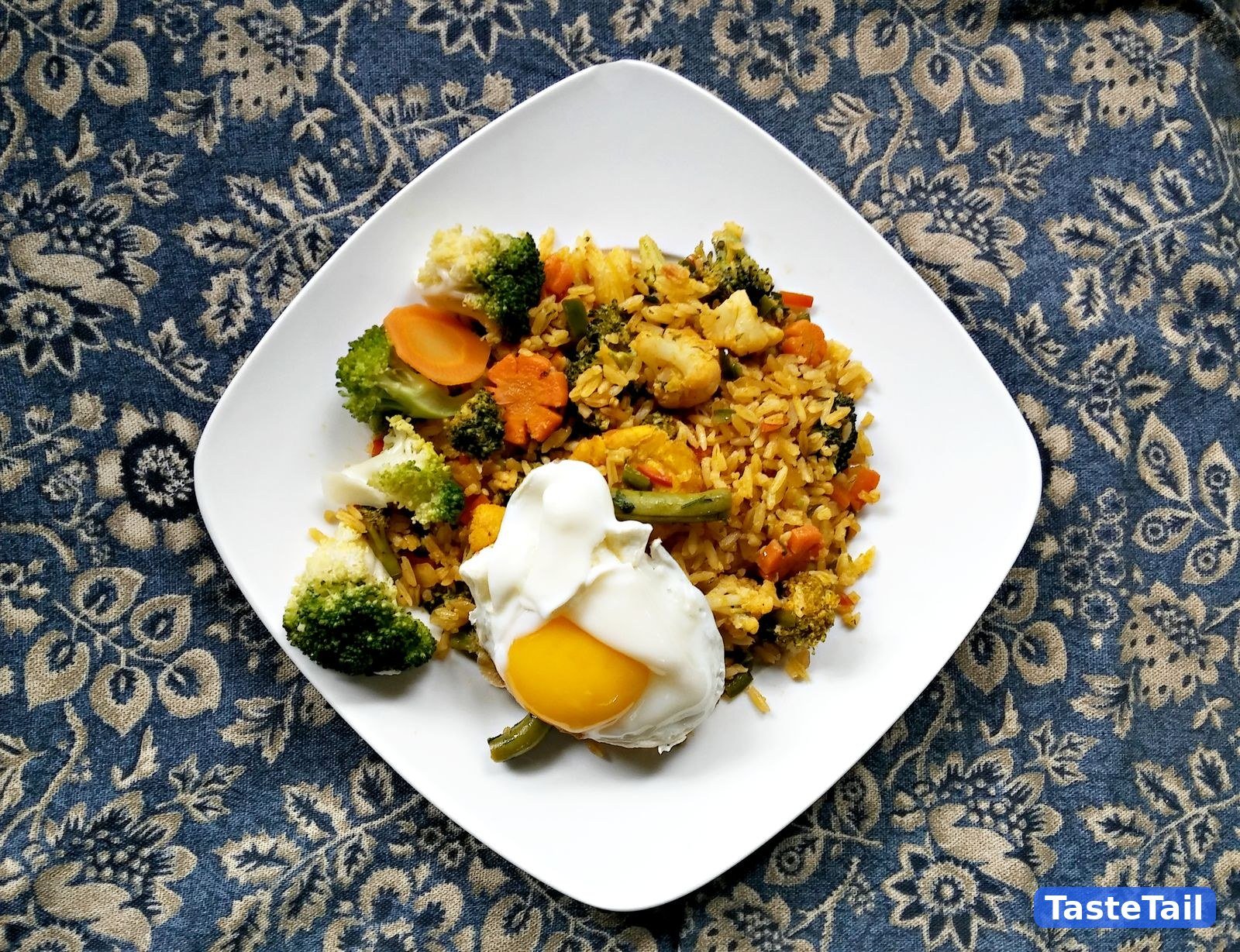
There is a particular joy in a pan of fried rice. It is fast, it is colourful, it uses up whatever is in the fridge, and it tastes like something you would happily pay for in a restaurant. The rice turns golden at the edges, the vegetables stay crisp and bright, the egg weaves through everything in silky ribbons, and the soy sauce ties it all together with a salty, savoury depth. It is one of those meals that feels both comforting and light at the same time.
I make fried rice at least once a week, usually on the night after we have had rice with something else. A container of cold, day-old rice in the fridge is practically an invitation. Freshly cooked rice is too soft and steamy for frying — it clumps together and turns mushy — but cold rice has firmed up in the fridge, the grains have separated, and each one fries beautifully in a hot pan. It is one of the best examples of leftovers being not just useful, but actually better than the original.
What I love about this one-pan version is how forgiving it is. There is no strict recipe to follow, no exact list of vegetables you must use. Carrots, peas, sweetcorn, peppers, spring onions, mushrooms, broccoli — whatever you have will work. The method stays the same, and the result is always a satisfying, flavourful dinner that comes together in about twenty-five minutes, including the chopping. It is the kind of cooking that rewards improvisation rather than precision.
This is also a genuinely useful recipe for busy households. It feeds four, it costs very little, it is ready faster than a takeaway would arrive, and it is easy to scale up or down. Add an egg or two for extra protein, throw in some leftover chicken or prawns if you have them, or keep it completely vegetarian. Serve it on its own as a light dinner, or as a side dish alongside something else. However you make it, it is a recipe worth knowing by heart.
Why You Will Love This One-Pan Vegetable Fried Rice
The first reason is the texture. Good fried rice is all about contrast: fluffy grains with crisp, golden edges, vegetables that still have a bite, and egg that is soft and silky rather than rubbery. When you get that combination right, every mouthful is interesting. The secret is a hot pan, cold rice, and not overcrowding the pan — and once you have felt how it should look and sound as it cooks, you will be able to make it without thinking.
The second reason is speed. Twenty-five minutes from start to finish, and most of that is chopping vegetables. The actual cooking takes about ten minutes, and it all happens in one pan. There is no waiting for water to boil, no juggling multiple pots, and no complicated timing. It is a perfect recipe for a night when you are hungry now and do not want to wait.
The third reason is how well it uses up leftovers. That container of rice from yesterday, the half a pepper in the fridge, the carrots that need using, the last few spring onions — they all have a home in this pan. Fried rice is the ultimate fridge-clearing meal, and it turns odds and ends into a dinner that feels intentional rather than improvised. It is economical, it reduces waste, and it tastes wonderful.
Finally, this recipe is endlessly adaptable. Make it vegan by leaving out the egg, make it spicier with chilli and sriracha, add tofu or tempeh for protein, or throw in whatever vegetables are in season. Children love it because it is colourful and mild, adults love it because it is quick and satisfying, and the cook loves it because there is only one pan to wash.
Ingredients
These quantities serve four people as a main course, or six as a side dish.
- 4 cups cold cooked rice, preferably day-old, about 600 grams
- 2 tablespoons vegetable oil, or sesame oil for extra flavour
- 3 large eggs, lightly beaten
- 1 medium onion, finely diced
- 3 cloves garlic, finely minced
- 1 tablespoon fresh ginger, finely grated
- 2 medium carrots, peeled and finely diced
- 1 red pepper, deseeded and diced
- 1 cup frozen peas, thawed
- 1 cup sweetcorn kernels, fresh or frozen
- 100 grams mushrooms, sliced, optional
- 3 tablespoons soy sauce, plus more to taste
- 1 tablespoon oyster sauce, optional but recommended
- 1 teaspoon sesame oil
- 1/2 teaspoon white pepper, or black pepper
- 4 spring onions, thinly sliced
- 1 tablespoon sesame seeds, to serve, optional
- Chilli sauce or sriracha, to serve, optional
A note on the rice: day-old rice is genuinely the key to good fried rice, and it is worth planning for. Cook your rice the day before, spread it out on a tray to cool quickly, then refrigerate it uncovered or loosely covered overnight. The grains dry out slightly and firm up, which means they fry instead of steaming. If you only have freshly cooked rice, spread it on a baking tray and pop it in the fridge for at least an hour, or in the freezer for twenty minutes, to cool and dry it out as much as possible. Long-grain rice such as basmati or jasmine works best, because the grains stay separate. Short-grain rice is stickier and can clump together in the pan.
How to Make One-Pan Vegetable Fried Rice
Start by getting everything ready before you turn on the heat. Fried rice cooks fast, and once the pan is hot you will not have time to stop and chop a carrot. Dice the onion, mince the garlic, grate the ginger, dice the carrots and pepper, slice the mushrooms if you are using them, and slice the spring onions, keeping the white and green parts separate. Beat the eggs in a small bowl with a pinch of salt. Measure out the soy sauce, oyster sauce, and sesame oil into a small jug so you can add them quickly. Break up any clumps in the cold rice with your fingers or a fork so the grains are mostly separate before they hit the pan.
Heat a large, deep skillet or wok over high heat for two minutes until it is very hot. Add one tablespoon of the vegetable oil and swirl it around the pan. Pour in the beaten eggs and let them set for twenty to thirty seconds, then scramble them gently with a spatula, breaking them into soft, large pieces. You want the egg just cooked through but still soft and slightly glossy, not browned or rubbery. This takes about a minute. Transfer the scrambled egg to a plate and set it aside — it will go back into the pan at the end.
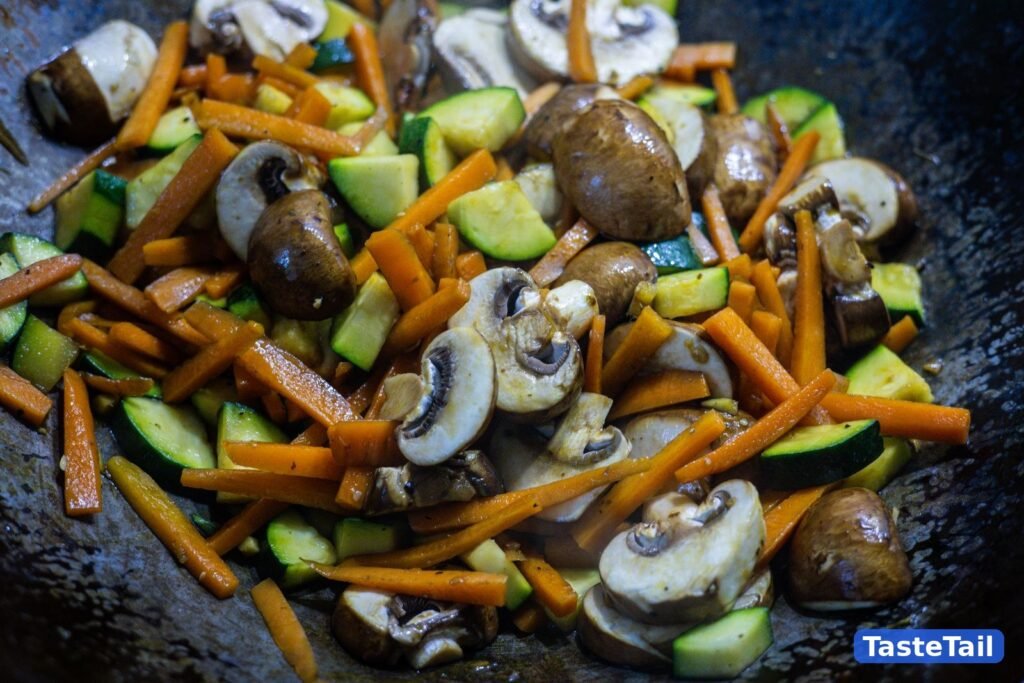
Add the remaining tablespoon of oil to the same pan and let it heat until it shimmers. Add the diced onion and carrots, and stir-fry for two to three minutes until the onion softens and the carrots begin to turn tender but still have a bite. The pan should be hot enough that you can hear a good sizzle — that sound is the vegetables searing rather than steaming, and it is what keeps them crisp and bright. Add the diced pepper and mushrooms, if using, and stir-fry for another two minutes until the pepper softens slightly and the mushrooms release their moisture and start to brown.
Push the vegetables to one side of the pan and add the garlic and ginger to the empty space. Cook for thirty seconds, stirring constantly, until fragrant. Garlic and ginger burn quickly at high heat, so keep them moving and do not leave them unattended. Stir everything together, then add the cold rice to the pan, breaking up any remaining clumps with your spatula. Spread the rice out in an even layer and let it sit undisturbed for a minute so the grains in contact with the hot pan get a little golden and crisp. This is what gives fried rice its lovely texture, and it is worth the patience.
Pour the soy sauce and oyster sauce evenly over the rice, then add the peas and sweetcorn. Stir-fry everything together for three to four minutes, tossing and folding the rice so the sauce coats every grain. You should see the rice turn a light golden brown, and the vegetables should be tender but still crisp. Taste a spoonful and adjust the seasoning — add a little more soy sauce if it needs salt, a pinch of white pepper for warmth, or a drizzle of sesame oil for fragrance. The Serious Eats guide to egg fried rice explains the technique behind great fried rice in detail, including why cold rice and a hot pan matter so much.
Return the scrambled egg to the pan, along with the sliced spring onion greens, and toss everything together for another minute until the egg is evenly distributed and everything is hot through. The egg should be in soft ribbons and pieces throughout the rice, not in one big clump. Remove the pan from the heat, drizzle over the sesame oil, and give it a final toss. Serve immediately, scattered with sesame seeds and extra spring onions, with chilli sauce or sriracha on the table for anyone who likes heat. If you are cooking with leftover rice, the USDA guidance on leftovers and food safety is a useful reminder on how to cool, store, and reheat cooked rice safely.
Tips for the Best Fried Rice
Use cold, day-old rice. I have said it already, but it is the single most important tip for fried rice, and it is the difference between fluffy, separate grains and a sticky, clumpy mess. Freshly cooked rice is full of moisture and steam, and it will turn to mush in a hot pan. Cold rice, on the other hand, has dried out and firmed up, so each grain fries separately and gets a little golden at the edges. Plan ahead and cook your rice the day before whenever you can.
Get the pan really hot. Fried rice needs high heat to get that characteristic seared flavour and texture. A pan that is not hot enough will steam the rice and vegetables instead of frying them, and you will end up with something soft and pale. Let your skillet or wok heat for a full two minutes over high heat before you add the oil, and do not be afraid of the sizzle. If you are using a wok, the high, sloping sides help you toss the rice easily.
Do not overcrowd the pan. If you pile too much rice and vegetables into a small pan, the temperature drops, the food steams, and nothing gets golden. Use the largest pan you have, and cook in two batches if you are doubling the recipe. It takes a few extra minutes, but the result is dramatically better. A wide, shallow pan works better than a deep, narrow pot for this reason.
Prepare everything before you start cooking. Fried rice moves fast once the pan is hot, and there is no time to chop an onion while the garlic is burning. Have all your vegetables chopped, your eggs beaten, your sauces measured, and your rice broken up before you turn on the heat. This is the kind of cooking where a few minutes of preparation makes the actual cooking feel calm and easy instead of frantic.
Variations to Try
Add protein to make it a heartier meal. Leftover chicken, diced and added with the vegetables, turns this into a complete dinner in one pan. Prawns, added for the last two minutes of cooking, are wonderful too — they cook quickly and add a lovely sweetness. Cubed tofu, fried until golden before you start the vegetables, makes a satisfying vegetarian version with plenty of protein. A tin of drained chickpeas, added with the peas, is another easy option.
Make it spicy with a tablespoon of chilli paste or gochujang stirred in with the soy sauce, or a sliced fresh red chilli added with the garlic and ginger. A drizzle of sriracha over the finished rice lets everyone adjust the heat to their own taste. If you are cooking for children, leave the chilli out and serve the sauce on the side.
Try different vegetables depending on the season. Broccoli florets, green beans, courgette, edamame, and shredded cabbage all work well in fried rice. Add firmer vegetables like broccoli and green beans early with the carrots, and softer vegetables like courgette and cabbage later with the peppers. The key is to add each vegetable at the right time so everything finishes cooking at the same moment, tender but still crisp.
Swap the sauce for a different flavour profile. A tablespoon of Thai curry paste stirred in with the garlic gives the rice a fragrant, spicy character. A splash of rice vinegar and a pinch of sugar adds a sweet-and-sour note. A spoonful of peanut butter whisked into the soy sauce makes a nutty, satay-style fried rice that is wonderful with a squeeze of lime. Once you know the basic method, you can take the flavour in any direction you like.
Serving Ideas
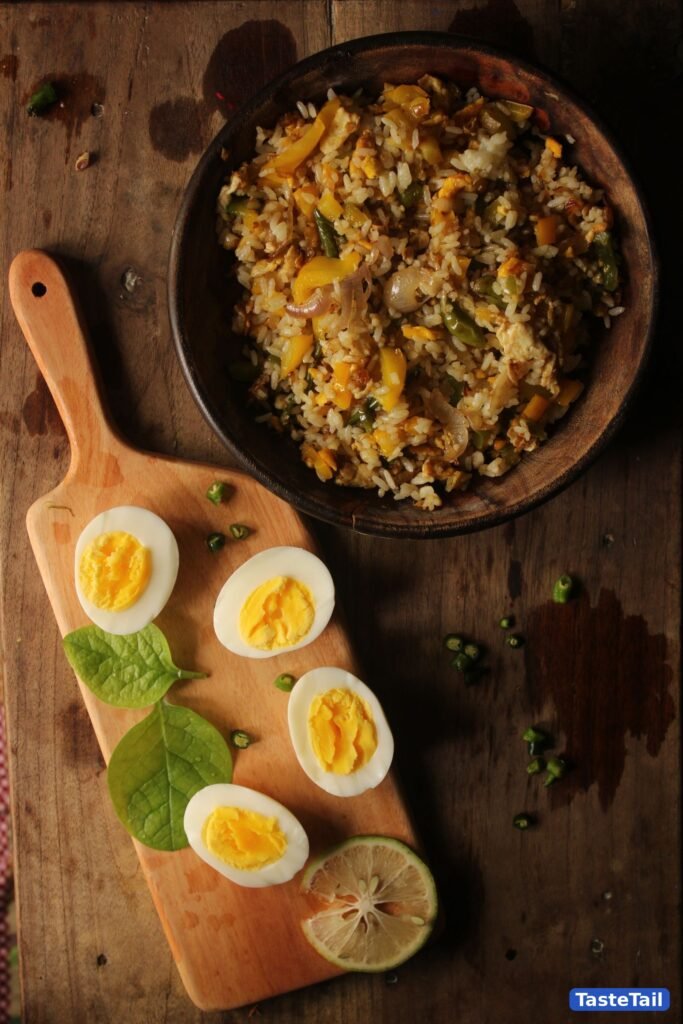
Vegetable fried rice is a complete meal on its own, especially with the egg for protein, and it needs very little alongside it. A simple cucumber salad, a bowl of miso soup, or some steamed edamame are all light, fresh accompaniments that complement the savoury rice without competing with it. A drizzle of chilli sauce and a scattering of extra spring onions at the table lets everyone finish their bowl exactly how they like it.
As a side dish, fried rice pairs beautifully with grilled chicken, stir-fried beef, or crispy tofu. It is a wonderful alternative to plain steamed rice, and it turns a simple main course into a more interesting meal. Serve it in a large bowl in the centre of the table, family style, with the main dish alongside, and let everyone help themselves. It is also excellent packed into lunchboxes, because it tastes good at room temperature and reheats well.
For a fuller spread, serve the fried rice with a simple garden salad with lemon dressing — the bright, citrusy salad cuts through the savoury rice beautifully. Air-fryer sweet potato wedges make a colourful, crispy side that children especially love. And if you have leftover chicken to use up, these easy meals with leftover rotisserie chicken ideas pair perfectly with a pan of fried rice, as do these leftover chicken and rice dinner ideas for nights when you want to stretch what is already in the fridge.
Storage and Reheating
Let the fried rice cool to room temperature within an hour of cooking, then transfer it to an airtight container and refrigerate for up to three days. Rice needs to be cooled quickly and stored properly, because it can harbour bacteria if left at room temperature for too long. Spread the rice out on a tray to cool it faster if you have made a large batch, and do not leave it sitting on the counter overnight.
To reheat, warm the rice in a pan over medium-high heat with a splash of water or a drizzle of oil, stirring frequently until it is piping hot all the way through. The microwave works well too — heat in short bursts, stirring between each one, until hot. Make sure the rice is heated thoroughly, to at least 74 degrees Celsius, and only reheat it once. Do not reheat the same portion a second time.
Fried rice freezes well for up to three months. Cool it completely, portion it into freezer bags or containers, and label them with the date. Thaw overnight in the fridge, then reheat thoroughly as described above. The vegetables will be a little softer after freezing, but the flavour will still be excellent. This makes fried rice a great batch-cooking recipe — make a double batch, eat half tonight, and freeze the rest for a busy night when you need dinner in ten minutes.
Frequently Asked Questions
Why is day-old rice better for fried rice?
Freshly cooked rice is soft, steamy, and full of moisture, which means it clumps together and turns mushy when you try to fry it. Day-old rice that has been refrigerated overnight has dried out and firmed up, so the grains stay separate and fry beautifully, getting golden and slightly crisp at the edges. If you only have fresh rice, spread it on a tray and chill it in the fridge for at least an hour, or in the freezer for twenty minutes, to dry it out as much as possible before cooking.
Can I make vegetable fried rice vegan?
Yes, easily. Leave out the egg, or replace it with scrambled tofu seasoned with a pinch of turmeric for colour. Use a vegan oyster sauce, or leave it out entirely and add an extra teaspoon of soy sauce. The rest of the recipe is already plant-based, and the result is just as flavourful and satisfying. A handful of edamame or chickpeas adds extra protein if you want it.
What vegetables work best in fried rice?
Carrots, peppers, peas, sweetcorn, spring onions, mushrooms, broccoli, green beans, and cabbage all work well. The key is to cut them into small, even pieces so they cook quickly, and to add firmer vegetables first and softer vegetables later so everything finishes at the same time. Avoid very watery vegetables like tomato or cucumber, which release liquid and make the rice soggy. Frozen mixed vegetables are a perfectly good shortcut on a busy night.
How do I stop fried rice from going soggy?
Use cold, day-old rice, a very hot pan, and do not overcrowd the pan. Spread the rice out in an even layer and let it sit undisturbed for a minute so the grains get golden and crisp. Do not add too much sauce — three tablespoons of soy sauce is enough for four cups of rice, and you can always add more at the table. Finally, do not add wet ingredients like fresh tomato, and make sure frozen vegetables are thawed and drained before they go in.
Can I add chicken or prawns to this recipe?
Yes, and it is a great way to turn this into a heartier meal. Add diced leftover chicken with the vegetables so it warms through, or add raw prawns for the last two minutes of cooking — they cook quickly and turn pink when done. Cubed tofu, fried until golden before you start, is a wonderful vegetarian protein. Whatever you add, keep the total amount modest so the pan does not get overcrowded and the rice still fries properly.