
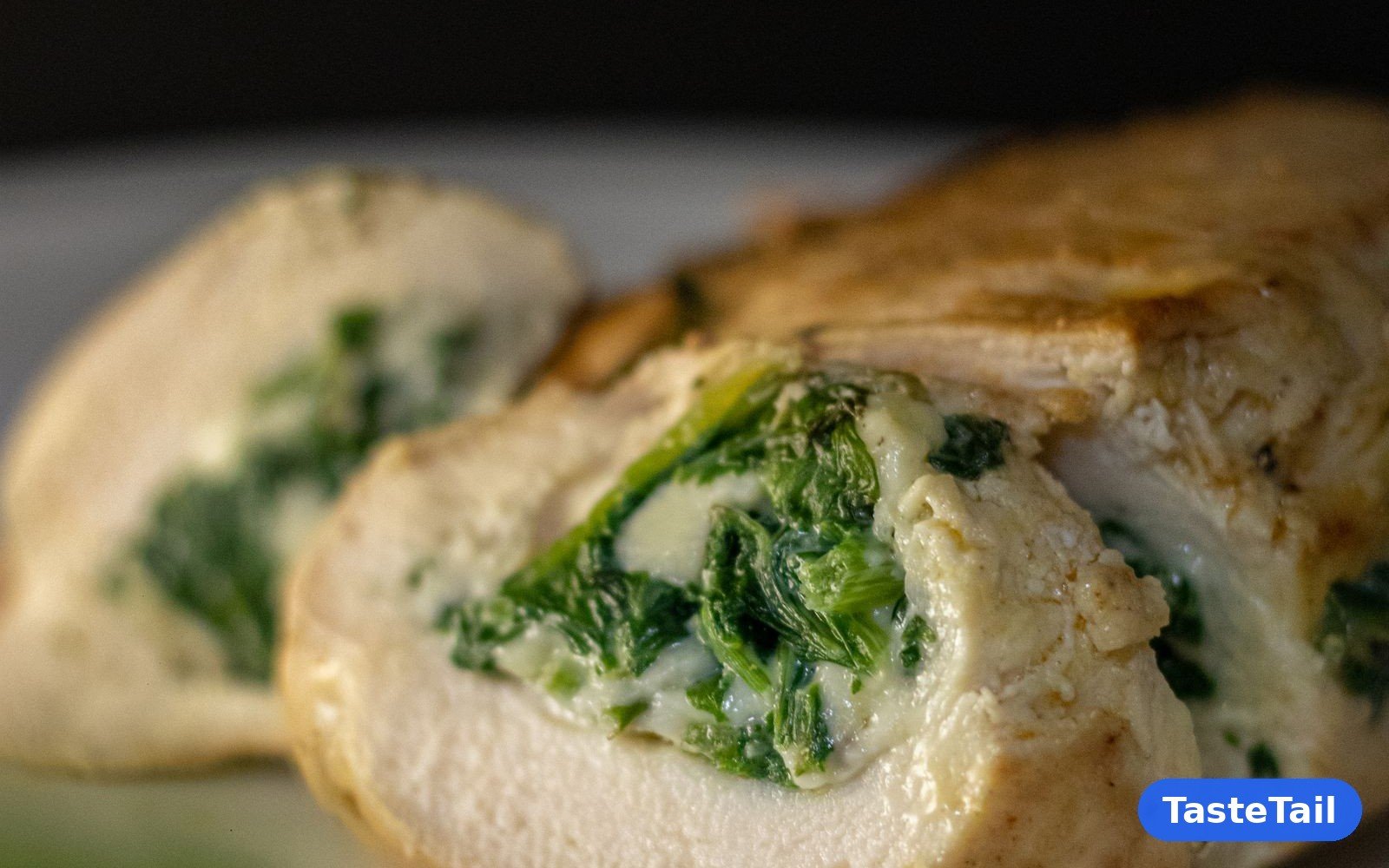
There is a moment at the dinner table, right after the first bite, when everyone goes quiet for a second and then someone asks for the recipe. That is exactly what happens with this stuffed chicken. It looks like something you would order at a restaurant — a golden chicken breast, sliced open to show a creamy green filling — but the truth is it takes about fifteen minutes of actual work and one baking dish. The rest is just the oven doing its job while you set the table.
I started making stuffed chicken breasts years ago, back when I thought they were far too fiddly for a weeknight. Cutting a pocket into raw chicken felt like surgery, and I was sure the filling would leak everywhere and the whole thing would end up a mess. The first time I tried it, I overstuffed them, the cheese oozed out, and the pan looked like a disaster. But the chicken itself was wonderful, and I realised the dish is far more forgiving than it looks. A little filling escaping is not a failure. It just becomes extra flavour in the pan, and honestly, some of the best bites are the crispy bits of cheese that brown on the baking dish.
The filling is the heart of this recipe, and it is a simple one. Fresh spinach wilted down with garlic, mixed with crumbled feta and a little cream cheese to hold it all together. The feta brings the salt and tang, the spinach brings colour and a gentle earthiness, and the cream cheese makes it rich and spoonable. A pinch of lemon zest lifts the whole thing, and a little black pepper is all the seasoning it needs beyond that. It is the kind of filling that tastes good on its own — I have caught myself eating spoonfuls of it straight from the bowl more than once — and inside the chicken it turns into something even better, because the juices from the meat season it as it bakes.
What I love most about this recipe is how it turns an ordinary chicken breast into a proper dinner. Plain chicken breasts can be boring, and they can dry out if you are not careful. Stuffing them changes everything. The filling keeps the meat moist from the inside, the sear on the outside gives you that golden colour, and the whole thing slices beautifully at the table. It is the sort of meal that makes a Tuesday feel like a small occasion, and it is just as good when friends come over, because it plates up so nicely and everyone thinks you worked much harder than you did.
If you are feeding a family, this one is a reliable crowd-pleaser. The flavours are familiar — chicken, cheese, spinach, garlic — with nothing unusual in the mix. Kids who claim they do not like spinach often change their minds when it is tucked inside cheesy chicken, and adults appreciate that it feels like a real dinner rather than another plain grilled breast. Serve it with roasted potatoes and a salad, or over rice with the pan juices spooned on top, and you have a complete meal. Nobody at the table needs to know how easy it was.
Why This Stuffed Chicken Works So Well
The first reason is the pocket itself. Cutting a pocket into the side of a chicken breast, rather than butterflying it flat, keeps the filling locked in while the chicken cooks. The meat closes around the filling, the cheese melts inside instead of running out, and you get a neat, sliceable breast that holds its shape on the plate. It sounds like a fussy technique, but once you have done it once, it takes about thirty seconds per breast, and it is the single trick that makes stuffed chicken work at home.
The second reason is the filling, which is built to stay put. Cream cheese is the quiet hero here. On its own, feta crumbles and spinach wilts into loose strands, and the two of them would slide straight out of the pocket. Mixed with softened cream cheese, they bind into a thick, spoonable mixture that stays where you put it. It also melts gently in the oven, so the filling turns creamy and rich instead of dry. If you have ever had a stuffed chicken where the filling fell out in a sad heap, the missing ingredient was almost certainly something to hold it together.
Third, the sear before baking makes a real difference. A quick two minutes per side in a hot skillet gives the outside a golden crust and locks in the juices, and it also helps seal the pocket closed. You do not need to cook the chicken through in the pan — the oven finishes the job — but that short sear is what gives you colour and flavour instead of pale, steamed-looking chicken. It also builds a little fond in the pan, those browned bits that make the pan juices taste so good when you spoon them over the finished breasts.
Finally, the resting time matters more than people think. Five minutes on the board after baking lets the juices settle back into the meat instead of running out onto the cutting board the moment you slice in. It also lets the filling firm up just enough to slice cleanly, so you get those lovely cross-sections with the green and white filling showing. It is a small wait, and it is worth it every single time.
Ingredients
You do not need anything exotic for this recipe, and most of it is probably already in your kitchen. The list is short on purpose. When the filling has three strong flavours — spinach, feta, garlic — you do not need a long supporting cast. Buy the best feta you can find, because it is doing a lot of the flavour work here, and use fresh spinach rather than frozen if you can. Frozen spinach works in a pinch, but you will need to squeeze it very dry, and the texture is never quite as good.
- 4 boneless, skinless chicken breasts (about 6 to 8 ounces each)
- 1 teaspoon kosher salt, divided
- 1/2 teaspoon black pepper
- 1/2 teaspoon garlic powder
- 1/2 teaspoon paprika
- 2 tablespoons olive oil
- 3 cups fresh baby spinach (about 90 g)
- 2 cloves garlic, minced
- 4 ounces (115 g) cream cheese, softened
- 3/4 cup crumbled feta cheese (about 115 g)
- 1 teaspoon lemon zest
- 1/4 teaspoon red pepper flakes, optional
- 2 tablespoons grated Parmesan cheese
- Toothpicks, for securing the pockets
- Fresh parsley or basil, chopped, for serving
How to Make Spinach and Feta Stuffed Chicken Breast
Start by making the filling, because it needs a few minutes to come together while you prepare the chicken. Heat a teaspoon of olive oil in a skillet over medium heat, add the minced garlic, and cook it for about thirty seconds until it smells fragrant. Add the spinach in handfuls, letting each handful wilt before you add the next, and cook until it has all collapsed down and most of the water has cooked off. Tip the spinach into a bowl and let it cool for a few minutes, then squeeze out any remaining liquid with your hands or a clean kitchen towel. This step matters more than it looks — wet spinach makes a watery filling, and a watery filling leaks.
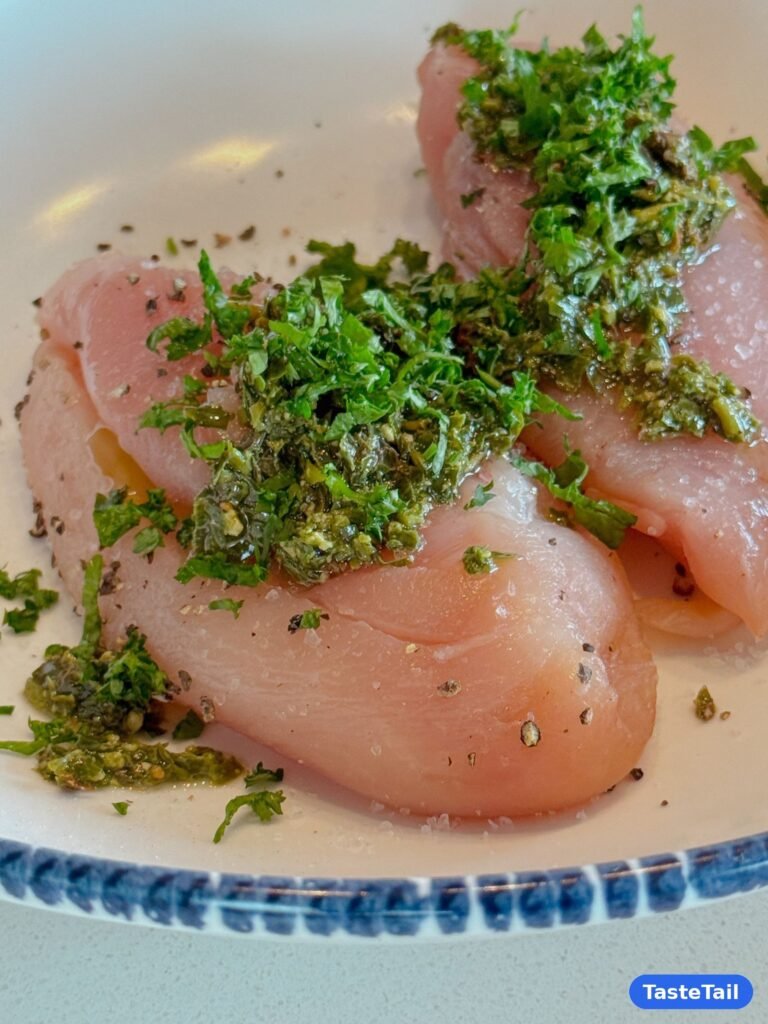
While the spinach cools, mix the filling. In a medium bowl, stir together the softened cream cheese, crumbled feta, lemon zest, and red pepper flakes if you are using them. Add the cooled, squeezed spinach and mix until everything is evenly combined. Taste it and add a pinch of salt if it needs it, but remember the feta is already salty, so go easy. The mixture should be thick enough to hold its shape on a spoon. If it feels too loose, stir in the grated Parmesan, which helps it firm up.
Now prepare the chicken. Pat the breasts dry with paper towels, which helps them sear properly later. Lay one breast flat on a cutting board and, with a sharp knife, cut a pocket into the thickest side, slicing horizontally almost all the way through but leaving the edges attached, like opening a book. You want a deep pocket that reaches most of the way across the breast without cutting through the other side. Repeat with the remaining breasts. Season the outside of each breast with salt, pepper, garlic powder, and paprika, and season lightly inside the pocket too.
Fill each pocket with about a quarter of the spinach and feta mixture, pressing it in gently with a spoon and spreading it evenly. Do not overfill — a generous but not bursting pocket is what you are after. If the pocket gapes open, secure it with one or two toothpicks pushed through the opening. The toothpicks come out before serving, so just remember how many you used. This is the one fiddly part of the whole recipe, and after the first breast you will have the feel of it.
Heat the remaining olive oil in a large oven-safe skillet over medium-high heat. When the oil is hot and shimmering, lay the stuffed breasts in the pan, pocket side up, and sear for two to three minutes without moving them. You want a deep golden crust. Flip them carefully with tongs and sear the other side for another two minutes. The chicken will not be cooked through yet, and that is fine — the oven does the rest. If your skillet is not oven-safe, transfer the breasts to a baking dish at this point.
Slide the skillet into a preheated 400°F (200°C) oven and bake for 15 to 18 minutes, until the chicken reaches 165°F (74°C) in the thickest part and the juices run clear. The exact time depends on the size of your breasts, so a quick check with a thermometer is the surest way to know. If you do not have one, cut into the thickest part — the meat should be white all the way through with no pink, and the filling should be hot and creamy. Remove the toothpicks, let the chicken rest for five minutes, and then slice and serve.
Tips for the Best Stuffed Chicken
Do not skip drying the spinach. This is the single most common reason stuffed chicken goes wrong, and it is the easiest one to fix. Spinach holds a surprising amount of water, and if that water ends up inside the pocket, it steams the filling instead of letting it bake into something creamy. Squeeze it firmly, in batches, until almost nothing more comes out. Your hands are the best tool for this. A kitchen towel works too, but your hands give you a better feel for when it is dry enough.
Pound the breasts lightly before cutting the pocket if they are very thick or uneven. A few gentle taps with a meat mallet or the bottom of a heavy pan will even out the thickness, which means the chicken cooks evenly and the pocket is easier to cut. Do not pound them flat — you are not making cutlets. Just a few taps to take down the thickest part so the breast is roughly the same thickness all the way across.
Use a thermometer if you have one. Chicken breasts are at their best at 165°F (74°C), and the difference between perfectly juicy and dry is only a few degrees. The USDA safe minimum internal temperature for chicken is 165°F, and pulling the breasts out right at that temperature, then letting them rest, gives you the juiciest result. If you enjoy stuffed chicken in general, the chicken kiev from RecipeTin Eats is another classic worth trying — it uses a garlicky butter filling instead of spinach and feta, and the technique is very similar.
Let the cream cheese come to room temperature before you mix the filling. Cold cream cheese does not blend smoothly with the feta and spinach, and you end up with lumps instead of a creamy mixture. Thirty minutes on the counter is enough. If you forgot, a few seconds in the microwave will soften it, but go gently — you want it soft, not melted.
Variations to Try
For a Mediterranean version, stir a few tablespoons of chopped sun-dried tomatoes and a handful of chopped Kalamata olives into the filling. The tomatoes add sweetness and the olives add a briny punch that works beautifully with the feta. A little dried oregano in the filling ties it all together. This is the version I make when I want the dish to feel a little more like a holiday dinner, and it pairs wonderfully with the baked pesto chicken with mozzarella on a shared table — two different stuffed and topped chicken dishes that complement each other without repeating flavours.
For a lighter version, swap the cream cheese for ricotta and use low-fat feta. The filling will be a little less rich but still creamy, and the spinach shines through more. You can also add a handful of chopped walnuts for crunch, which sounds odd until you try it — the nutty flavour works surprisingly well with the spinach and cheese.
For a spicier version, add a diced jalapeño, seeds removed, to the filling, and a pinch more red pepper flakes. The heat sits in the background and makes the salty feta stand out more. Serve it with a cooling side, like a simple cucumber salad, and the contrast is lovely.
For a different cheese, try goat cheese in place of the feta, or a mix of mozzarella and Parmesan if you want a milder, stretchier filling. Goat cheese gives the filling a tangy creaminess that is quite different from feta, and it melts beautifully. Mozzarella makes the filling stringy and mild, which kids tend to prefer. Either way, the method stays exactly the same.
Serving Ideas
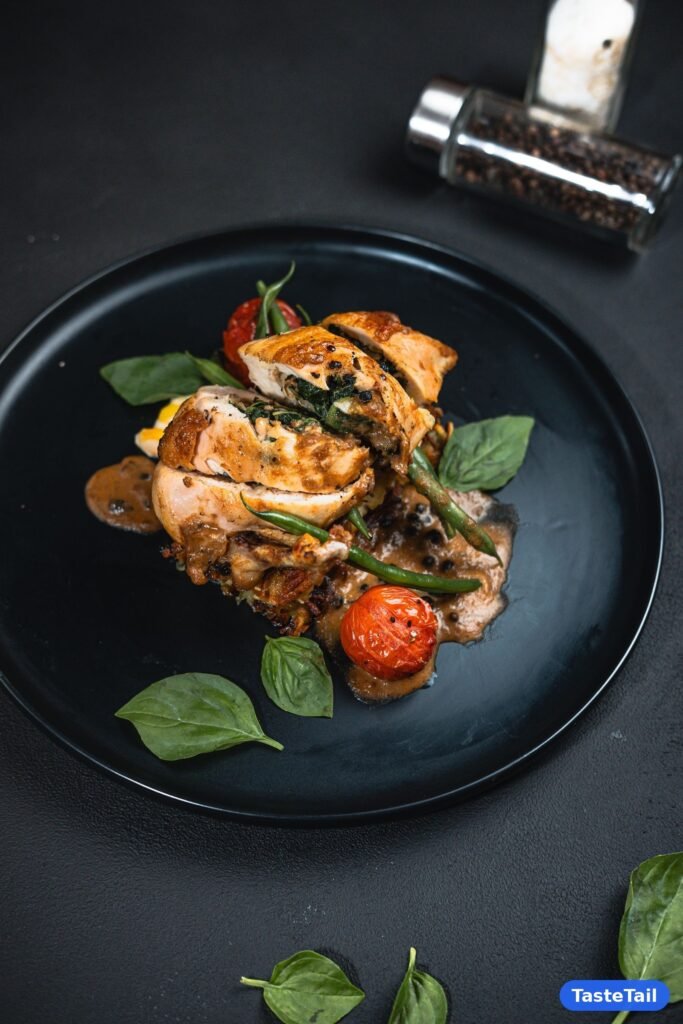
These stuffed breasts are a natural fit for a dinner that feels a little special without being complicated. I like to serve them with roasted potatoes and a simple green salad, letting the pan juices act as a light sauce. They also work beautifully over rice or mashed potatoes, where the creamy filling mingles with the starch. If you want a lighter plate, serve them sliced over a big salad with a lemon dressing — the warm chicken against cool, crisp greens is a combination I come back to again and again, and our simple garden salad with lemon dressing was practically made for this.
For a complete dinner, pair the chicken with a vegetable side that can roast in the same oven. Asparagus, green beans, or cherry tomatoes on a sheet pan go in at the same temperature and finish at about the same time as the chicken. That way everything lands on the table together, hot, with no juggling. A little extra feta crumbled over the top just before serving makes the plate look as good as it tastes.
Leftovers are wonderful sliced cold over a grain bowl or tucked into a sandwich the next day. The filling stays creamy even when cold, and a slice of stuffed chicken on good bread with a little mayo and lettuce makes a lunch that feels far more generous than a regular sandwich. If you want another chicken dinner for the week, the herb roasted chicken legs are an easy follow-up — same oven, same kind of comfort, different flavours entirely.
Storage and Reheating
Leftover stuffed chicken keeps in the fridge for three to four days in an airtight container. Let it cool completely before you put it away, and store any pan juices with it — they keep the meat moist when you reheat. To reheat, warm the breasts in a 350°F (175°C) oven for about ten minutes, covered loosely with foil so the outside does not dry out. The microwave works in a pinch, but it can make the filling rubbery, so the oven is worth the extra few minutes if you have them.
You can also assemble the stuffed breasts a day ahead and keep them covered in the fridge, then sear and bake them when you are ready to cook. This is a lovely trick for dinner parties, because the fiddly part is done in advance and all that is left is ten minutes at the stove and a short bake. Do not freeze the assembled raw breasts — the filling does not thaw well and the spinach goes watery. Cooked leftovers freeze better, for up to a month, though the filling will be a little softer after thawing.
Frequently Asked Questions
How do I keep the filling from leaking out?
Cut the pocket carefully so you do not slice through the other side, do not overfill it, and secure the opening with toothpicks. Searing the breasts before baking also helps seal the pocket closed. A little filling escaping is normal and not a problem — it just browns in the pan and tastes wonderful.
Can I use frozen spinach instead of fresh?
Yes, but you must thaw it completely and squeeze it very dry. Frozen spinach holds even more water than fresh, so squeeze it in batches until almost nothing comes out. You will need about 10 ounces (280 g) of frozen spinach to replace the 3 cups of fresh. The texture will be a little softer, but the flavour is just as good.
What is the best cheese to use in the filling?
Feta is my first choice because it is salty and tangy and holds its shape in the filling. Goat cheese is a good swap if you prefer something creamier, and a mix of mozzarella and Parmesan works if you want a milder filling. Avoid very soft cheeses that melt too quickly, because they run out of the pocket before the chicken finishes cooking.
Can I make this ahead of time?
Yes. Assemble the stuffed breasts up to a day ahead, cover them, and keep them in the fridge. Take them out about twenty minutes before cooking so they are not fridge-cold going into the pan, then sear and bake as usual. You may need an extra minute or two in the oven if they are still cold in the middle.
How do I know when the chicken is done?
The surest way is a thermometer — 165°F (74°C) in the thickest part of the meat, away from the filling. Without one, cut into the thickest part of the largest breast. The meat should be white all the way through with no pink, and the juices should run clear. If you are unsure, give it another two or three minutes in the oven rather than risking undercooked chicken.
What should I serve with stuffed chicken breast?
Roasted potatoes, rice, or mashed potatoes all work well, because they soak up the pan juices. A simple green salad or roasted vegetables keep the plate balanced. For a heartier meal, try it with the creamy garlic chicken pasta on the side, or keep it light with steamed green beans and a lemon wedge. For more ideas, the chicken breast recipes from BBC Good Food collection has plenty of sides and mains that pair well with this dish.