
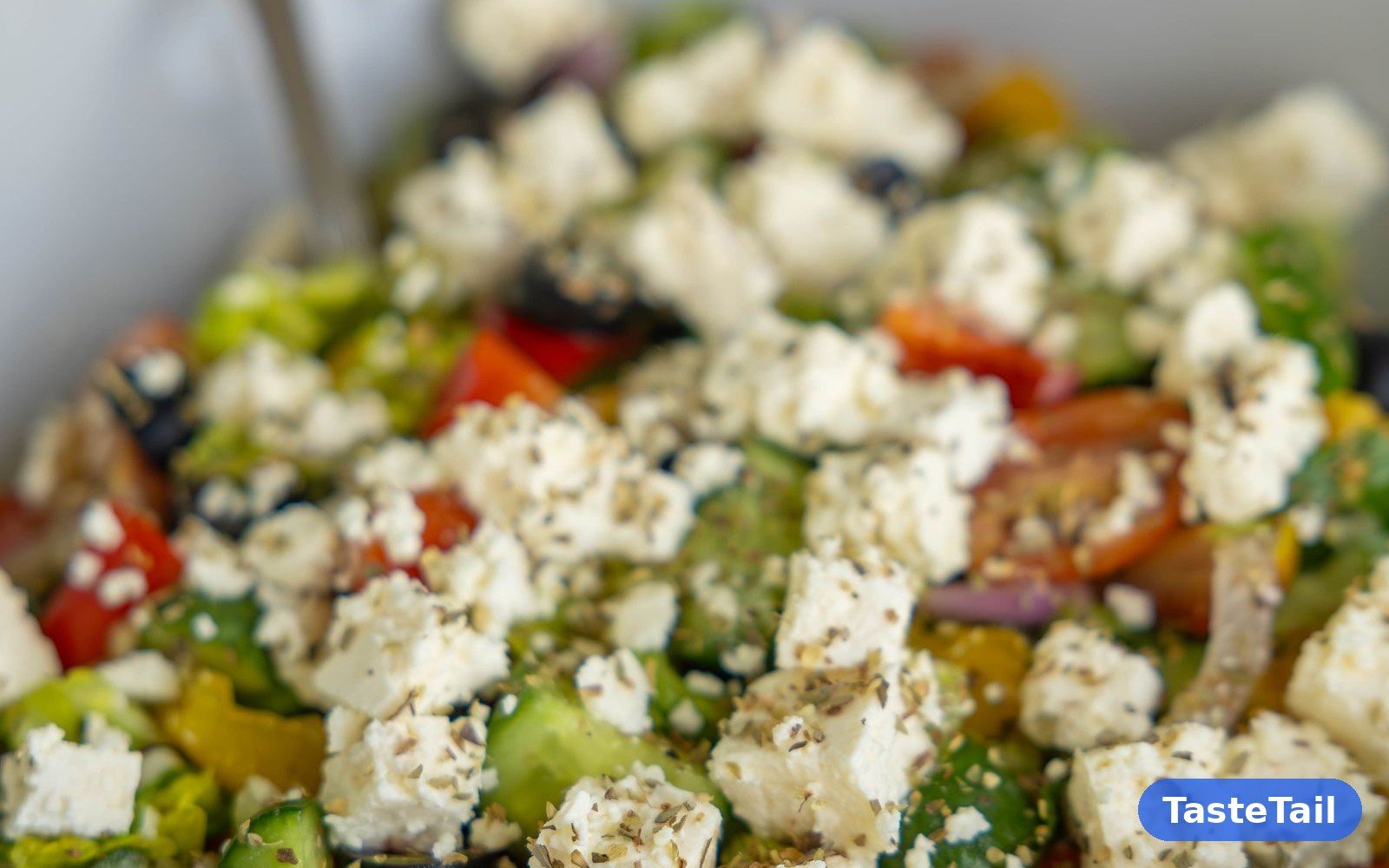
Why This Greek Salad Works
The first reason is the tomatoes, and I mean that literally — a Greek salad is only ever as good as its tomatoes. They are the heart of the dish, the thing everything else is built around. A ripe tomato, the kind that is heavy for its size and smells sweet when you hold it to your nose, brings juice, acidity, and sweetness all at once, and that juice becomes half the dressing. A pale, hard supermarket tomato, on the other hand, brings almost nothing: no juice, no flavour, just a watery crunch. If your tomatoes are not great, wait for better ones, or make something else that night. I would rather eat this salad twice a week in tomato season than once a month with tomatoes that were picked green and shipped a thousand miles. If you want another salad that treats its vegetables with the same respect, our simple garden salad with lemon dressing is a good one to try next, because it follows the same rule: a few fresh things, dressed simply, and eaten right away.
The second reason is the feta, and specifically how you handle it. Feta is a brined cheese, which means it lives in salty water until you use it, and that brine is part of its flavour. Good feta is creamy and tangy and a little crumbly at the edges, and it should taste salty but not harsh. The mistake people make is crumbling it into tiny pieces and stirring it through the salad, where it disappears into the dressing and turns everything cloudy. Keep it in thick slices or one big slab laid over the top instead. That way you get a proper bite of feta with your vegetables, cold and creamy against the warm, juicy tomatoes, and the salad looks like it is meant to look. Buy feta sold in a block in brine if you can, not the pre-crumbled kind in a tub, which is usually drier and less flavourful.
Third, the olives. Kalamata olives are not interchangeable with the black olives that come in a tin, and this is the place where swapping them really shows. A Kalamata olive is dark purple, almost black, with a soft, meaty texture and a flavour that is fruity and briny and slightly wine-like. A tinned black olive is mostly salt water and not much else. If you can buy Kalamatas with the pits still in, do that — they taste better, and the pits are easy enough to eat around at the table. If you prefer them pitted for convenience, look for ones packed in olive oil or brine rather than in a tin, and give them a quick rinse if they taste too salty straight from the jar. A handful is enough. You do not need a mountain of olives; you need good ones.
Fourth, the dressing, or rather the lack of one. There is no bottled dressing here, no mayonnaise, no sugar, no mustard. The dressing is olive oil, red wine vinegar, dried oregano, salt, and pepper, and it works because the tomatoes add their own juice to it as the salad sits. Use the best extra virgin olive oil you have, because you will actually taste it — this is not a recipe where the oil disappears into the background. A fruity, peppery oil is ideal, and if you have a Greek olive oil in the cupboard, this is the moment to use it. The vinegar should be red wine vinegar, not white, not balsamic. White vinegar is too sharp, and balsamic is too sweet and too dark. Red wine vinegar has a gentle, fruity acidity that belongs with tomatoes.
Finally, the size of the cut. This is the detail that separates a good Greek salad from a forgettable one, and it costs nothing to get right. The tomatoes should be cut into thick wedges, not diced. The cucumber should be sliced into half-moons about as thick as your little finger. The onion should be sliced thin, but into rings or half-rings that hold their shape. Everything should be big enough to spear with a fork, and big enough that you can taste each vegetable on its own before the flavours blend together. When everything is cut too small, the salad turns into a mushy mix where nothing has a texture of its own. Cut it generously, toss it gently, and let the bowl look rustic. It is supposed to.
Ingredients
The list is short, and every item on it matters, so buy the best version of each thing you can find. The tomatoes are the most important purchase — look for ones that are heavy, fragrant, and a deep red all the way around, with no pale shoulders or hard spots. If you can find tomatoes on the vine, or beefsteak tomatoes, or even a mix of red and yellow, use those. The cucumber should be firm and dark green, with no soft spots. A hothouse or English cucumber works well because the skin is thin and the seeds are small, but a regular cucumber, peeled in stripes, is just as good. And the feta should be a block in brine, not pre-crumbled.
- 4 large ripe tomatoes, cut into thick wedges
- 1 large cucumber, halved lengthwise and sliced into thick half-moons
- 1 medium red onion, peeled and thinly sliced into half-rings
- 1 green bell pepper, cored, seeded, and cut into rings
- 200 g (7 oz) feta cheese, in a block, kept in its brine until needed
- 3/4 cup (about 100 g) Kalamata olives, pitted or whole
- 1/3 cup (80 ml) good extra virgin olive oil
- 2 tablespoons red wine vinegar
- 1 teaspoon dried oregano, preferably Greek
- 1/2 teaspoon fine sea salt, plus more to taste
- 1/4 teaspoon freshly ground black pepper
To serve (optional but recommended):
- Crusty bread or warm pita, for mopping up the juices
- Extra olive oil, for drizzling over the top
- A pinch of flaky sea salt, for finishing
- Lemon wedges, for anyone who likes a little extra brightness
How to Make Greek Salad with Feta and Kalamata Olives
Start with the vegetables, because the order you cut them in matters more than you might think. Cut the tomatoes first, into thick wedges — six or eight per tomato, depending on the size — and put them in a wide, shallow bowl rather than a deep one. A shallow bowl lets the dressing coat everything evenly instead of pooling at the bottom where only the vegetables on the lowest layer get any flavour. Cut the cucumber next, halving it lengthwise and slicing it into half-moons about as thick as your little finger. Add the red onion, sliced thin into half-rings, and the green pepper, cut into rings. If the onion tastes very sharp, soak the slices in a bowl of cold water for five minutes and drain them well — it takes the raw bite off without making the onion limp.
Now the dressing, which takes about thirty seconds. Put the olive oil, red wine vinegar, dried oregano, salt, and pepper in a small bowl or a jam jar and whisk or shake them together until the mixture looks slightly cloudy and combined. Pour about two-thirds of it over the vegetables and toss them very gently with your hands or with two large spoons — you want everything coated, not bruised. Tomatoes are delicate, and if you toss them hard they will break apart and the salad will turn mushy. A gentle lift and fold, three or four times, is enough. Taste a piece of cucumber and adjust the salt if it needs it, remembering that the feta and the olives will add more salt when they go in.
Let the salad rest for ten minutes. This is not a step to skip, and it is not a step to rush. In those ten minutes, the salt draws juice out of the tomatoes, the vinegar softens into the oil, and the oregano releases its flavour into the dressing. The vegetables relax a little and the whole bowl starts to smell like a Greek taverna — sharp, green, and warm. While it rests, take the feta out of its brine and pat it dry gently with a paper towel. If you are using a block, cut it into thick slices or break it into a few large pieces. Lay the feta over the top of the salad rather than stirring it in, scatter the Kalamata olives over everything, and drizzle the remaining dressing over the top, letting it run over the feta. Finish with a pinch of dried oregano and a little extra olive oil, and serve it straight away, with bread on the table.
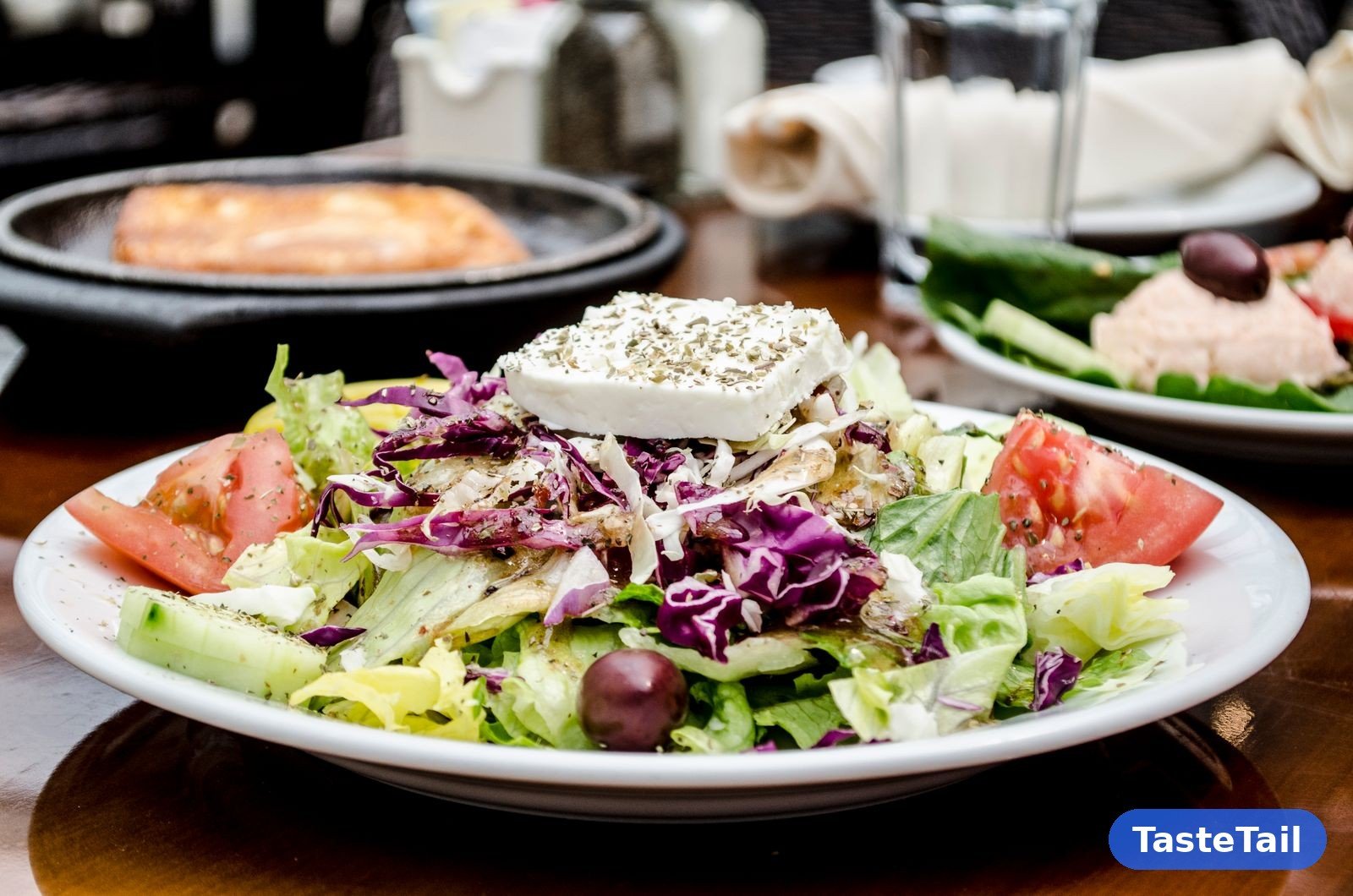
That bread is not an afterthought, by the way. In Greece, the salad is served with bread for a reason: the juices that gather at the bottom of the bowl are too good to leave behind. Tomato juice, olive oil, vinegar, oregano, and a little feta brine, all mixed together in the bottom of the bowl, is one of the great simple flavours of Mediterranean cooking. A piece of crusty bread, torn rather than sliced, is the tool for the job. Tear off a piece, press it into the juices, and eat it. It is the part of the meal people remember, and it is the reason you should always put the salad in a bowl with a wide bottom rather than a flat plate — you need somewhere for those juices to collect.
Serve the salad at room temperature, never cold from the fridge. If you made the vegetables ahead of time, take them out of the fridge at least twenty minutes before you dress them, because cold tomatoes taste like almost nothing. The feta can stay in the fridge until the last minute, since its cool creaminess against the room-temperature vegetables is part of the pleasure of the dish. And do not dress the salad until you are nearly ready to eat. Once the dressing is on, the clock is ticking — the vegetables will start to soften, the tomatoes will release more and more juice, and after an hour the salad will be a shadow of what it was. Ten minutes of rest after dressing is perfect. An hour is too long.
Tips for the Best Greek Salad
Buy your tomatoes at room temperature and keep them that way. A tomato that has been in the fridge loses flavour that it never fully gets back, and a cold tomato in a salad is a waste of a good tomato. If you have to buy tomatoes that are not quite ripe, leave them on the counter for two or three days, stem-side down, until they soften and smell sweet. A tomato that smells like nothing will taste like nothing, so use your nose when you are shopping. If the tomatoes at the shop smell green and hard, walk away and make something else that night.
Do not peel the cucumber unless you have to. The skin adds colour, crunch, and a little bitterness that balances the sweetness of the tomatoes, and a peeled cucumber goes soft faster in the dressing. If the skin is thick or waxy, peel it in stripes — alternate strips of skin and no skin — which gives you the best of both. And scoop out the seeds if your cucumber is large and seedy, because the seeds are mostly water and they make the salad soggy. A hothouse cucumber rarely needs this step, but a big garden cucumber often does, and it takes ten seconds with a teaspoon.
Use dried oregano, not fresh. This is one of the few recipes where dried herbs are genuinely better than fresh ones, because dried Greek oregano has a concentrated, earthy, slightly peppery flavour that fresh oregano does not have. Fresh oregano is softer and greener, and it gets lost in the dressing. Rub the dried oregano between your palms as you sprinkle it over the salad — the friction wakes up the oils in the leaves and makes the whole bowl smell wonderful. If you can find Greek oregano sold on the stem, buy it. It is stronger, more fragrant, and worth the small extra cost.
Salt in two stages. A pinch of salt over the vegetables before the dressing goes on, and then a taste and an adjustment after the feta and olives are added. The reason is simple: feta and olives are both salty, and if you salt the salad fully before they go in, you will end up with a salad that is too salty to enjoy. Salt the vegetables lightly, let them rest, add the feta and olives, and then taste a tomato and a piece of cucumber before you decide whether it needs more. Flaky sea salt, sprinkled over the top at the end, gives you little bursts of saltiness that are much nicer than salt that has dissolved into the dressing.
Serving Ideas
The simplest way to serve a Greek salad is as the centre of a light lunch: a big bowl of it, a piece of crusty bread, and a glass of something cold. That is genuinely enough, and it is how I eat it most often. But it also works beautifully as a side dish, and it is one of the most useful salads to have in your rotation because it goes with almost everything from the grill. Next to grilled chicken, it is the perfect fresh, sharp contrast to smoky meat. Next to fish, it is light enough not to overwhelm it. And next to something rich, it cuts through the richness in a way that a heavy, creamy side dish never could. Our roasted asparagus with lemon makes a lovely partner on the same table — two bright, lemony, vegetable dishes that feel like summer even in the middle of winter.
For a bigger meal, build the table around the salad. Put it in the middle with a bowl of tzatziki, some warm pita, a plate of grilled chicken or lamb, and a dish of olives, and let everyone help themselves. It is the kind of meal that does not need a formal structure, and it is better for it — people eat slowly, they go back for more salad, they tear more bread, and the conversation goes on longer than it does at a plated dinner. If you are feeding a crowd, make the salad in two bowls rather than one huge one, because a salad this generous is hard to toss properly in a single bowl, and the vegetables at the bottom never get any dressing. Two medium bowls, dressed separately, are always better than one enormous one.
Variations to Try
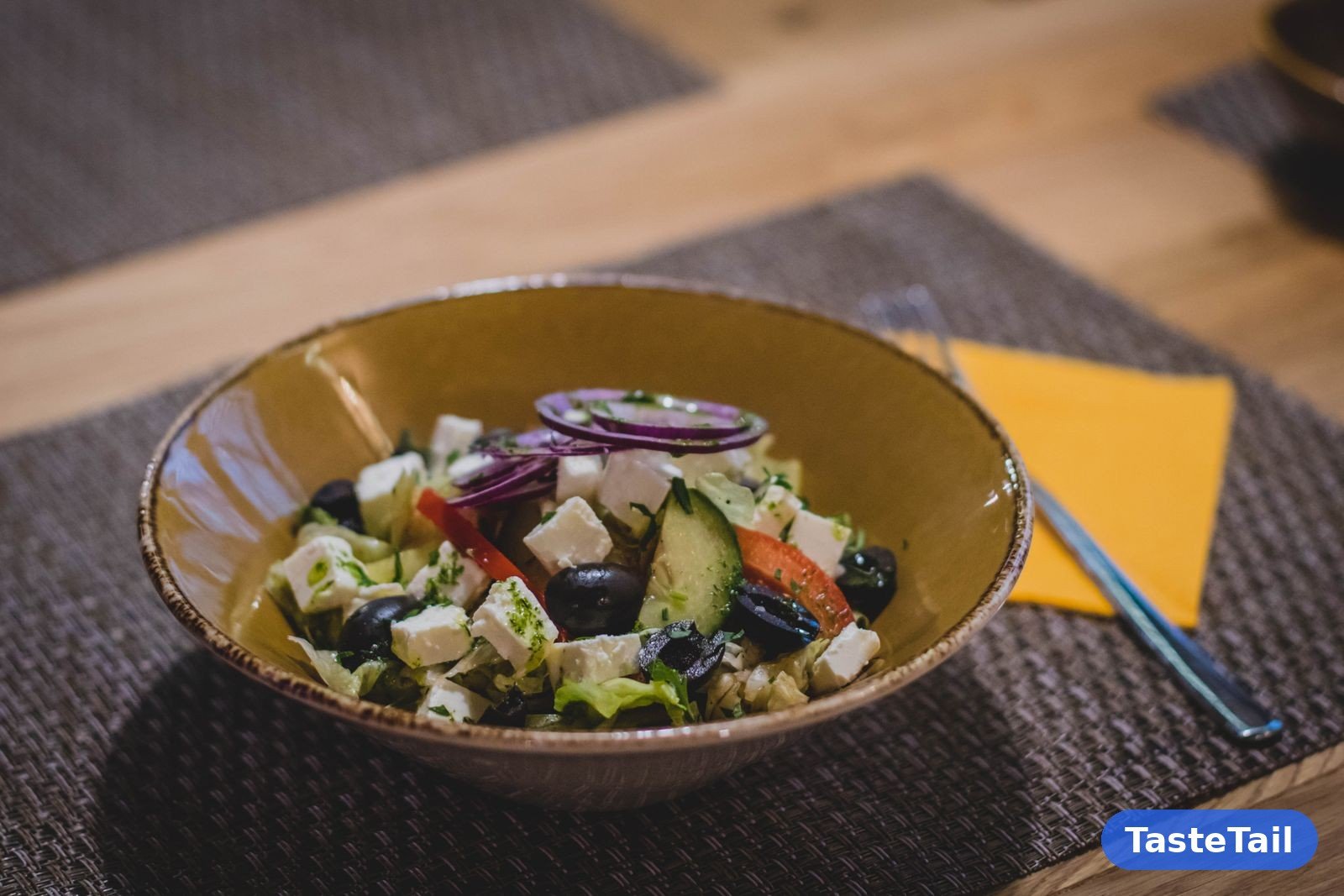
Once you have made the classic version, there are a few honest variations that keep the spirit of the salad while changing it enough to be interesting. The most popular one is adding lettuce, which makes it the Greek-American version most of us grew up with. If you like lettuce in your salad, use a crisp romaine, torn into large pieces, and add it at the very end so it stays crunchy. A few capers, rinsed and scattered over the top, add a sharp, briny note that works beautifully with the olives. And a handful of chickpeas, drained and rinsed, turns the salad into something more substantial — enough to be a proper lunch on its own. If you are building a whole table of Mediterranean dishes, our garlic butter corn on the cob is a good, simple addition that everyone at the table will reach for, even though it is not Greek at all.
You can also change the cheese. A slab of grilled halloumi, sliced and laid over the top while it is still warm, is wonderful against the cool vegetables, and the salty, squeaky texture is completely different from feta. Goat cheese, crumbled in large pieces, gives you a softer, tangier version that some people prefer. And if you want to keep it dairy-free, leave the cheese out entirely and add an extra handful of olives and a few more peppers — the salad still works, because the tomatoes and the oil and the oregano carry it. What I would not do is add a creamy dressing, or a sweet one, or anything that hides the vegetables. The point of a Greek salad is that you can taste everything in it, and a heavy dressing defeats that purpose entirely.
Storing and Making Ahead
A Greek salad is at its best within an hour of being made, and that is the honest truth about it. It is not a salad that improves overnight, and it is not one you should make the day before a party. The tomatoes soften, the cucumber goes limp, the onion gets stronger, and the whole thing turns into a soupy version of itself. That said, you can prepare the parts ahead of time, and that is how I handle it when I am cooking for guests. Cut the vegetables in the morning, put them in separate containers in the fridge, and keep the feta in its brine and the olives in their jar. Make the dressing and keep it in a jar on the counter. Then, ten minutes before you want to eat, take everything out, let the vegetables come to room temperature, and assemble the salad fresh. It takes five minutes and it tastes like you just made it, because you did.
If you do have leftovers, do not throw them away. The salad will not be as crisp the next day, but the juices at the bottom of the bowl are still delicious, and the vegetables, soft as they are, make a wonderful topping for toast. Spoon the leftover salad over a thick slice of toasted bread, drizzle the juices over the top, and eat it like a bruschetta. Or chop the leftovers roughly and stir them into cooked orzo or couscous with a little more olive oil, which turns them into a pasta salad that is genuinely good. The feta will have softened into the dressing by then, which is not a problem in a pasta salad — it becomes part of the sauce. Just do not try to serve day-old Greek salad as though it were fresh. It is not, and everyone at the table will know.
Frequently Asked Questions
Does a real Greek salad have lettuce in it?
No. A traditional Greek salad, the horiatiki, has no lettuce at all. It is tomatoes, cucumber, onion, green pepper, olives, and feta, dressed with olive oil and vinegar and sprinkled with dried oregano. Lettuce was added later, mostly in Greek restaurants outside of Greece, and it became so common that a lot of people now think it belongs there. It is not wrong to add lettuce if you like it — plenty of people do, and it makes the salad go further — but if you want the salad as it is eaten in Greece, leave the lettuce out and let the vegetables speak for themselves.
Should I use Kalamata olives or regular black olives?
Kalamata olives, every time. They are a completely different olive from the tinned black olives most supermarkets sell. Kalamatas are dark purple, soft and meaty, with a fruity, wine-like flavour that is one of the defining tastes of this salad. Tinned black olives are mild to the point of bland, and they add colour but almost no flavour. If you can find Kalamatas with the pits still in, they taste even better, though pitted ones are more convenient at the table. Either way, buy them from the deli or in a jar in brine, not from a tin.
Can I make Greek salad ahead of time?
You can prepare the parts ahead of time, but you should not dress the salad until you are nearly ready to eat it. Cut the vegetables a few hours ahead and keep them covered in the fridge, make the dressing and keep it in a jar, and keep the feta in its brine until the last moment. Then assemble everything ten minutes before serving. Once the dressing is on, the vegetables start to soften and release juice, so a salad dressed an hour ago will be noticeably worse than one dressed ten minutes ago. The ten-minute rest after dressing is the sweet spot.
What is the best feta for Greek salad?
A block of feta sold in brine, made from sheep’s milk or a mix of sheep’s and goat’s milk, is the best choice. It should be creamy and tangy, a little crumbly at the edges, and salty but not harsh. Avoid pre-crumbled feta, which is usually drier and less flavourful, and avoid feta that is sold dry in a plastic tub without any brine, which tends to be rubbery. If you can find Greek feta specifically, buy it. Bulgarian feta is a good second choice, and it is often a little creamier. Whatever you buy, keep it in its brine in the fridge until you need it.
Can I use a different vinegar?
Red wine vinegar is the traditional choice, and it is the one I recommend, because it has a gentle, fruity acidity that suits tomatoes. White wine vinegar works well too, and it is a little milder. Lemon juice is a good substitute if you have no vinegar at all — use about the same amount, and add a little more olive oil to balance it. What I would avoid is balsamic vinegar, which is too sweet and too dark for this salad, and plain white vinegar, which is too sharp and will overpower everything else in the bowl. The dressing should brighten the vegetables, not fight them.
How do I keep the salad from getting soggy?
Three things. First, cut the vegetables into big pieces, not small ones — big pieces release their juice more slowly. Second, dress the salad only ten minutes before you serve it, not an hour before. Third, use a wide, shallow bowl, which lets the dressing coat everything evenly instead of pooling at the bottom and soaking the vegetables on the lowest layer. If your cucumber is very watery, scoop out the seeds with a teaspoon before you slice it. And if your tomatoes are very juicy, you can salt them lightly and let them sit in a colander for five minutes before you add them to the bowl, which draws out some of the excess liquid.
Is Greek salad healthy?
Yes, and it is one of the healthiest salads you can make. It is mostly fresh vegetables, and the dressing is olive oil, which is rich in the monounsaturated fats that are a big part of why the Mediterranean diet is so well regarded. The feta and the olives add salt, so if you are watching your sodium, use a little less of each and taste before you add more salt. The salad is naturally gluten-free and vegetarian, and it is a good source of fibre, vitamin C, and the antioxidants that come from tomatoes and olive oil. Eaten with a piece of wholegrain bread, it is a genuinely satisfying and balanced meal.
Final Thoughts
Greek salad with feta and Kalamata olives is one of those recipes that I come back to all summer, and then all year, because it never lets me down. It takes fifteen minutes, it needs no cooking, and it tastes like a holiday in a bowl — bright, salty, fresh, and generous. The secret is not a trick or a technique. It is buying good tomatoes, using real feta, and not messing around with the dressing. Do those three things and the salad will take care of itself. If you are planning a full summer table, our cheesy scalloped potatoes make a rich, comforting contrast to the bright, sharp salad, and together they cover the whole table — something fresh, something warm, and plenty of bread for the juices. But first, make the salad. Cut the tomatoes thick, lay the feta on top in one generous slab, scatter the olives, and eat it with bread, the way it was meant to be eaten.