
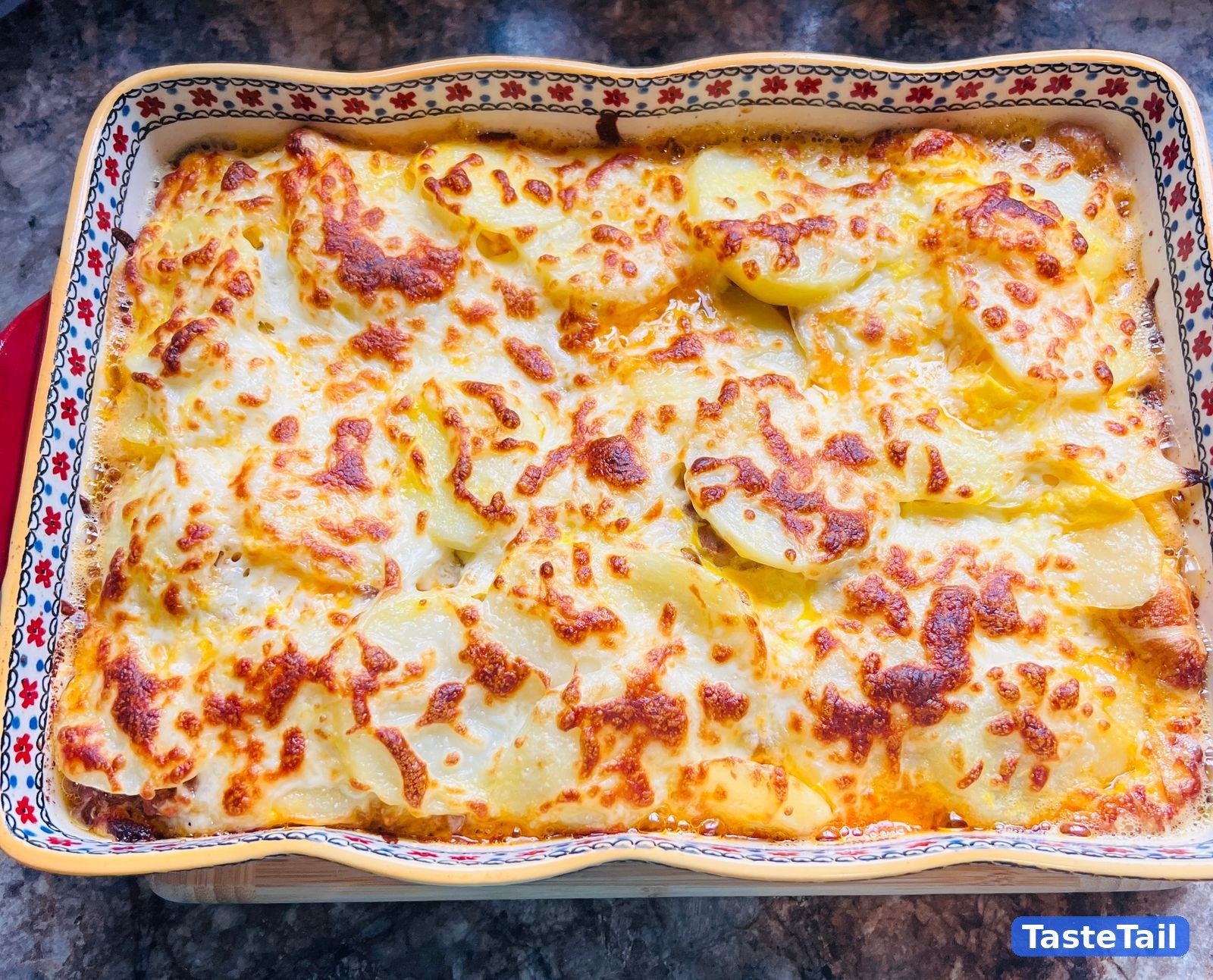
There is a reason scalloped potatoes appear at almost every holiday table, and it is not just tradition. They are warm, creamy, and deeply comforting, with thin slices of potato that go tender in a garlic cream sauce and a top layer of cheese that turns golden and bubbling in the oven. They are the kind of side dish that people remember, the one they ask for by name, and the one that disappears first even when there are a dozen other dishes on the table. They take a little time, mostly in the oven, but the work itself is simple, and the result is worth every minute.
I make scalloped potatoes most often in autumn and winter, when the weather turns cold and the kitchen is the warmest room in the house. They are a natural partner for roast chicken, ham, and steak, and they are generous enough to feed a crowd. The recipe here is a classic one, with no shortcuts and no canned soup. We make a simple cream sauce with butter, garlic, and thyme, layer the potatoes with cheese, and bake the dish until it is tender and golden. It is not a quick side dish, but it is not a difficult one either. Most of the time is hands-off, and the oven does the work while you prepare the rest of the meal.
What makes this recipe work is the slicing. The potatoes need to be thin and even, about an eighth of an inch thick, so they cook through in the time it takes the sauce to thicken and the cheese to brown. A mandoline makes this easy, but a sharp knife and a steady hand will work too. Take your time with the slicing, because even slices mean even cooking, and even cooking means no crunchy layers in the middle and no mushy layers at the bottom. The other key is patience. Scalloped potatoes need a full hour in the oven, and they need ten minutes to rest before you serve them, so the sauce can set and the slices hold together when you spoon them out.
This is a dish that rewards a little care, and it is a dish that brings people together. It is rich, so serve it in modest portions, and let it be the star of the side dishes. A green vegetable alongside, something fresh and bright, will balance the richness beautifully. For a deeper look at the technique, the Serious Eats scalloped potatoes guide is excellent, and the BBC Good Food potato side collection has plenty of ideas for what to serve with them.
Ingredients
You will need two pounds of potatoes, peeled and thinly sliced, two tablespoons of unsalted butter, three cloves of garlic minced, two tablespoons of all-purpose flour, one and a half cups of whole milk, half a cup of heavy cream, a teaspoon of fresh thyme leaves or half a teaspoon of dried thyme, half a teaspoon of fine salt, a quarter of a teaspoon of black pepper, a pinch of nutmeg, and two cups of grated cheese. For the cheese, I like a mixture of sharp cheddar and Gruyere, one cup of each. Cheddar gives flavour and colour, Gruyere gives a nutty, melty richness. If you only have cheddar, use two cups of cheddar. It will still be delicious.
Choose a waxy or all-purpose potato, such as Yukon Gold, rather than a floury potato like Russet. Yukon Golds hold their shape when baked, they have a naturally buttery flavour, and they turn tender without falling apart. Russets will work, but they are more likely to break down and make the sauce starchy. Whatever potato you use, slice it thinly and evenly, and do not rinse the slices after cutting. The starch on the surface of the potatoes helps to thicken the sauce, and rinsing it away will leave you with a thinner sauce and a less satisfying result.
The milk and cream should be full-fat. Low-fat milk will make a thinner sauce, and it is more likely to split in the oven. Whole milk and heavy cream give you a rich, stable sauce that coats the potatoes beautifully. If you want a lighter version, you can use all milk and no cream, but the sauce will be thinner and the dish will be less rich. The thyme is optional, but it adds a lovely savoury note that works well with potatoes and cheese. Fresh thyme is best, but dried thyme will work if that is what you have.
A note on cheese: grate it yourself if you can. Pre-grated cheese is coated with anti-caking agents that can make the sauce grainy and prevent the cheese from melting smoothly. Grating a block of cheese takes a few minutes, but it makes a noticeable difference to the texture of the dish. It is one of those small steps that is worth doing, especially in a recipe where cheese is a main ingredient.
How to Make Cheesy Scalloped Potatoes
Heat the oven to 375 degrees Fahrenheit, or 190 degrees Celsius. Butter a nine-by-thirteen-inch baking dish, or a similar-sized gratin dish, generously. The butter helps the potatoes release from the dish and adds flavour to the edges. Set the dish aside while you make the sauce and slice the potatoes. Peel the potatoes and slice them thinly, about an eighth of an inch thick. A mandoline is ideal for this, but a sharp knife works too. Keep the slices in a bowl of cold water if you are not using them immediately, to prevent them from browning, then pat them dry before layering. If you are using them right away, you do not need the water.
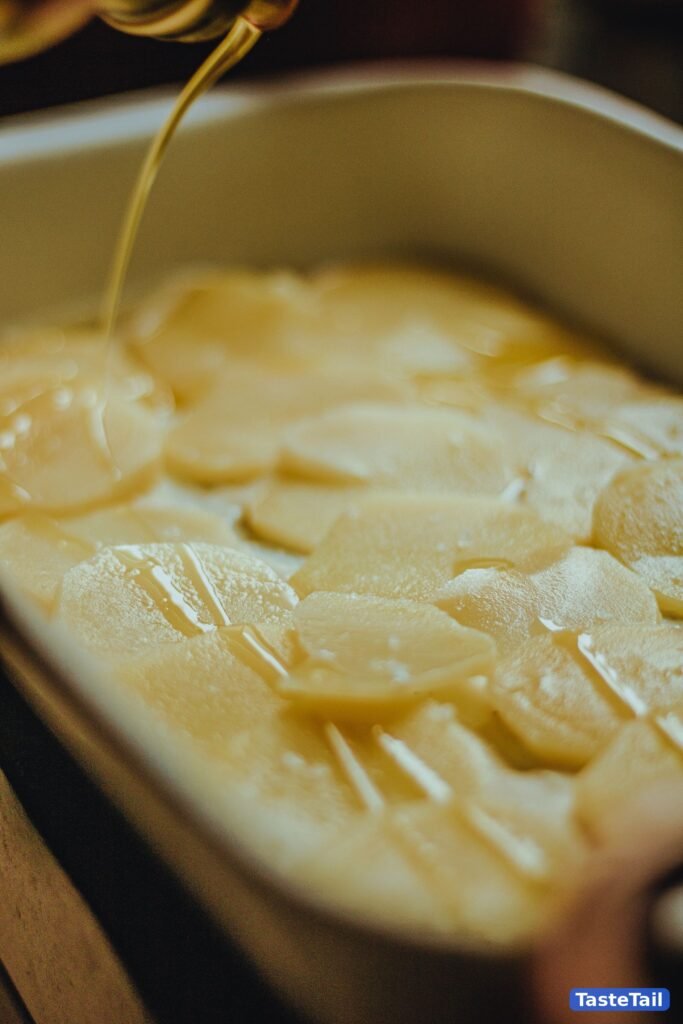
Make the sauce by melting the butter in a medium saucepan over medium heat. Add the garlic and cook it for one minute, stirring constantly, until it is fragrant but not browned. Sprinkle over the flour and cook it for another minute, stirring, until it forms a pale paste. This is a roux, and it is what thickens the sauce. Pour in the milk and cream a little at a time, whisking constantly to prevent lumps. Bring the sauce to a gentle simmer, stirring, until it thickens enough to coat the back of a spoon. This will take three to four minutes. Remove the pan from the heat and stir in the thyme, salt, pepper, and nutmeg. Taste the sauce and adjust the seasoning. It should taste well seasoned, because the potatoes themselves are bland and will need the sauce to carry the flavour.
Now assemble the dish. Arrange a layer of potato slices in the bottom of the buttered dish, overlapping them slightly like shingles. Spoon over a third of the sauce, spreading it evenly, and sprinkle over a third of the cheese. Repeat with two more layers, finishing with sauce and cheese on top. The top layer of cheese is what will turn golden and bubbling, so be generous with it. Cover the dish tightly with foil and bake for forty-five minutes. The foil traps steam and helps the potatoes cook through without the cheese burning.
Remove the foil and bake for another twenty to twenty-five minutes, until the potatoes are tender when pierced with a knife, the sauce is bubbling, and the top is golden brown. If the top is browning too quickly, cover it loosely with foil for the last few minutes. If it is not browning enough, turn on the grill for two to three minutes at the end, watching it closely so it does not burn. Let the dish rest for ten minutes before serving. This is important. The sauce needs time to set, and the potatoes need time to firm up slightly, so they hold together when you spoon them out. If you serve them straight from the oven, the sauce will run and the slices will fall apart.
Tips for the Best Scalloped Potatoes
Slice the potatoes thinly and evenly. This is the single most important tip, and it is worth taking your time over. Thin slices cook through in the time it takes the sauce to thicken, while thick slices will still be crunchy in the middle when the top is already brown. A mandoline is the easiest way to get even slices, but a sharp knife and a steady hand will work. Aim for an eighth of an inch, and do not worry if a few slices are slightly thicker. Just make sure they are mostly even.
Do not rinse the sliced potatoes. The starch on the surface helps to thicken the sauce, and rinsing it away will leave you with a thinner, less satisfying dish. If you need to keep the slices from browning while you work, put them in cold water, but pat them dry before layering. The water will wash away some starch, but it is better than brown potatoes. If you are working quickly, skip the water entirely and layer the potatoes straight into the dish.
Let the dish rest before serving. Ten minutes is the minimum, and fifteen minutes is better. The sauce will thicken as it cools slightly, and the potatoes will hold together when you serve them. It is tempting to dig in straight from the oven, because the dish smells wonderful and looks golden and bubbling, but a short rest will give you much neater servings and a better texture. Cover the dish loosely with foil while it rests, to keep it warm.
Season the sauce well. Potatoes are bland, and they need a well-seasoned sauce to taste good. Taste the sauce before you assemble the dish, and make sure it tastes a little more seasoned than you think it should. The potatoes will absorb some of the salt, and the cheese will add salt too, but the sauce is where the flavour starts. A pinch of nutmeg may seem unusual, but it is a classic addition to cream sauces, and it adds warmth without tasting like nutmeg.
Serving Ideas
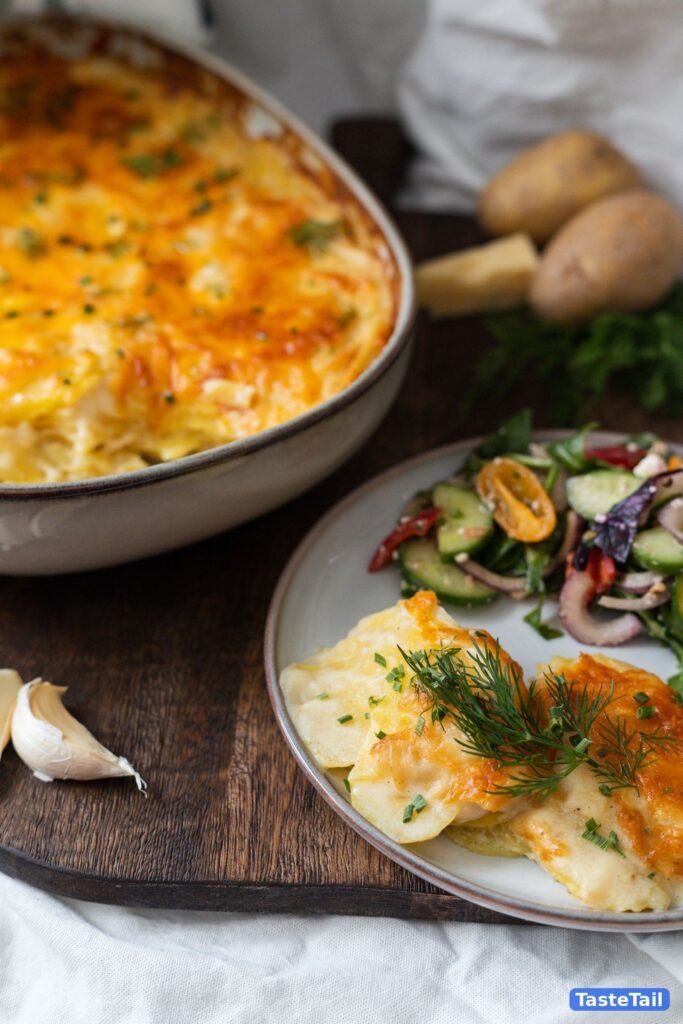
Scalloped potatoes are a classic side dish for roast dinners, holiday meals, and family gatherings. Serve them with baked pesto chicken with mozzarella for a comforting weeknight dinner, or with air fryer chicken parmesan for a meal that feels like a celebration. They are wonderful with ham at Easter or Christmas, with roast beef on a Sunday, and with grilled steak on a summer evening. They are rich, so serve them with something fresh and green alongside, like a salad or steamed vegetables, to balance the meal.
They are also a good dish to bring to a potluck or a gathering, because they travel well and they feed a crowd. Bake them in a dish with a lid, keep them warm in a low oven when you arrive, and let them rest for ten minutes before serving. They are one of those dishes that people ask for the recipe for, so be ready to share it. If you are planning a menu, a main course like one-pan chicken alfredo is rich and satisfying, and the scalloped potatoes make it feel like a proper feast. A lighter main course, such as chicken skillet with frozen vegetables, also works well, because the potatoes provide the comfort and the chicken provides the freshness.
For a holiday table, scalloped potatoes are a natural choice. They can be assembled ahead of time, refrigerated, and baked when you need them. They look beautiful in the dish, golden and bubbling, and they are easy to serve. Put the dish in the centre of the table, let people help themselves, and watch it disappear. It is a dish that makes a meal feel special, and that is the best kind of side dish.
Storage
Scalloped potatoes keep well in the fridge for three to four days, covered tightly. To reheat, cover the dish with foil and warm it in a 350 degree oven for twenty minutes, or until it is hot through. You can also reheat individual portions in the microwave, though the top will lose some of its crispness. The potatoes will soften a little as they sit, but the flavour will still be good, and many people think they taste even better the next day, once the flavours have had time to meld.
They freeze well, too, though the texture will change slightly. Let the dish cool completely, then freeze it in portions in airtight containers for up to two months. Thaw overnight in the fridge and reheat in the oven. The sauce may separate a little on reheating, but stirring it gently and warming it slowly will help it come back together. The potatoes will be softer than when freshly baked, but they will still be delicious, especially served with a fresh salad.
If you have leftover scalloped potatoes, do not throw them away. They are wonderful reheated and served with a fried egg for breakfast, or chopped and fried in a pan with a little butter until crisp. They also make a good filling for a savoury pie, or a topping for a shepherd’s pie. Leftover potatoes are too good to waste, and a little creativity will turn them into a second meal.
Variations
Once you have the basic recipe, there are many ways to change it. For a smoky version, add half a cup of cooked, crumbled bacon between the layers, and a pinch of smoked paprika to the sauce. For a herby version, add fresh rosemary and thyme to the sauce, and finish with chopped chives. For a spicy version, add a diced jalapeno to the sauce, or a pinch of cayenne pepper. For a vegetarian version, the recipe is already vegetarian, but you can add sliced mushrooms or leeks between the layers for extra flavour and texture.
You can also change the cheese. Try a mixture of cheddar and Parmesan for a sharper flavour, or Gruyere and Emmental for a more Swiss-style dish. A little blue cheese crumbled through the layers will give you a bold, savoury result that is wonderful with steak. The potatoes themselves can change too. Try sweet potatoes for a sweeter, more colourful dish, or a mixture of potatoes and celeriac for a lighter, more fragrant result. The method stays the same, so you can experiment without changing the bake.
For a lighter version, use all milk and no cream, and reduce the cheese by a third. The dish will be less rich, but it will still be creamy and satisfying. For a richer version, use all cream and no milk, and add an extra handful of cheese on top. The dish will be indulgent, but it is a holiday dish, and holidays are for indulgence. The recipe is forgiving, so make it your own.
Frequently Asked Questions
Why are my scalloped potatoes still crunchy in the middle?
Crunchy potatoes usually mean the slices were too thick, or the dish did not bake long enough. Slice the potatoes thinly and evenly, about an eighth of an inch thick, and bake the dish covered with foil for the first forty-five minutes, so the potatoes steam and cook through. Test the potatoes with a knife before you take the dish out of the oven. If they are still firm, cover the dish again and bake for another ten minutes.
Can I make scalloped potatoes ahead of time?
Yes. Assemble the dish up to a day ahead, cover it tightly, and refrigerate it. Bake it straight from the fridge, adding ten to fifteen minutes to the covered baking time, because the dish will be cold. Or bake it completely, let it cool, refrigerate it, and reheat it in the oven before serving. Both methods work well, and the dish actually tastes good reheated, once the flavours have melded.
What is the difference between scalloped potatoes and au gratin potatoes?
The two dishes are very similar, and the terms are often used interchangeably. Traditionally, scalloped potatoes are baked in a cream sauce, while au gratin potatoes are baked with cheese and breadcrumbs on top. This recipe is a cheesy scalloped potato, which is a bit of both. The name does not matter as much as the result, which is tender potatoes in a creamy sauce with a golden, cheesy top.
Can I use pre-grated cheese?
You can, but freshly grated cheese melts more smoothly and gives you a better texture. Pre-grated cheese is coated with anti-caking agents that can make the sauce grainy. If pre-grated cheese is all you have, it will still work, but the sauce may be a little less smooth. Grating a block of cheese takes a few minutes and is worth doing for this dish.
How do I prevent the sauce from curdling?
A cream sauce can curdle if it is heated too quickly or if the milk is low-fat. Use whole milk and heavy cream, cook the sauce over medium heat rather than high heat, and do not let it boil vigorously. Once the dish is in the oven, bake it at 375 degrees, not higher, and cover it with foil for the first part of the bake. These steps will keep the sauce smooth and creamy.