
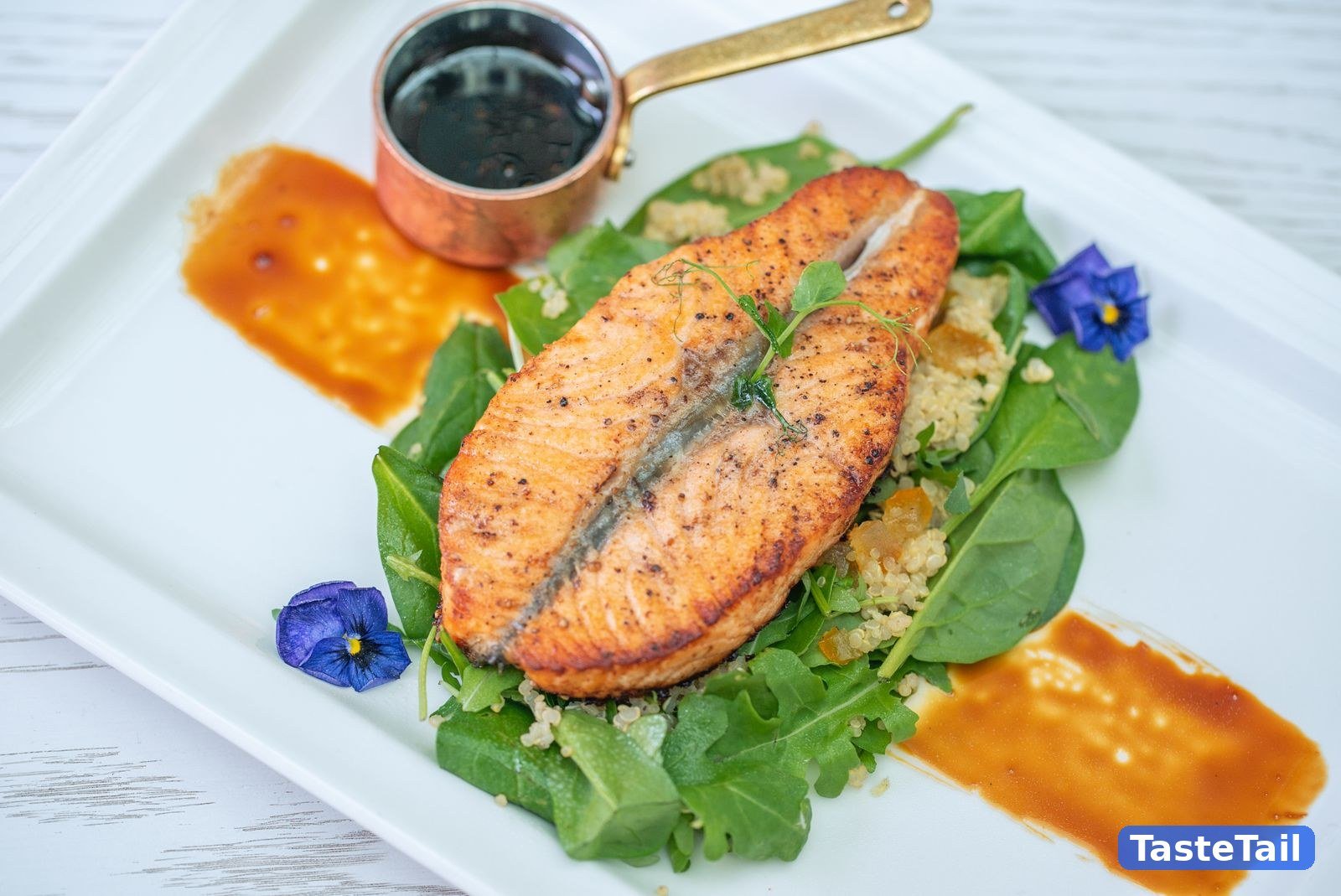
Salmon is one of those foods that people either cook all the time or avoid completely, and the difference usually comes down to one bad experience. A dry, overcooked fillet can put you off salmon for years. The good news is that salmon is actually one of the easiest and quickest things you can cook in the air fryer, and when you get it right it is tender, flaky, and full of flavour. This lemon herb version takes fifteen minutes from start to finish, and it is the recipe I turn to when I want a proper dinner without a lot of effort.
The air fryer is almost made for salmon. The hot air cooks the fillet quickly and evenly, so the outside gets a light golden edge while the inside stays moist. There is no pan to watch, no oil splattering, and no fishy smell lingering in the kitchen for hours. The skin, if you leave it on, crisps up beautifully and protects the flesh underneath. And because the cooking time is so short, there is very little room for the salmon to dry out — which is the main thing that goes wrong when people cook it in the oven or on the stove.
The flavour here is simple and bright: lemon, garlic, and fresh herbs. Lemon does two jobs — it cuts through the richness of the salmon and it adds a fresh, clean note that makes the whole dish feel light. Garlic adds warmth, and herbs like dill, parsley, or thyme add a green, fragrant layer that works beautifully with fish. A little butter at the end ties it all together into a simple sauce that you can spoon over the fillet as you serve it. Nothing fancy, nothing complicated, just good ingredients cooked well.
This is also a genuinely healthy dinner, which matters when you are trying to eat well without spending an hour in the kitchen. Salmon is rich in omega-3 fatty acids and protein, and cooking it in the air fryer needs only a light brush of oil. Serve it with vegetables and a salad, and you have a balanced meal that feels satisfying without being heavy. It works for a busy weeknight, for a light lunch, or for a dinner with friends when you want something that looks impressive but takes almost no effort.
Why You Will Love This Lemon Herb Salmon
The first reason is speed. Fifteen minutes is not an exaggeration — ten minutes to prepare and about eight minutes in the air fryer, with a couple of minutes to rest. On a night when you get home late and you are tempted to order takeaway, this is faster than delivery and tastes far better. It is the kind of recipe that makes healthy eating feel easy rather than like a project.
The second reason is how forgiving it is. Salmon has a natural richness that keeps it moist even if you cook it a minute longer than planned, and the air fryer cooks it so evenly that you do not get the dry edges and raw centre that can happen in a pan. The lemon and herb topping also helps — it keeps the surface moist as it cooks and adds flavour all the way through. If you are new to cooking fish, this is a very good place to start.
The flavour is the third reason. Lemon and salmon are a classic pairing for a reason: the acidity of the lemon brightens the rich, oily fish without overpowering it. Fresh herbs add a layer of freshness that dried herbs cannot match, and garlic adds a savoury warmth that rounds everything out. It is a simple combination, but it is one that restaurants have relied on for decades, because it works. If you enjoy herb-roasted chicken legs, you will recognise the same kind of bright, herby flavour here, just with fish instead of chicken.
Finally, it is versatile. You can serve this salmon with almost any side — roasted vegetables, rice, potatoes, pasta, or a salad — and it will fit. You can change the herbs to suit what you have in the fridge, swap the lemon for lime, or add a pinch of chilli if you like heat. It is a base recipe that you can make your own, and once you have made it a few times you will not need to look at the recipe at all.
Ingredients
You will need:
- 4 salmon fillets (about 170 g each), skin on or off
- 1 tablespoon olive oil
- 2 cloves garlic, finely minced
- 1 teaspoon lemon zest
- 2 tablespoons fresh lemon juice
- 1 teaspoon Dijon mustard (optional, helps the topping stick)
- 1 teaspoon dried oregano or Italian seasoning
- 1/2 teaspoon fine sea salt
- 1/2 teaspoon black pepper
- 1/2 teaspoon paprika
- 2 tablespoons chopped fresh dill, parsley, or a mix
- 1 tablespoon unsalted butter, melted
- Lemon slices and extra herbs, to serve
When you are buying salmon, look for fillets that are bright in colour, firm to the touch, and smell fresh and mild — like the sea, not like fish. If the salmon smells strong or fishy, it is not fresh. Fillets that are similar in size and thickness will cook evenly, so try to pick four that match. Skin-on fillets are my preference for the air fryer, because the skin crisps up and protects the flesh, but skinless fillets work just as well — just reduce the cooking time by a minute.
Fresh herbs make a noticeable difference here. Dill is the classic partner for salmon, with a soft, slightly sweet flavour that suits the fish perfectly. Parsley is milder and more versatile, and thyme adds a warm, earthy note. If you only have one fresh herb, use that — do not worry about having the exact mix. Dried herbs can work in a pinch, but use half the amount, because dried herbs are more concentrated, and add them to the seasoning mix rather than scattering them on top at the end.
The lemon is doing important work, so use a fresh lemon rather than bottled juice. The zest adds a bright, floral citrus flavour that juice alone cannot give you, and it is worth the extra minute to grate it. Roll the lemon on the counter before you cut it — this loosens the juice inside and makes it easier to squeeze. You need about two tablespoons of juice, which is roughly half a large lemon, and the zest of the whole lemon.
For the butter, use unsalted so you can control the salt, and melt it gently. It is mixed with the lemon juice, garlic, and herbs to make a simple sauce that you brush over the salmon before cooking and spoon over it afterwards. If you prefer not to use butter, olive oil works too, though the sauce will be a little less rich. The Dijon mustard is optional, but it helps the herb mixture stick to the salmon and adds a subtle tang that works well with the lemon.
How to Make Air Fryer Lemon Herb Salmon
Start by preparing the salmon. Take the fillets out of the fridge about ten minutes before cooking, so they are not ice cold when they go into the air fryer — cold fish cooks unevenly. Pat each fillet dry with kitchen paper, on both sides. This is important: moisture on the surface stops the fish from browning and can make it steam instead of crisping at the edges. Check for any pin bones by running your finger along the fillet — if you feel any, pull them out with clean tweezers. Most fillets sold in shops are already deboned, but it is worth a quick check.
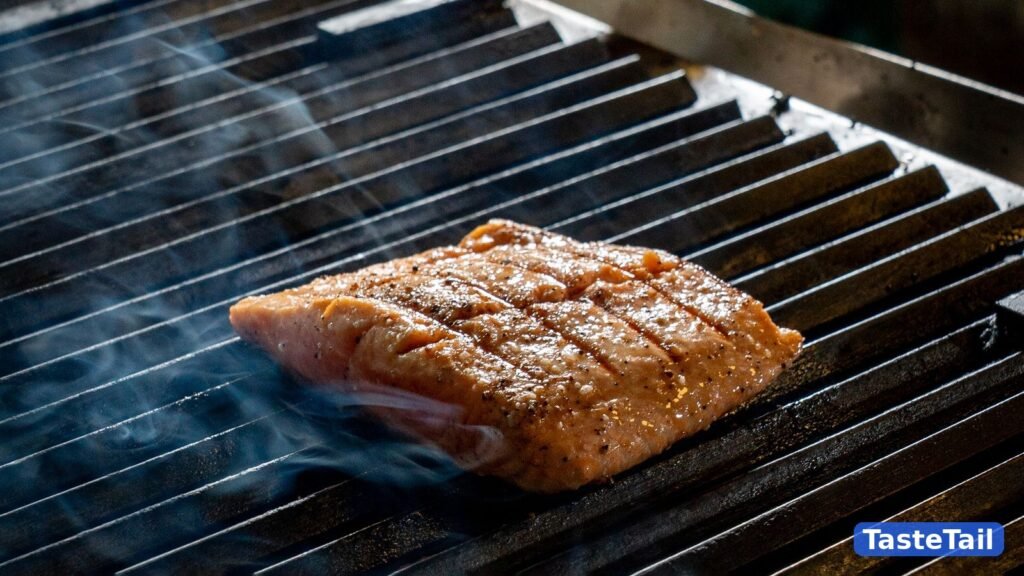
Make the lemon herb mixture in a small bowl. Whisk together the olive oil, melted butter, minced garlic, lemon zest, lemon juice, Dijon mustard if you are using it, oregano, salt, pepper, and paprika. Stir in half of the chopped fresh herbs, and save the rest for serving. The mixture should smell bright and garlicky, with the lemon coming through clearly. Taste it — it should be well seasoned, because this is the main flavour on the salmon. If it tastes flat, add a pinch more salt or a squeeze more lemon.
Brush the mixture generously over the top and sides of each fillet, using a pastry brush or the back of a spoon. Make sure you get an even layer, including the edges, because the topping is what keeps the salmon moist and gives it flavour. If you are using skin-on fillets, brush the flesh side only — the skin does not need seasoning, and it will crisp up on its own. Let the fillets sit for five minutes while the air fryer preheats, so the flavours have a moment to settle in.
Preheat your air fryer to 200°C (400°F) for three minutes. If your air fryer has a basket, you can line it with a small piece of parchment, or spray it lightly with oil to stop the salmon sticking. Place the fillets in the basket skin-side down, leaving a little space between them so the air can circulate. Do not stack them or crowd them — if they are touching, they will steam rather than cook evenly. Depending on the size of your basket, you may need to cook in two batches.
Cook the salmon for seven to nine minutes, depending on thickness. A fillet that is about two and a half centimetres thick usually takes eight minutes. The salmon is done when it flakes easily with a fork and the inside is opaque, with just a hint of translucency in the very centre if you like it medium. The safe internal temperature for fish is 63°C (145°F), according to the USDA safe temperature chart, and it is worth checking with a thermometer if you are unsure. Do not overcook it — salmon goes from perfect to dry very quickly, so check it a minute early rather than a minute late.
Let the salmon rest for two minutes before serving. This lets the juices settle and the fillet firm up slightly, so it does not fall apart when you lift it onto the plate. Spoon any remaining lemon herb butter over the top, scatter over the reserved fresh herbs, and add a lemon wedge or a thin slice of lemon to each plate. Serve immediately, while the salmon is still warm and the herbs are bright and fresh. Serious Eats has a clear guide on how to cook salmon that explains the signs of doneness well if you want to read more.
Tips for Perfect Air Fryer Salmon
The most important tip is not to overcook it. Salmon is a fish that goes from juicy to dry in the space of a minute or two, and the air fryer cooks fast. Start checking at seven minutes, even if the recipe says eight or nine. Look for flesh that flakes easily at the thickest part but still looks moist, not chalky. If you are using a thermometer, aim for 63°C in the centre, and remember that the salmon will continue to cook a little as it rests. It is better to take it out a minute early than a minute late.
Pat the fillets dry before you season them. This is a small step, but it makes a real difference. Water on the surface turns to steam in the air fryer, and steam stops the top of the salmon from getting that light golden colour. A dry surface also helps the lemon herb mixture stick properly instead of sliding off. Use kitchen paper, not a tea towel, and pat gently — you do not want to damage the flesh.
Do not move the salmon around while it cooks. Unlike chicken or vegetables, salmon does not need turning in the air fryer. The heat comes from above and circulates around the fillet, so cooking it skin-side down for the whole time is enough. Flipping salmon is the easiest way to break it apart, and it is not necessary. Put it in, close the basket, and leave it alone until it is time to check.
Use fillets of a similar thickness. If one fillet is much thicker than the others, it will need longer, and the thinner ones will be overcooked by the time it is done. If you have a mix, cook the thick ones first for a couple of minutes, then add the thinner ones, or simply check the thin ones early and take them out first. It is a small bit of juggling, but it is worth it for evenly cooked fish.
Let the salmon come to room temperature before cooking. Fish that goes straight from the fridge into a hot air fryer can cook unevenly, with the outside done before the inside has caught up. Ten minutes on the counter is enough — you do not need to leave it out for long. This also applies to the lemon herb mixture: if the butter has set in the fridge, let it soften before brushing it on, so it spreads evenly.
Serving Ideas
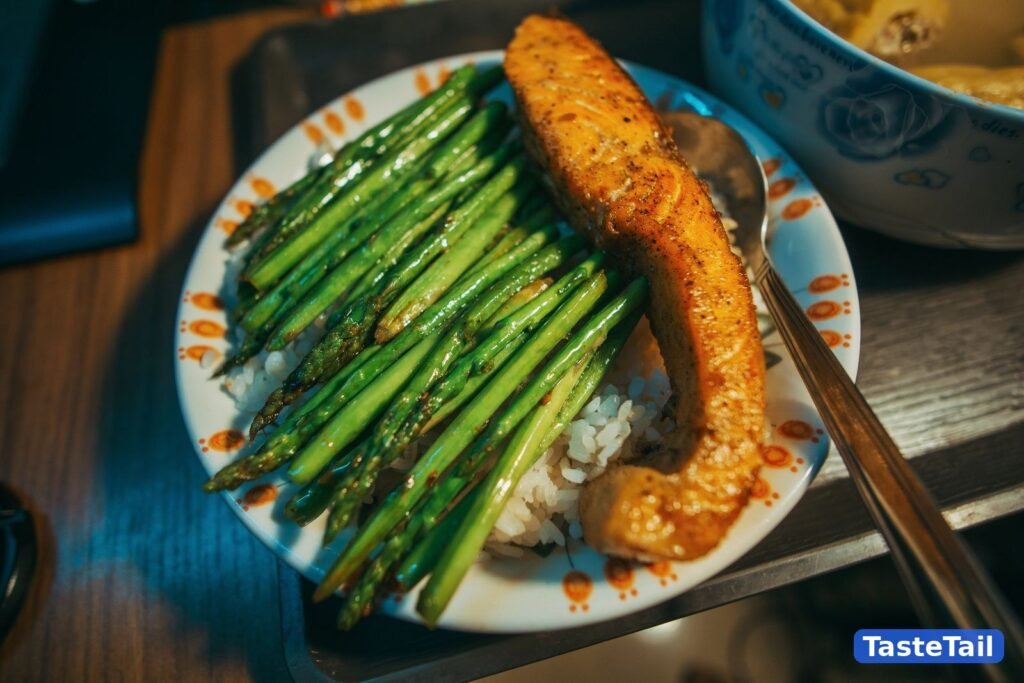
The classic way to serve lemon herb salmon is with roasted vegetables and a starch, and it is classic because it works. Roasted asparagus with lemon is a natural partner — the lemon in both dishes ties the plate together, and the asparagus adds a fresh, green contrast to the rich fish. Add some boiled new potatoes or rice, and you have a complete, balanced dinner that looks like it took far more effort than it did.
For a lighter meal, serve the salmon with a big salad. A simple garden salad with lemon dressing is perfect — the sharp dressing cuts through the richness of the salmon, and the fresh vegetables keep the plate light. Add some crusty bread to mop up the lemon butter, and you have a meal that is satisfying without being heavy. This is a good choice for a warm evening or a lunch when you do not want to feel sluggish afterwards.
Salmon also works well with pasta. Flake the cooked fillet into warm pasta with a little of the lemon herb butter, some capers, and extra herbs, and you have a quick pasta dish that feels restaurant-quality. Or serve it over rice with steamed broccoli and a drizzle of soy sauce for an Asian-inspired twist. The lemon and herb flavour is gentle enough to work with many different cuisines, so do not be afraid to experiment.
If you are feeding a crowd, you can cook the salmon in batches and keep the finished fillets warm in a low oven at 120°C while you cook the rest. Put a platter in the middle of the table with the salmon, a bowl of vegetables, and a salad, and let people help themselves. It is relaxed, it looks generous, and it means you are not plating individual dinners while the fish gets cold. Salmon is a fish that impresses people, and serving it family-style makes it feel celebratory without being formal.
Storage and Reheating
Leftover salmon keeps in the fridge for up to two days in an airtight container. It is best eaten cold the next day — flaked over a salad, tucked into a sandwich, or stirred through pasta — rather than reheated, because reheating fish can dry it out and make the whole kitchen smell. If you do want to reheat it, do so gently: place the fillet in the air fryer at 160°C (320°F) for three to four minutes, just until it is warmed through. Do not cook it for longer, or it will go dry.
You can also use leftover salmon in other dishes. Flake it into a frittata, mix it with cream cheese and herbs for a sandwich filling, or add it to a grain bowl with rice, avocado, and cucumber. The lemon and herb flavour works well cold, and the salmon stays moist if you do not overheat it. It is a useful leftover, and it is worth planning for — cook an extra fillet if you can, and you have lunch sorted for the next day.
Do not freeze cooked salmon if you can avoid it. The texture changes when it thaws, and the fish can go watery and a little mushy. Fresh salmon freezes well before cooking, though — if you buy fillets on special offer, wrap them tightly and freeze them for up to two months. Thaw them overnight in the fridge, pat them dry, and cook them as normal. They will taste almost as good as fresh, and it is a good way to keep salmon affordable.
Variations Worth Trying
The herbs are the easiest thing to change. Try dill and lemon for a Scandinavian feel, or basil and garlic for a Mediterranean version. A little chopped tarragon adds a subtle aniseed flavour that is lovely with salmon, though it is strong, so use it sparingly. If you only have dried herbs, use half the amount and mix them into the butter and lemon mixture rather than scattering them on top.
You can change the flavour profile more dramatically too. For a honey mustard version, swap the lemon juice for a tablespoon of honey and a tablespoon of Dijon mustard, and add a pinch of paprika. For a spicy version, add half a teaspoon of chilli flakes to the herb mixture and serve with a cooling yoghurt dip. For an Asian-inspired version, use soy sauce, ginger, and sesame oil instead of lemon and butter, and scatter over sesame seeds and spring onions.
If you want a crusted topping, mix the herbs with a couple of tablespoons of panko breadcrumbs and a little Parmesan, press it onto the top of the fillet before cooking, and spray lightly with oil. The topping will crisp up in the air fryer and give the salmon a lovely crunchy layer. Just watch it carefully — breadcrumbs can go from golden to burnt quickly at high heat, so check the salmon a minute early.
You can also cook the salmon with vegetables in the same basket. Thin asparagus spears, green beans, or cherry tomatoes cook in about the same time as the salmon, so you can add them around the fillets for a one-basket dinner. Just make sure the vegetables are in a single layer and not piled on top of the fish. It is a simple way to make the meal even easier, and the vegetables pick up a little of the lemon butter as they cook.
Frequently Asked Questions
How long does salmon take in the air fryer?
A fillet about two and a half centimetres thick takes seven to nine minutes at 200°C (400°F). Thinner fillets may be done in six minutes, while very thick ones can take ten. The exact time depends on the thickness of your fillet and the power of your air fryer, so start checking at seven minutes. The salmon is done when it flakes easily with a fork and the centre reaches 63°C (145°F). Remember that it will continue to cook a little as it rests, so it is better to take it out a minute early.
Should I cook salmon skin on or skin off in the air fryer?
Either works, but skin-on is my preference. The skin crisps up beautifully in the air fryer, it protects the flesh underneath from drying out, and it helps the fillet hold together. Cook it skin-side down and do not flip it. If you prefer skinless salmon, that is fine too — just reduce the cooking time by about a minute, and be a little more careful when lifting the fillet out of the basket, because it is more delicate without the skin to support it.
How do I stop salmon sticking to the air fryer basket?
Lightly spray or brush the basket with oil before you put the salmon in, or use a small piece of parchment paper cut to fit the basket. If you use parchment, make sure it does not cover the whole basket and block the airflow — cut it a little smaller than the basket and weigh it down with the salmon. Cooking the salmon skin-side down also helps, because the skin acts as a barrier between the flesh and the basket. Let the salmon rest for a minute before lifting it out, and use a wide spatula rather than tongs.
Can I use frozen salmon fillets?
Yes, but thaw them first for the best result. Thaw frozen fillets overnight in the fridge, then pat them very dry before seasoning. Cooking salmon from frozen in the air fryer is possible, but it takes longer — about twelve to fourteen minutes — and the seasoning does not stick as well to a frozen surface. The texture is also a little less even. If you are short on time, you can thaw fillets quickly by sealing them in a bag and submerging them in cold water for about thirty minutes, changing the water once.
What should I serve with lemon herb salmon?
Roasted vegetables, rice, or potatoes are the classic choices, and air fryer chicken thighs without breading can be served alongside if you are feeding a mixed group. A fresh salad is a lighter option, and pasta works well if you flake the salmon through it. Keep the sides simple and let the salmon be the star — the lemon and herb flavour is bright and fresh, so it pairs best with sides that do not compete with it.
2 thoughts on “Air Fryer Lemon Herb Salmon”