
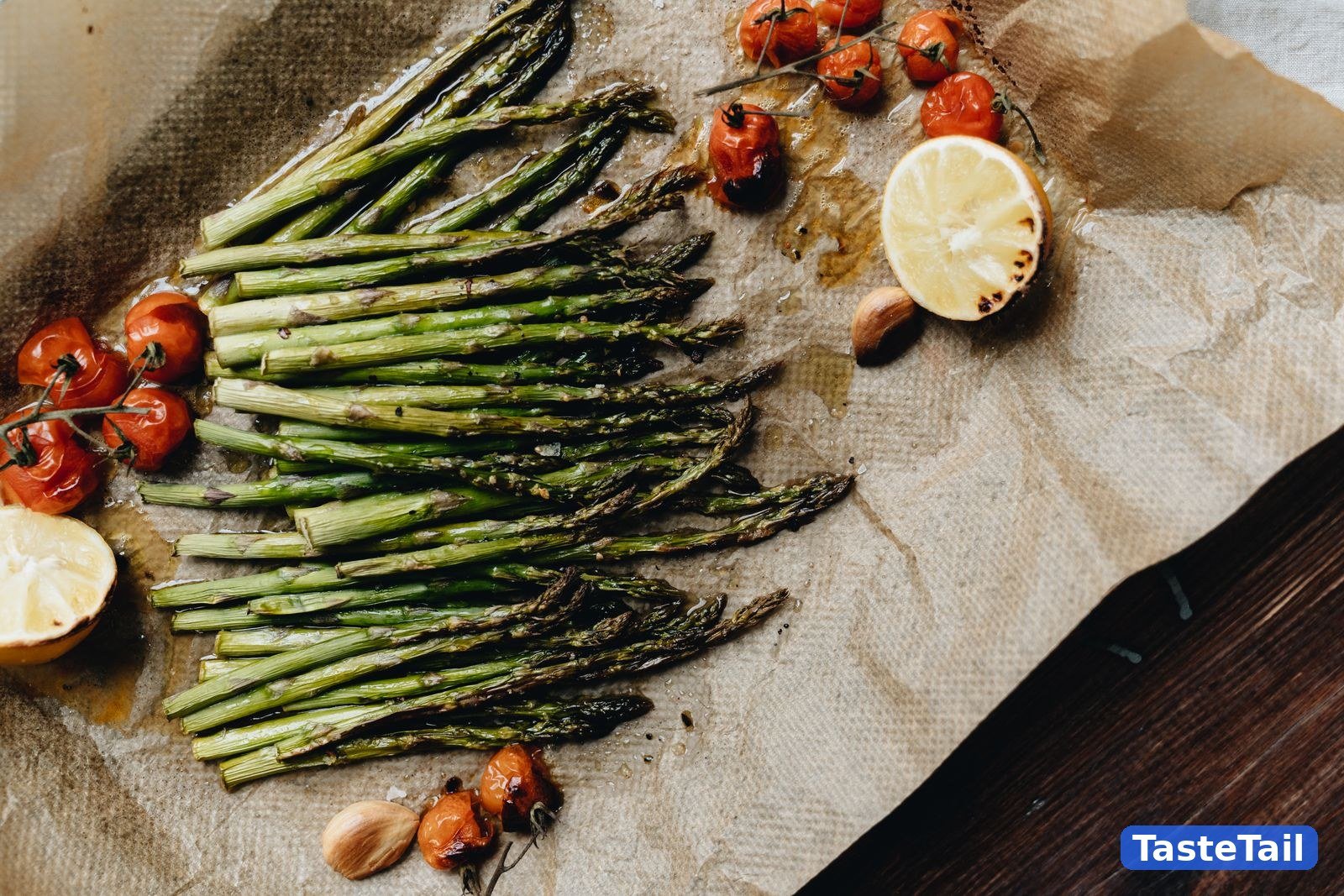
Asparagus is one of those vegetables that does not need much help. When it is fresh, in season, and cooked properly, it is tender, sweet, and faintly grassy, with tips that go crisp and golden in a hot oven. Roasting is the best way to cook it, because the high heat concentrates the flavour, the edges caramelise slightly, and the spears stay firm rather than going limp and watery the way they can when they are boiled. Add a little olive oil, a squeeze of lemon, and some flaky salt, and you have a side dish that takes twenty minutes and goes with almost everything you cook.
I make roasted asparagus most often in spring, when the spears are thin, bright green, and snap cleanly when you bend them. That is the asparagus worth buying. It cooks quickly, it tastes sweet, and it needs very little seasoning. Later in the season, when the spears are thicker, roasting still works beautifully, but you need to give them a few extra minutes and peel the lower part of the stalk if it feels woody. Either way, the method is the same, and the result is a side dish that looks elegant on the plate without any effort at all.
What I love about this recipe is its simplicity. There are no complicated techniques, no special equipment, and no long list of ingredients. You trim the asparagus, toss it with oil and salt, roast it in a hot oven, and finish it with lemon. That is the whole recipe. And yet it is the kind of dish that makes a simple dinner feel considered, because the asparagus is bright, fresh, and properly cooked. It is also a dish that scales easily. One bunch feeds two people, two bunches feed four, and you can roast two trays at once if you are feeding a crowd. Just make sure the spears are in a single layer, or they will steam instead of roast.
This is a side dish that earns its place at the table. It works with chicken, fish, steak, pasta, and eggs. It is good warm from the oven, and it is good at room temperature, which makes it useful for buffets and picnics. It is also one of the easiest ways to get more green vegetables onto the table without a lot of fuss. If you have ever been disappointed by soggy, grey asparagus, this recipe will change your mind. For guidance on choosing and storing fresh asparagus, the USDA asparagus guide is helpful, and Serious Eats on roasting asparagus explains why a hot oven and a single layer matter so much.
Ingredients
You will need one pound of fresh asparagus, about one bunch, two tablespoons of olive oil, half a teaspoon of fine salt, a quarter of a teaspoon of black pepper, two cloves of garlic thinly sliced, the zest of one lemon, and a tablespoon of fresh lemon juice. For serving, you will want a little extra olive oil for drizzling, flaky sea salt, and optionally two tablespoons of grated parmesan cheese and a small handful of toasted pine nuts or sliced almonds. The parmesan and nuts are optional, but they add a lovely savoury note and a little crunch.
Choose asparagus with firm, bright green spears and tight, compact tips. The tips should be closed and not flowering or spreading open. The cut ends should look fresh and moist, not dry and woody. Thin spears cook faster and are more tender, while thick spears are meatier and hold up better to roasting. Both are good, and you do not need to worry too much about the thickness as long as the spears in a bunch are roughly the same size, so they cook evenly. If your bunch has a mix of thin and thick spears, separate them and give the thick ones a head start in the oven.
The lemon is doing important work here, so use a fresh lemon, not bottled juice. The zest gives you fragrance and brightness without acidity, while the juice gives you the sharpness that balances the richness of the olive oil. Zest the lemon before you juice it, because it is much harder to zest a lemon that has already been squeezed. A microplane grater is ideal for zesting, but a fine grater works too. Take only the yellow part of the peel, not the white pith underneath, which is bitter.
Use a good olive oil, but do not use your most expensive finishing oil for roasting. A decent everyday extra-virgin olive oil is perfect. It will coat the spears, help them brown, and carry the flavour of the garlic and lemon. Save the best oil for drizzling over the finished dish, where you will actually taste it. The same principle applies to salt. Fine salt for seasoning before roasting, flaky salt for finishing, where its crunch and clean flavour make a difference.
How to Make Roasted Asparagus with Lemon
Heat the oven to 425 degrees Fahrenheit, or 220 degrees Celsius. A hot oven is essential for roasting asparagus. If the oven is too cool, the asparagus will steam and go limp before it browns. If it is hot, the outside will caramelise while the inside stays crisp-tender. Put a baking tray in the oven while it preheats, so the tray is hot when the asparagus goes on it. A hot tray helps the spears start cooking immediately and gives you better browning on the bottom.
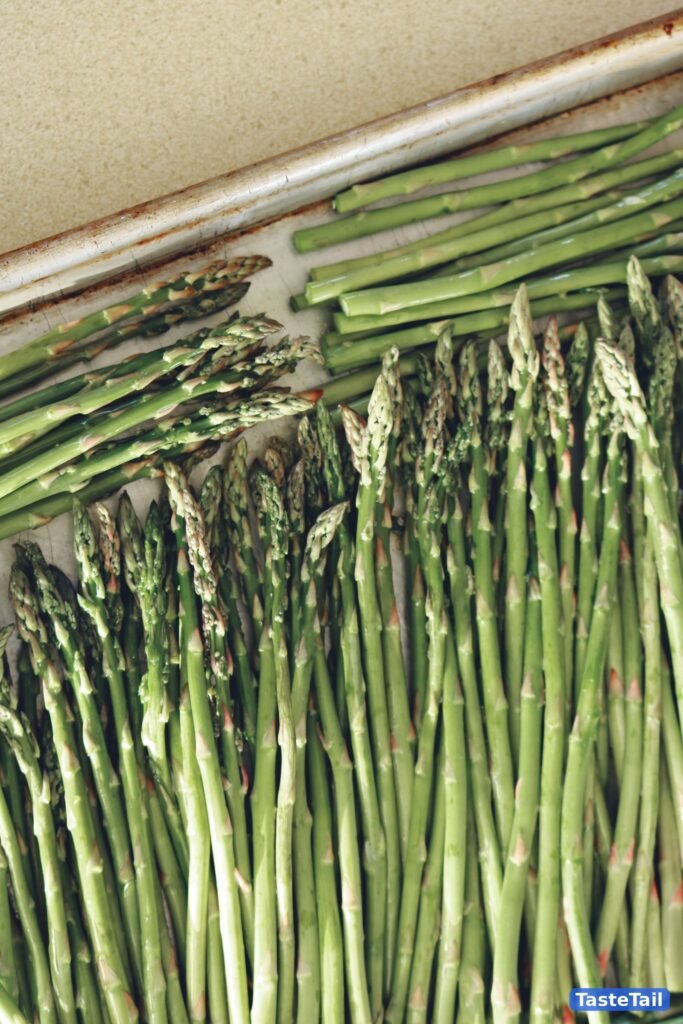
Prepare the asparagus by washing it well and trimming the woody ends. Hold a spear near the bottom and bend it gently. It will snap naturally at the point where the tender part meets the woody part. Use that spear as a guide and trim the rest of the bunch to the same length. If the spears are thick, you can also peel the lower third of each stalk with a vegetable peeler. This removes the tough outer layer and gives you a more tender result. It is an extra step, but it is worth it for thick asparagus.
Pat the asparagus dry with a clean towel or paper towels. Dry spears roast better than wet ones, because water on the surface will steam and prevent browning. Put the asparagus on the hot baking tray, drizzle over the olive oil, and toss the spears with your hands until they are evenly coated. Sprinkle over the salt and pepper, and scatter the sliced garlic over the top. Spread the spears out in a single layer, with a little space between them. Crowding the tray is the most common mistake in roasting vegetables. If the spears are touching, they will steam. If they have room, they will roast.
Roast for ten to fourteen minutes, depending on the thickness of the spears. Thin spears will be done in ten minutes, thick spears may need fourteen or fifteen. The asparagus is ready when it is bright green, tender when pierced with a knife, and lightly browned at the tips and in places along the stalk. Shake the tray halfway through cooking, so the spears cook evenly and the garlic does not burn in one spot. The garlic should be golden and fragrant, not dark and bitter. If the garlic starts to brown too quickly, push it to the side of the tray or add it halfway through cooking next time.
Remove the tray from the oven and transfer the asparagus to a serving plate. Sprinkle over the lemon zest and squeeze over the lemon juice. Toss gently, so the zest and juice coat the spears. Drizzle with a little extra olive oil, sprinkle with flaky salt, and add the parmesan and nuts if you are using them. Serve warm or at room temperature. The lemon should be bright and fresh, not overpowering. Taste a spear and adjust the salt and lemon to your liking. A little more lemon juice can make all the difference, so do not be shy about adding another squeeze.
Tips for the Best Roasted Asparagus
Do not crowd the pan. This is the single most important tip for roasting any vegetable, and asparagus is no exception. The spears need space for the hot air to circulate around them. If they are piled on top of each other, they will steam, go limp, and lose their bright colour. Use a large tray, spread them out, and use two trays if you need to. It is better to roast in two batches than to crowd one tray.
Use a hot oven and a hot tray. A preheated tray gives the asparagus a head start and helps the bottoms brown. If you do not want to preheat the tray, at least make sure the oven is fully preheated before the asparagus goes in. An oven that is still heating up will not give you the same caramelisation, and the asparagus will be pale and soft rather than golden and crisp-tender.
Trim the woody ends properly. The bottom of an asparagus spear is tough and fibrous, and no amount of cooking will make it tender. The bend-and-snap method is reliable, but it can waste a little of the good part of the spear. If you prefer, cut off the bottom inch or two with a knife, and peel the lower part if the spears are thick. Either way, do not skip this step. Woody asparagus is unpleasant to eat, and it is the reason many people think they do not like asparagus.
Season after roasting as well as before. Salt before roasting helps the asparagus cook evenly, but a little flaky salt after roasting adds crunch and a clean, bright flavour. The same applies to lemon. A squeeze of lemon juice at the end brightens everything, while lemon added before roasting can taste muted. Finish the dish, taste it, and adjust. That final tasting and adjusting is what separates a good cook from a recipe follower.
Serving Ideas
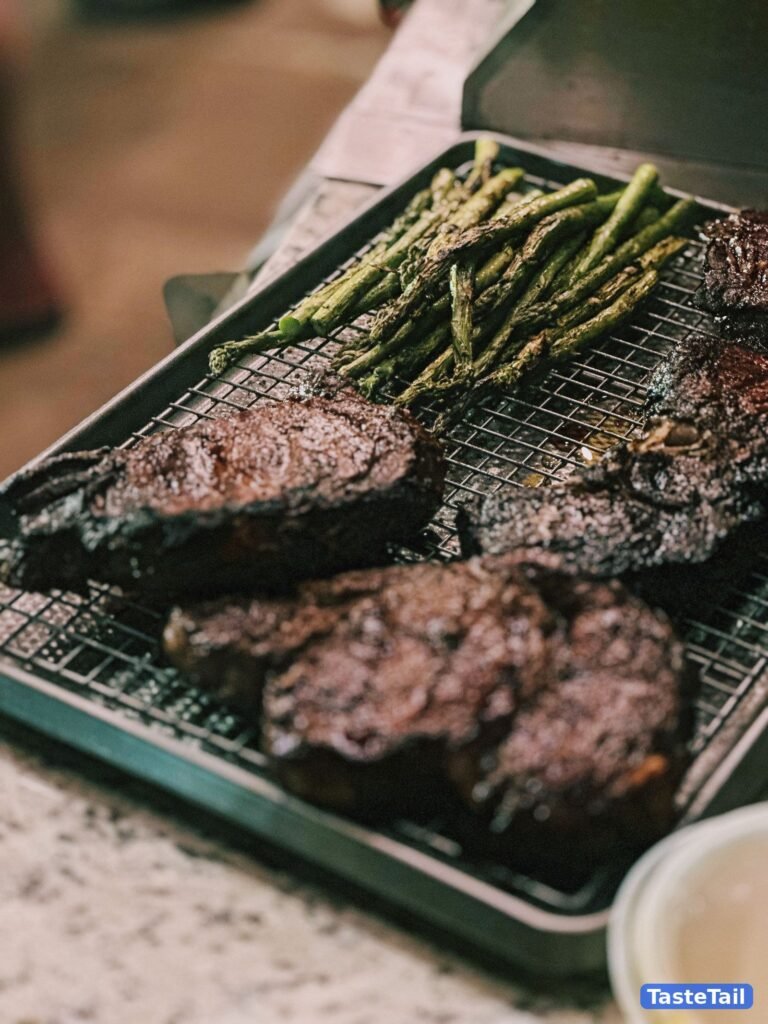
Roasted asparagus is one of the most versatile side dishes you can make. It goes with almost everything, and it looks beautiful on the plate. Serve it alongside air fryer lemon herb salmon, where the lemon in both dishes ties the meal together. Serve it with herb roasted chicken legs for a simple, satisfying dinner that needs nothing else except perhaps some bread to mop up the juices. Serve it with one-pan garlic butter steak bites for a steakhouse-style meal at home, where the asparagus provides freshness and colour against the richness of the meat.
It is also wonderful with pasta, eggs, and grains. Toss the roasted asparagus, cut into pieces, through a pasta dish with parmesan and lemon, or lay it over a grain bowl with a fried egg on top. For a light lunch, serve it at room temperature with a piece of good bread and a soft cheese. For a brunch, serve it with poached eggs and hollandaise, or simply with scrambled eggs and toast. The asparagus is bright and fresh, and it lifts whatever it is served with.
For a spring dinner party, roast two bunches and arrange them on a platter with lemon wedges, shaved parmesan, and a drizzle of good olive oil. It looks elegant, it tastes wonderful, and it takes twenty minutes. If you are planning a menu, a main course like easy chicken dinner with few ingredients keeps things simple, and the asparagus makes the meal feel complete. It is a side dish that does not try to steal the show, but it often ends up being the thing people remember.
Storage
Roasted asparagus is best eaten fresh from the oven, while it is still warm and the tips are crisp. That said, leftovers keep well in the fridge for two to three days in an airtight container. The asparagus will soften a little as it sits, and the tips will lose some of their crispness, but the flavour will still be good. Serve leftovers at room temperature, or warm them gently in a low oven for a few minutes. Avoid microwaving them, because the microwave will make them soggy.
Leftover roasted asparagus is wonderfully useful. Chop it and toss it through pasta, add it to a frittata or an omelette, lay it on a pizza, or blend it into a soup with stock and cream. It is also good chopped into a grain salad with lemon, herbs, and feta. Do not throw it away. A little leftover asparagus can turn a plain lunch into something special, and it is far too good to waste.
Do not freeze roasted asparagus. Freezing will make it limp and watery, and the texture will not recover. If you have a lot of fresh asparagus and you want to preserve it, blanch it briefly in boiling water, refresh it in ice water, and freeze it raw. That will give you a much better result than freezing it after roasting. Fresh asparagus also keeps well in the fridge for a few days if you stand the spears upright in a jar with an inch of water, like flowers, and cover the tips loosely with a bag.
Variations
Once you have the basic recipe, there are many ways to change it. For a Mediterranean version, add cherry tomatoes to the tray for the last five minutes of roasting, and finish with crumbled feta and a drizzle of balsamic. For an Asian-inspired version, toss the roasted asparagus with soy sauce, sesame oil, and toasted sesame seeds. For a smoky version, sprinkle over smoked paprika before roasting and finish with a squeeze of lime instead of lemon. For a cheesy version, sprinkle grated parmesan over the asparagus for the last two minutes of cooking, so it melts and crisps slightly.
You can also change the cooking method. Asparagus is wonderful on the grill, where it picks up a smoky char, and in the air fryer, where it cooks quickly and crisps at the tips. For the air fryer, cook at 400 degrees Fahrenheit for seven to nine minutes, shaking the basket halfway through. For the grill, toss the spears with oil and salt, lay them perpendicular to the grates so they do not fall through, and grill for three to four minutes per side. The lemon finish is the same, no matter how you cook them.
In spring, try white asparagus if you can find it. It is milder and more delicate than green asparagus, and it needs peeling before cooking. In autumn, try roasting asparagus with mushrooms and thyme, which gives you a heartier, more savoury side dish. The basic method stays the same, so you can adapt it to the season and to whatever is in your fridge.
Frequently Asked Questions
How do I know when asparagus is done?
Asparagus is done when it is bright green, tender when pierced with a knife, and lightly browned at the tips. Thin spears take about ten minutes at 425 degrees, thick spears take up to fifteen minutes. The spears should bend slightly when you lift them, but they should not flop over completely. If they are limp and olive green, they are overcooked. It is better to check early and take them out a minute before you think they are ready, because they will continue to cook a little on the hot tray.
Should I peel asparagus before roasting?
Thin asparagus does not need peeling. Thick asparagus benefits from peeling the lower third of the stalk, because the outer layer can be tough and fibrous. Use a vegetable peeler and peel lightly, from just below the tip down to the cut end. It is an extra step, but it makes a noticeable difference to the texture, especially with spears that are thicker than your thumb.
Can I roast asparagus ahead of time?
Yes, you can roast asparagus a few hours ahead and serve it at room temperature. It holds well, and the flavour is still good. If you want to serve it warm, roast it, let it cool, and reheat it in a hot oven for three to four minutes just before serving. Do not add the lemon juice until you are ready to serve, because the acid can dull the colour if it sits for too long.
What goes well with roasted asparagus?
Roasted asparagus goes with almost everything. It is classic with salmon, chicken, steak, and eggs. It is good with pasta, grains, and salads. It is wonderful on its own with a little parmesan and lemon, and it is a natural partner for spring dishes like risotto and frittata. If you are unsure what to serve it with, think of it as a green vegetable that likes lemon, garlic, butter, and cheese, and build your meal around those flavours.
How do I store fresh asparagus?
Stand the spears upright in a jar or glass with an inch of cold water, cover the tips loosely with a plastic bag, and keep the jar in the fridge. The asparagus will stay fresh for three to four days this way. Alternatively, wrap the cut ends in a damp paper towel and store the bunch in a bag in the crisper drawer. Do not wash asparagus until you are ready to cook it, because moisture will make it spoil faster.
One thought on “Roasted Asparagus with Lemon”