
There are few things that say summer quite like corn on the cob. It is sweet, it is juicy, it is a little messy, and it is best eaten outside, with butter running down your chin and no one minding at all. Add garlic butter, and it becomes something more than a simple side dish. The butter melts into the kernels, the garlic adds warmth and depth, and a little parsley and salt bring everything together. It is the kind of food that makes a barbecue feel like a barbecue, and a weeknight dinner feel like a small celebration.
I make garlic butter corn all summer long, whenever corn is sweet and fresh. The method is simple, and there are two ways to cook the corn, boiled or grilled, and both work beautifully. Boiling is quicker and more reliable, especially if you are cooking for a crowd. Grilling gives you a smoky char and a deeper flavour, and it is worth doing if the barbecue is already lit. Either way, the garlic butter is the star, and you should make plenty of it. There is no such thing as too much garlic butter on corn, and any leftover butter is wonderful on bread, potatoes, or grilled vegetables.
What makes this recipe work is the quality of the corn. Fresh corn, bought the same day you cook it, will be sweet and tender, with kernels that pop when you bite them. Corn that has been sitting in the fridge for a week will be starchy and less sweet, because the sugars in corn turn to starch quickly after picking. Buy corn with bright green husks that feel damp, not dry, and with silk that is pale and slightly sticky, not brown and dry. Peel back a little of the husk and look at the kernels. They should be plump, even, and milky when you press a nail into one. If they look shrivelled or dented, choose another ear.
This is a side dish that brings people to the table. It is good with grilled chicken, sausages, steak, burgers, and fish. It is good on its own, with nothing else except a cold drink and good company. It is also a dish that children love, because it is fun to eat and sweet to taste. If you are planning a summer meal, this corn is the place to start, and everything else can be built around it. For more corn ideas, the BBC Good Food corn collection is full of inspiration, and The Kitchn guide to cooking corn covers the basics well.
Ingredients
You will need four ears of fresh corn, husked and cleaned, four tablespoons of unsalted butter, three cloves of garlic finely minced, half a teaspoon of fine salt, a quarter of a teaspoon of black pepper, a tablespoon of fresh parsley finely chopped, and optionally a pinch of chilli flakes, a squeeze of lime juice, and two tablespoons of grated parmesan cheese. The chilli, lime, and parmesan are optional, but they each add something different. Chilli gives warmth, lime gives brightness, and parmesan gives a salty, savoury finish.
Use real butter, not margarine and not a spread. Butter is the base of the sauce, and its flavour matters. Unsalted butter lets you control the salt, which is important because corn is naturally sweet and too much salt will overpower it. If you only have salted butter, use it, but reduce the added salt by half and taste before you add more. The garlic should be fresh, not jarred, because fresh garlic has a cleaner, brighter flavour that jarred garlic cannot match. Mince it finely, so it distributes evenly through the butter and does not burn in clumps.
The parsley should be fresh, not dried. Dried parsley has very little flavour, and it will not give you the fresh, green note that makes the butter taste alive. Flat-leaf parsley is best, but curly parsley will work if that is what you have. Chop it finely, and add it at the end, after the butter has cooled slightly, so it stays bright green and does not wilt into the hot butter. If you do not like parsley, try chives, basil, or coriander, all of which work well with corn and garlic.
A note on corn: buy it the day you plan to cook it if you can. If you must buy it ahead, keep it in the fridge with the husks on, and cook it within two days. Once the corn is husked, cook it as soon as possible, because the kernels will start to dry out. If you are cooking for a crowd, buy an extra ear or two. Corn on the cob disappears quickly, and someone always wants a second ear.
How to Make Garlic Butter Corn on the Cob
Start by making the garlic butter, because it needs a few minutes for the flavours to come together. Melt the butter in a small saucepan over low heat. Add the minced garlic and cook it gently for one minute, stirring constantly, until it is fragrant but not browned. Garlic burns quickly, and burnt garlic is bitter, so keep the heat low and watch it closely. As soon as you can smell the garlic, remove the pan from the heat. Stir in the salt, pepper, and chilli flakes if you are using them. Let the butter cool for a few minutes, then stir in the parsley. Taste it and adjust the salt. The butter should taste rich, garlicky, and well seasoned. Set it aside while you cook the corn.
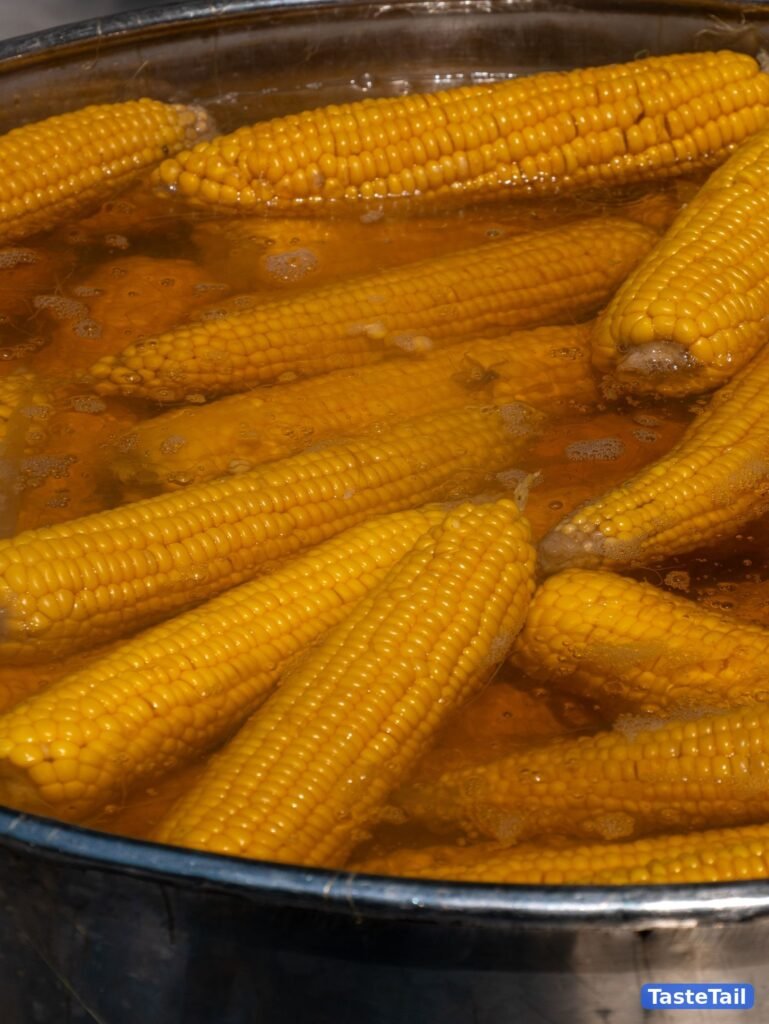
To boil the corn, bring a large pot of water to a rolling boil. Do not add salt to the water, because salt can make the kernels tough. Add the husked corn, making sure the ears are fully submerged, and cook for four to five minutes. Fresh, sweet corn does not need long. Four minutes is enough for tender kernels, and five minutes will give you a slightly softer result. Do not overcook it. Overcooked corn is starchy and dull, while properly cooked corn is sweet, juicy, and crisp. Use tongs to lift the corn out of the water and let it drain for a minute.
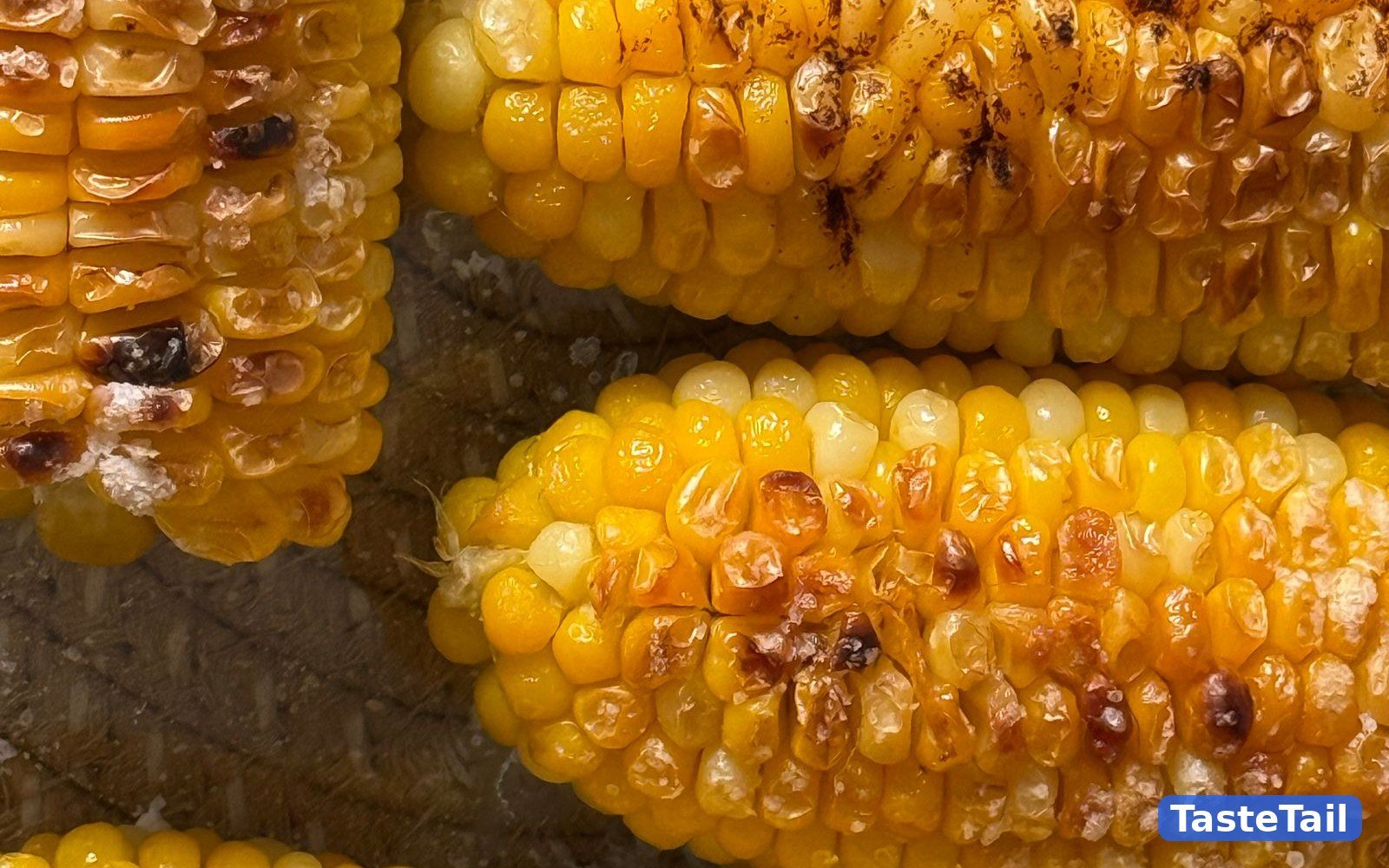
To grill the corn, heat the grill or barbecue to medium-high. Brush the husked corn lightly with oil, and grill the ears directly over the heat, turning them every two minutes, for eight to ten minutes in total. The corn is done when it is tender and lightly charred in places. The char adds a smoky flavour that is wonderful with garlic butter. If you prefer, you can grill the corn in its husk. Soak the ears in water for ten minutes first, then grill them in the husk for fifteen minutes, turning occasionally. The husk will steam the corn inside, and you will peel it back before serving. Both methods work, so choose whichever suits your grill.
While the corn is still hot, brush it generously with the garlic butter. Use a pastry brush, or simply spoon the butter over the corn and let it melt into the kernels. Turn the ear as you brush, so the butter coats all sides. Sprinkle over the parmesan if you are using it, and squeeze over a little lime juice if you like. Serve immediately, while the corn is hot and the butter is still melting. Put extra garlic butter on the table, because someone will always want more. Serve the corn on a platter, with napkins, because this is a dish that is meant to be eaten with your hands.
Tips for the Best Corn on the Cob
Do not overcook the corn. This is the most important tip, and it is the one that makes the difference between sweet, juicy corn and starchy, dull corn. Fresh corn needs only four to five minutes in boiling water, or eight to ten minutes on the grill. If you are unsure, taste a kernel. It should be tender and sweet, with a slight pop when you bite it. If it is chewy or starchy, it has been cooked too long, or the corn was not fresh to begin with.
Do not salt the boiling water. Salt in the water can toughen the kernels and make them less sweet. Season the corn after it is cooked, with salted garlic butter and a little flaky salt if you like. The butter carries the salt into the kernels, and the result is better seasoned than corn boiled in salted water. Sugar in the water is also unnecessary. Fresh corn is sweet enough on its own, and sugar will not make old corn taste fresh.
Make the garlic butter ahead if you like. You can make it up to two days ahead and keep it in the fridge. Warm it gently before you use it, just until it is liquid, and stir in the parsley at the last minute. You can also make a double batch and freeze half of it in a small container. Frozen garlic butter is useful for vegetables, bread, and pasta, and it thaws quickly at room temperature. It is one of those small preparations that makes weeknight cooking easier.
Cook the corn just before serving. Corn on the cob is best eaten hot, straight from the pot or the grill. If you cook it too early and let it sit, it will cool, dry out, and lose its sweetness. Time the corn so it is ready when everything else is ready, and serve it immediately. If you must hold it for a few minutes, keep it in the pot with the lid on, or wrap the grilled ears in foil. Ten minutes is fine. Thirty minutes is too long.
Serving Ideas
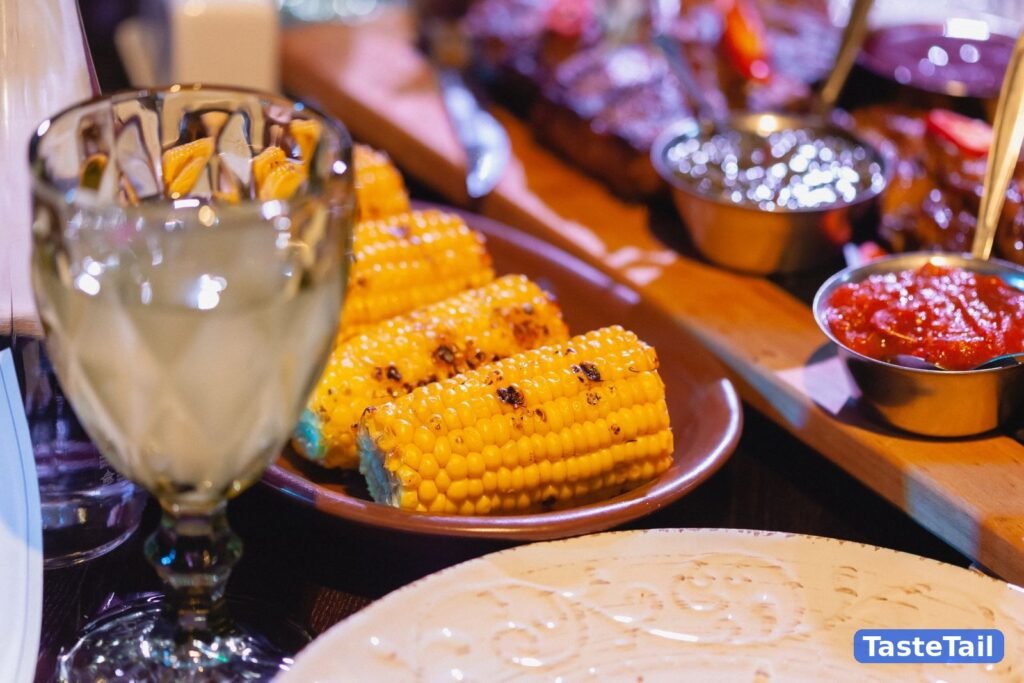
Garlic butter corn is a natural partner for grilled and barbecued food. Serve it with air fryer chicken thighs without breading for a simple weeknight dinner, or with one-pan sausage and peppers for a hearty meal that needs nothing else. It is wonderful with burgers, steak, and grilled fish, and it is a classic at a barbecue alongside coleslaw, potato salad, and baked beans. For a lighter meal, serve it with a green salad and some good bread, and let the corn be the star.
It is also a great dish for a crowd. Cook a large pot of corn, set out a bowl of garlic butter and a plate of toppings, and let everyone butter their own ear. Toppings to try include parmesan, chilli flakes, lime wedges, smoked paprika, and crumbled feta. A topping bar is fun, it is interactive, and it lets people make the corn their own. Children love choosing their own toppings, and adults do too.
For a family dinner, this corn makes a lovely side to a main course like teriyaki chicken stir fry bowls, where the sweet corn balances the savoury sauce, or alongside air fryer buffalo cauliflower bites for a spread of finger food that everyone can share. Serve it on a big platter in the middle of the table, and let people help themselves. It is a dish that brings people together, and that is the best kind of side dish.
Storage
Leftover corn on the cob will keep in the fridge for three to four days. Wrap each ear tightly in cling film, or place the ears in an airtight container. The butter will solidify in the fridge, so reheat the corn gently before serving. The microwave works well. Wrap the corn in a damp paper towel and heat it for one to two minutes, until it is hot through. You can also reheat it in a pan with a little butter, turning it occasionally, until it is warm and the butter has melted again.
Do not leave cooked corn at room temperature for more than two hours, and less than that on a hot day. Corn is a fresh food, and it will spoil quickly in the heat. If you are serving corn at a barbecue, keep the cooked ears in a covered dish, and put any leftovers in the fridge as soon as the meal is over. Leftover corn is also good cut off the cob and added to salads, soups, and fried rice, so do not throw it away.
You can freeze cooked corn, but the texture will change. Cut the kernels off the cob, place them in a freezer bag, and freeze them for up to three months. Frozen corn kernels are good in soups, stews, and stir-fries, where a slightly softer texture does not matter. They are less good on their own, because they will not have the same crisp, juicy bite as fresh corn. For best results, eat corn fresh, and freeze only what you cannot use within a few days.
Variations
Mexican street corn is a popular variation, and it is easy to make with this garlic butter as a base. After you brush the corn with garlic butter, spread a little mayonnaise over each ear, sprinkle it with crumbled cotija cheese or feta, and finish it with chilli powder and a squeeze of lime. The result is creamy, salty, tangy, and a little spicy, and it is a wonderful change from plain buttered corn. Serve it with lime wedges and extra chilli on the side.
For a herby version, swap the parsley for basil, chives, or dill, and add a little lemon zest to the butter. Lemon zest gives a bright, fresh note that works beautifully with corn, and it is especially good if you are serving the corn with fish or chicken. For a smoky version, add half a teaspoon of smoked paprika and a pinch of cumin to the butter, and finish the corn with a little crumbled bacon if you like. The smokiness pairs well with grilled corn and with the char from the barbecue.
For a spicy version, increase the chilli flakes, or add a finely chopped fresh chilli to the butter. A little hot sauce stirred into the butter also works well, and it is an easy way to add heat without changing the method. If you are cooking for children, leave the chilli out of the main batch, and set out a small bowl of chilli flakes for the adults to add themselves. That way, everyone can make the corn as mild or as spicy as they like.
FAQ
How long should I boil corn on the cob?
Fresh corn needs only four to five minutes in a large pot of rolling boiling water. Four minutes gives you tender, slightly crisp kernels, and five minutes gives you a softer result. Do not overcook it, because overcooked corn is starchy and dull. If you are cooking older corn, or corn that has been in the fridge for a few days, you may need an extra minute, but fresh corn should never need more than five minutes. Use tongs to lift the corn out, and serve it immediately.
Should I add salt to the water when boiling corn?
No, do not add salt to the boiling water. Salt can make the kernels tough and less sweet. Season the corn after it is cooked, with salted garlic butter and a little flaky salt if you like. The butter carries the salt into the kernels, and the result is better seasoned than corn boiled in salted water. Sugar in the water is also unnecessary, because fresh corn is sweet enough on its own.
Can I grill corn on the cob in the husk?
Yes, you can grill corn in the husk. Soak the ears in cold water for ten minutes first, so the husks do not catch fire, then grill them over medium-high heat for about fifteen minutes, turning occasionally. The husk will steam the corn inside. Peel the husk back before serving, and brush the corn with garlic butter. Grilling in the husk gives you a gentler, steamed flavour, while grilling without the husk gives you a smoky char. Both are good.
How do I store leftover corn on the cob?
Wrap each ear tightly in cling film, or place the ears in an airtight container, and keep them in the fridge for three to four days. Reheat the corn in the microwave, wrapped in a damp paper towel, for one to two minutes, or in a pan with a little butter. You can also cut the kernels off the cob and freeze them for up to three months, for use in soups, stews, and stir-fries. Do not leave cooked corn at room temperature for more than two hours.
Can I make garlic butter corn ahead of time?
You can make the garlic butter up to two days ahead and keep it in the fridge, then warm it gently before you use it. The corn itself is best cooked just before serving, because it loses its sweetness and texture if it sits. If you must cook it ahead, keep it warm in the pot with the lid on, or wrapped in foil, for no more than ten minutes. For a barbecue, cook the corn in batches so there is always a fresh batch ready.