
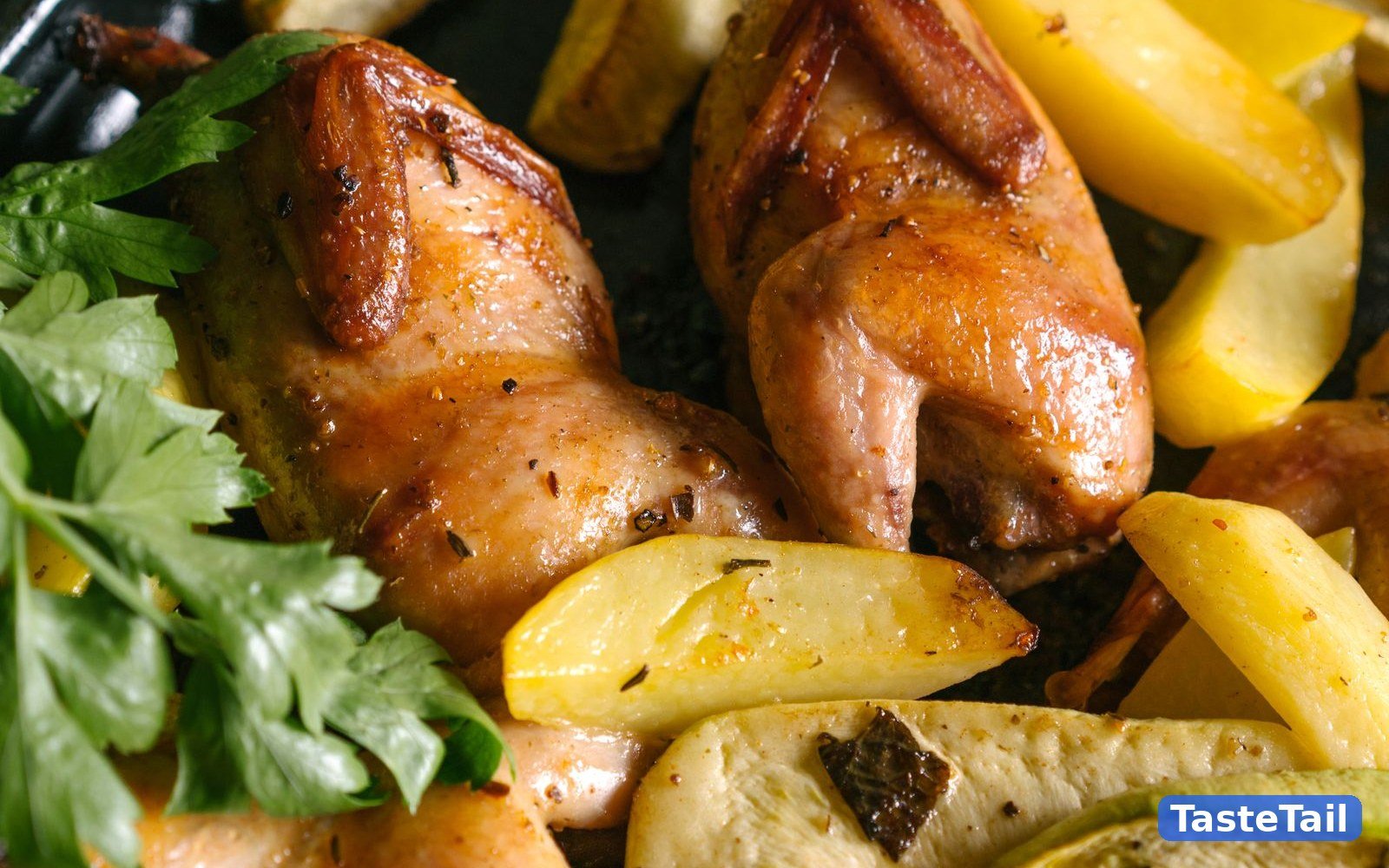
There is something deeply satisfying about a tray of roasted chicken legs coming out of the oven — the skin golden and crisp, the smell of garlic and rosemary filling the kitchen, the meat so juicy it practically falls off the bone. It is one of the oldest, simplest dinners there is, and it is also one of the best. No fancy technique, no expensive ingredients, no long list of steps. Just good chicken, fresh herbs, a hot oven, and a little patience.
Chicken legs are one of the most underrated cuts in the supermarket. They are cheaper than breasts, more forgiving to cook, and — in my opinion — more flavourful. The dark meat stays juicy even if you leave it in the oven a few minutes too long, and the skin crisps up beautifully in a way that breast meat never quite manages. If you have ever been disappointed by dry baked chicken breasts, chicken legs are your answer. They are almost impossible to overcook, and they taste like a proper Sunday dinner even on a Tuesday.
I make this recipe at least once a week, and it has become the dinner I reach for when I want something that feels like a real meal without any real effort. The prep takes about ten minutes: a quick herb rub, a squeeze of lemon, and the chicken goes into the oven. While it roasts, there is time to make a salad, set the table, or just sit down for a few minutes. An hour later, dinner is ready, and the kitchen smells wonderful. It is the kind of cooking that makes a house feel like a home.
What I love most about this dish is how it brings people to the table. There is something about a tray of roasted chicken that makes everyone show up on time. It is generous, it is comforting, and it is the kind of food that does not need a special occasion. Serve it with roasted potatoes and a green vegetable, and you have a complete dinner that costs very little and tastes like a great deal more.
Why Herb Roasted Chicken Legs Work So Well
Chicken legs are built for roasting in a way that chicken breasts simply are not. The dark meat has more fat and more connective tissue, which means it stays moist during a long roast and actually gets better as it cooks. Where a breast dries out past 165°F, a leg stays juicy well beyond that, and the meat becomes more tender as the connective tissue breaks down. This is why legs are so forgiving — a few extra minutes in the oven will not ruin them, and that forgiveness is worth a great deal on a busy evening.
The second reason this recipe works is the skin. Chicken skin, when it is properly dried and roasted at a high temperature, turns into something wonderful: crisp, golden, and deeply savoury. The key is to pat the skin very dry before it goes into the oven, and to roast at a high enough temperature that the fat renders out and the skin crisps rather than steams. A little oil rubbed over the skin helps it brown evenly, and the herb rub underneath and on top gives it flavour all the way through. If you have ever wondered why restaurant roast chicken has such good skin, this is the secret — dry skin and a hot oven.
Third, the herb rub does real work here. Garlic, rosemary, thyme, and lemon are a classic combination for a reason: they are bold enough to stand up to the rich flavour of dark meat, and they complement it rather than competing with it. The herbs go under the skin as well as on top, so the flavour reaches the meat itself, not just the surface. And as the chicken roasts, the herbs release their oils into the pan juices, which become a light, fragrant sauce that is wonderful spooned over the chicken and whatever you serve alongside it.
Finally, this is a true one-pan dinner. The chicken roasts in a single pan, and you can add vegetables to the same pan — potatoes, carrots, onions — and they will roast in the chicken drippings, picking up flavour that no amount of seasoning could replicate. It is efficient, it is delicious, and it means there is only one pan to wash at the end of the night. That is a kind of cooking that respects your time and your energy.
Ingredients
The ingredient list is short and simple, which is exactly how it should be for a roast chicken dinner. The herbs are the stars, so use fresh ones if you can — they make a real difference here. If you only have dried herbs, they will work, but use about a third as much, since dried herbs are more concentrated.
- 8 chicken legs (drumsticks), about 3 to 3 1/2 pounds total
- 2 tablespoons olive oil
- 6 cloves garlic, minced
- 1 tablespoon fresh rosemary, finely chopped
- 1 tablespoon fresh thyme leaves
- 1 teaspoon fresh oregano leaves, chopped, or 1/2 teaspoon dried oregano
- 1 teaspoon kosher salt
- 1/2 teaspoon black pepper
- 1/2 teaspoon paprika
- 1/4 teaspoon red pepper flakes, optional
- 1 lemon, halved
- 1 tablespoon Dijon mustard, optional
- Fresh parsley, chopped, for serving
- Lemon wedges, for serving
A note on the chicken: look for legs that are roughly the same size so they cook evenly. If your supermarket sells drumsticks and thighs separately, this recipe works beautifully with either, or with a mix of both. Bone-in, skin-on pieces are essential — the bone keeps the meat juicy and adds flavour, and the skin is what crisps up so beautifully. Boneless, skinless legs will cook faster and will not give you that crispy skin, so save those for another recipe.
For the herbs, fresh rosemary and thyme are the classic pair for roast chicken, and they are worth buying fresh. Rosemary is woody and piney; thyme is earthy and gentle. Together, with garlic and lemon, they are the flavour of a proper roast. If you have a herb garden, this is the recipe to use it in. If you do not, a small packet of each from the supermarket is inexpensive and will last for a few recipes. And if you only have dried herbs, use one teaspoon of dried rosemary and one teaspoon of dried thyme, and rub them between your palms before adding them to release their oils.
How to Make Herb Roasted Chicken Legs
Start by heating your oven to 425°F (220°C). A hot oven is essential for crispy skin, so do not be tempted to use a lower temperature. While the oven heats, line a large rimmed baking sheet or a roasting pan with parchment paper or foil for easy cleanup, and place a wire rack inside if you have one. The rack is not essential, but it lifts the chicken above the pan juices so hot air can circulate underneath, and that helps the skin crisp on all sides.
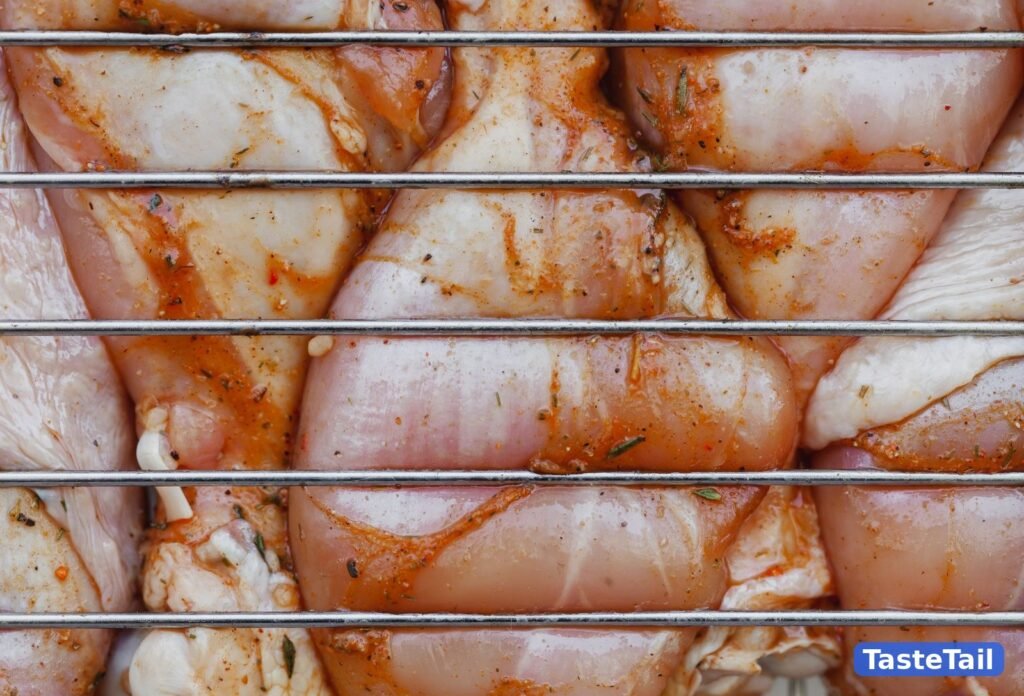
Pat the chicken legs very dry with paper towels, on all sides. This is the most important step in the whole recipe. Wet skin steams; dry skin crisps. Take your time with it, and use plenty of paper towels. Once the chicken is dry, place it in a large bowl. In a small bowl, mix together the olive oil, minced garlic, rosemary, thyme, oregano, salt, pepper, paprika, red pepper flakes, and Dijon mustard if you are using it. The mustard is optional, but it adds a lovely tang and helps the herb rub stick to the skin.
Pour the herb mixture over the chicken and rub it in with your hands, making sure every leg is coated on all sides. If you have a little extra time, gently lift the skin on each leg and rub some of the herb mixture directly onto the meat underneath. This is a small step that makes a big difference, because it flavours the meat itself rather than just the skin. It takes about a minute, and it is worth doing whenever you have the time.
Arrange the chicken legs on the prepared baking sheet or rack in a single layer, skin side up, leaving a little space between them. They should not be touching — crowded chicken steams instead of roasting, and you will lose the crispy skin you are working for. Squeeze half the lemon over the chicken, then cut the squeezed half into pieces and tuck them around the pan with the other half, cut into wedges. The lemon roasts in the pan juices and becomes soft, sweet, and wonderful squeezed over the finished chicken.
Roast for 40 to 45 minutes, until the skin is deep golden brown and crisp, and the meat is cooked through. The USDA safe minimum internal temperature for chicken is 165°F, but chicken legs are at their best when they reach 175°F to 185°F, where the connective tissue has broken down and the meat is fall-off-the-bone tender. Check the temperature at the thickest part of the leg, away from the bone. If the skin is browning too fast, you can tent the pan loosely with foil for the last ten minutes, but in most ovens this will not be necessary.
Let the chicken rest for five to ten minutes before serving. This lets the juices redistribute through the meat, and it gives the skin a chance to stay crisp rather than going soft under a cover. While the chicken rests, spoon some of the pan juices over the legs, or save the juices to serve on the side. Scatter fresh parsley over the top, and serve with lemon wedges for squeezing. The roasted lemon pieces from the pan are wonderful squeezed over the chicken — they are soft, sweet, and nothing like raw lemon.
Tips for the Crispiest Skin
Crispy skin is the whole point of roast chicken legs, and it comes down to three things: dry skin, high heat, and space. Pat the skin as dry as you can before the herb rub goes on, and if you have time, leave the uncovered chicken legs in the refrigerator for a few hours or overnight. The dry air of the fridge dries the skin out even further, and the difference in crispness is noticeable. This is the same technique used for roast duck and for the best roast chicken in restaurants, and it works just as well at home.
High heat matters too. A 425°F oven is hot enough to render the fat from under the skin quickly and crisp it up before the meat overcooks. A lower temperature will cook the meat fine, but the skin will be soft and pale rather than golden and crisp. If your oven runs cool, you can go up to 450°F — just keep an eye on the herb rub, which can darken if it is very thick. And do not open the oven door too often to check. Every time you open it, the temperature drops, and the skin loses its momentum.
Space is the third factor, and it is the one people forget most often. Chicken legs that are crowded together will steam, no matter how hot the oven is. Use a large pan, leave a gap between each piece, and use two pans rather than one if you need to. A wire rack helps too, because it lets hot air circulate underneath the chicken and keeps the bottom of each leg from sitting in the pan juices and going soft.
Finally, do not cover the chicken while it roasts, and do not cover it while it rests. Foil traps steam, and steam is the enemy of crispy skin. Let the chicken rest uncovered on the pan for five to ten minutes, and the skin will stay crisp. If you are worried about it cooling down, do not be — a large tray of roasted chicken holds its heat well, and five minutes of resting will not make it cold.
Serving Ideas

The classic way to serve herb roasted chicken legs is with roasted potatoes and a green vegetable, and it is a classic for a reason. The potatoes roast in the same oven at the same time — cut them into chunks, toss them in olive oil and salt, and put them in the oven about ten minutes before the chicken, or in the same pan around the chicken for the last thirty minutes. They will pick up flavour from the chicken drippings, and they are wonderful with the pan juices spooned over them. For the green vegetable, our roasted asparagus with lemon is a beautiful partner, and it roasts at the same temperature.
A simple salad is another excellent choice. A green salad with a sharp vinaigrette cuts through the richness of the chicken skin, and a coleslaw adds crunch and freshness. If you want something warm and comforting, steamed green beans with butter and almonds, or glazed carrots with a little honey, are both lovely. And crusty bread is never a bad idea — there are pan juices to mop up, and bread is the right tool for the job.
For a lighter meal, serve the chicken legs over a big salad, with the warm chicken on top of crisp lettuce, cucumber, and tomatoes. The heat of the chicken wilts the lettuce just slightly, and the pan juices act as a dressing. It is a wonderful way to eat roast chicken in warmer weather, when a heavy plate of potatoes feels like too much. Or serve the legs with rice and a spoonful of the pan juices — simple, satisfying, and ready in the time the chicken takes to roast.
If you are cooking for a crowd, this recipe scales up beautifully. Double the chicken, use two pans, and rotate them halfway through cooking so they brown evenly. It is the kind of dinner that works for a family gathering, a casual dinner party, or a Sunday lunch, and it always feels generous. And if you want another chicken dinner with a completely different flavour, try our baked pesto chicken with mozzarella — herby, cheesy, and just as easy. Or, if you need something fast, our easy chicken dinner with few ingredients is a good one to keep in mind.
Storage and Leftovers
Leftover roast chicken legs keep well in the refrigerator for three to four days, stored in an airtight container. The skin will soften in the fridge — that is unavoidable — but you can crisp it up again when you reheat. The best way to reheat is in a hot oven: place the legs on a baking sheet and warm them at 400°F for about ten minutes, until the skin is crisp again and the meat is heated through. The microwave will heat the meat, but the skin will stay soft, so the oven is worth the extra time.
Leftover chicken legs are also wonderful cold, pulled off the bone and used in other dishes. The meat is flavourful and tender, and it works beautifully in sandwiches, salads, wraps, and pasta. Shred it and toss it with barbecue sauce for a quick sandwich filling. Add it to a green salad with a lemon dressing for a light lunch. Or fold it into a chicken soup — the roasted flavour adds a depth that plain boiled chicken never has. If you want more ideas for using leftover chicken, our guide to easy meals with leftover chicken is full of simple options, though honestly, roast chicken legs rarely last long in our house.
You can freeze cooked chicken legs for up to three months. Let them cool completely, then wrap them individually in plastic wrap and place them in a freezer bag with the air pressed out. Thaw overnight in the refrigerator and reheat in the oven as above. The skin will not be quite as crisp after freezing, but the meat will still be juicy and flavourful. The pan juices can be frozen too — pour them into an ice cube tray and freeze them, then use the cubes to add flavour to soups, gravies, and rice dishes.
Variations to Try
This recipe is a wonderful base for variations, and the herb rub is easy to change. For a Mediterranean version, add a teaspoon of dried oregano, some lemon zest, and a handful of olives to the pan. For a smoky version, add a teaspoon of smoked paprika and a pinch of cumin to the rub. For a spicy version, add a tablespoon of harissa paste or a diced fresh chilli. The method stays exactly the same — only the seasoning changes, and the chicken is forgiving enough to carry any of them.
You can also add vegetables to the same pan. Potatoes, carrots, and onions are the classics, and they roast beautifully in the chicken drippings. Add them to the pan around the chicken, toss them in a little oil and salt, and let them cook for the full roasting time if they are cut small, or add them halfway through if they are larger. Sweet potatoes, parsnips, and Brussels sprouts are all wonderful too. Just avoid overcrowding the pan — if you are adding a lot of vegetables, use a second pan so the chicken still has room to crisp.
For a different flavour altogether, try a honey and mustard glaze: brush the legs with a mix of honey, Dijon mustard, and a little soy sauce during the last ten minutes of roasting. The glaze caramelises in the heat and gives you a sticky, sweet-savoury finish that is wonderful with the herbs. Or try a barbecue version, brushing the legs with your favourite barbecue sauce in the last ten minutes. And if you love the idea of crispy chicken thighs but want a quicker method, our air fryer chicken thighs are another great way to get golden, crispy chicken with very little effort.
Frequently Asked Questions
How long does it take to roast chicken legs?
At 425°F, chicken legs take about 40 to 45 minutes to roast, depending on their size. The skin should be deep golden brown and crisp, and the meat should be cooked through. Chicken legs are at their best when they reach 175°F to 185°F internally, where the meat is fall-off-the-bone tender. Always check the temperature at the thickest part of the leg, away from the bone, rather than relying on time alone.
How do I get crispy skin on roasted chicken legs?
Three things matter: dry skin, high heat, and space. Pat the skin very dry with paper towels before cooking, and if you have time, leave the uncovered legs in the refrigerator for a few hours so the skin dries out further. Roast at 425°F, and leave space between the pieces so they roast rather than steam. A wire rack helps hot air circulate underneath. Do not cover the chicken while it roasts or rests.
Can I use chicken thighs instead of drumsticks?
Yes, absolutely. Bone-in, skin-on thighs work beautifully in this recipe and take about the same time to cook. You can also use a mix of drumsticks and thighs, which is a nice option when you are feeding a crowd with different preferences. Boneless, skinless thighs will cook faster — about 25 to 30 minutes — but you will not get the same crispy skin.
Can I prepare herb roasted chicken legs ahead of time?
Yes. You can rub the chicken with the herb mixture up to a day ahead and keep it covered in the refrigerator. In fact, this improves the flavour, as the herbs have more time to season the meat. Take the chicken out of the fridge about 20 minutes before roasting so it is not ice cold going into the oven. You can also roast the chicken fully ahead of time and reheat it in a 400°F oven for about ten minutes to crisp the skin again.
What temperature should chicken legs be cooked to?
The USDA safe minimum internal temperature for chicken is 165°F, and that applies to chicken legs as well. However, legs taste best when cooked to 175°F to 185°F, because the extra time breaks down the connective tissue and makes the meat more tender. Unlike chicken breasts, legs do not dry out at these higher temperatures, so you can cook them with confidence. For more on safe cooking temperatures, see the BBC Good Food guide to roast chicken.
What should I serve with herb roasted chicken legs?
Roasted potatoes and a green vegetable are the classic pairing, and they can roast in the same oven at the same time. A simple green salad with a sharp vinaigrette is a lovely contrast to the rich chicken. Steamed green beans, glazed carrots, or roasted asparagus all work well. And crusty bread is perfect for mopping up the pan juices. For a lighter meal, serve the legs over a big salad with a lemon dressing.
Can I roast vegetables in the same pan as the chicken?
Yes, and it is one of the best things about this recipe. Potatoes, carrots, onions, and parsnips all roast beautifully in the chicken drippings. Cut them into even pieces, toss them in a little oil and salt, and arrange them around the chicken. Add them at the start if they are cut small, or halfway through if they are larger. Just avoid overcrowding the pan, or the chicken skin will not crisp properly.
4 thoughts on “Herb Roasted Chicken Legs”