
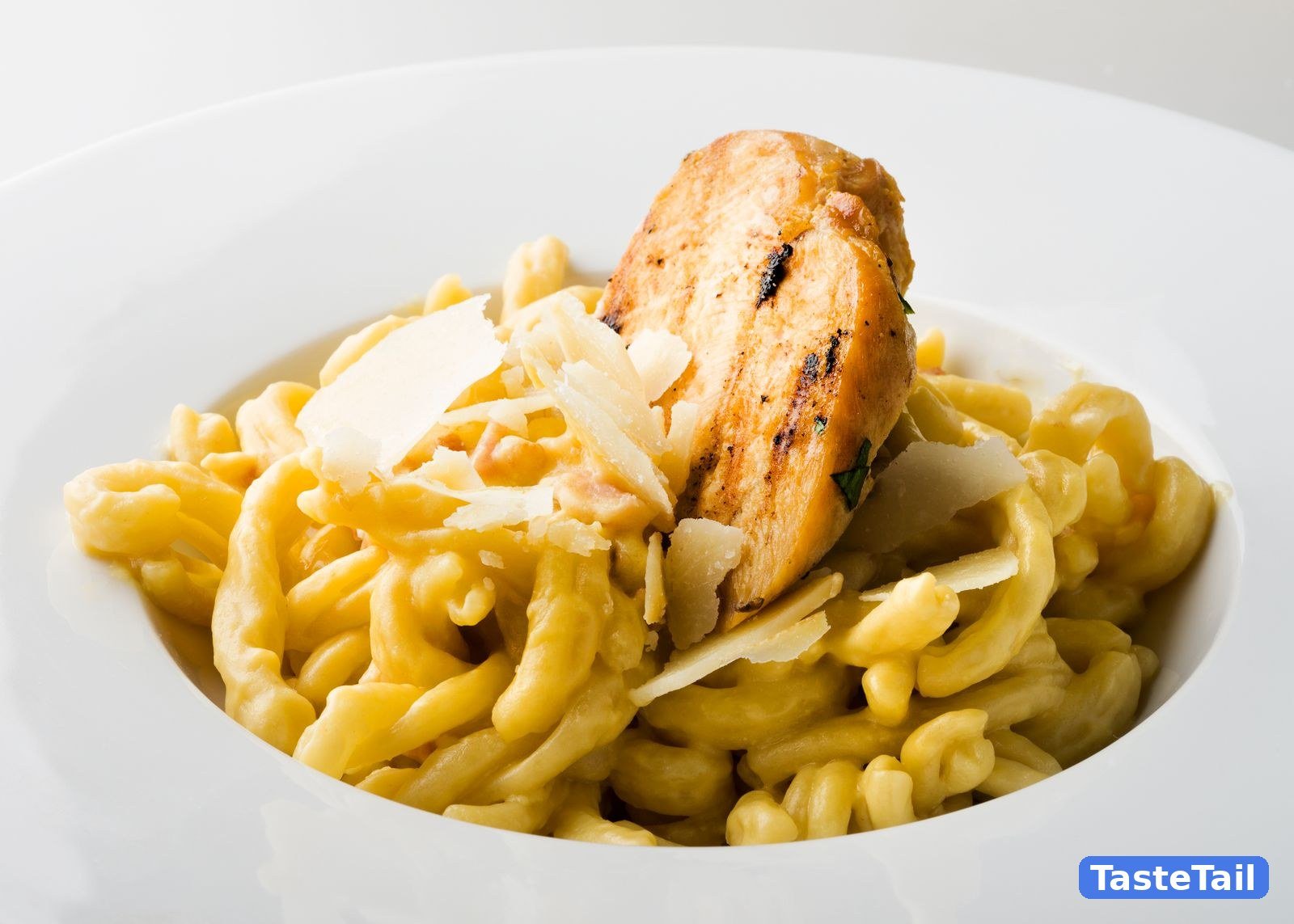
There is a particular kind of comfort that only a bowl of creamy pasta can give, and this creamy garlic chicken pasta delivers it in about thirty minutes, with one pan for the sauce and one pot for the pasta. The sauce is silky without being heavy, the garlic is present but never harsh, and the chicken stays tender because it is cooked quickly and finished gently in the sauce. It is the dinner I make when the day has been long, the fridge is uninspiring, and everyone at the table needs something that feels like a small kindness.
I learned the bones of this recipe from a neighbour years ago, a woman who cooked the way good home cooks do — by feel, with a wooden spoon, and with a firm belief that dinner should not require a second mortgage or a culinary degree. Her version had more butter than mine and less garlic than I like, but the idea was the same: brown the chicken well, build the sauce in the same pan so you keep all the flavour stuck to the bottom, and let the pasta finish in the sauce so everything tastes like it belongs together. I have made it dozens of times since, adjusting a little here and there, and this is the version that has stuck.
What I love most about this dish is how forgiving it is. The sauce comes together from pantry staples — butter, garlic, cream, Parmesan, a little chicken broth — and it is hard to get wrong. If it gets too thick, you loosen it with pasta water. If it tastes a little flat, a squeeze of lemon or an extra pinch of salt fixes it. The chicken can be breasts or thighs. The pasta can be whatever shape you have in the cupboard. It is a recipe that meets you where you are, and on a busy evening, that matters more than almost anything else.
It is also a genuinely crowd-pleasing dinner. Children love the creamy sauce and the mild garlic flavour. Adults appreciate that it tastes like something from a restaurant, not like a shortcut. And because it is all cooked in about half an hour, it works just as well for a Tuesday as it does for a casual Friday night with friends. Serve it with garlic bread and a green salad and you have a meal that feels complete without any fuss at all.
Why This Creamy Garlic Chicken Pasta Works
A good creamy pasta sauce is about balance, not richness for its own sake. Too much cream and the dish feels heavy and dull; too little and the sauce will not coat the pasta properly. This recipe finds the middle ground: enough cream to make the sauce silky, balanced by chicken broth, garlic, Parmesan, and lemon so the flavour stays bright and interesting rather than one-note. The Parmesan does more than add flavour — it helps the sauce thicken and cling to the pasta, which is why you should use real Parmesan grated fresh if you can. The pre-grated kind works, but it does not melt as smoothly, and in a sauce this simple, that difference shows.
The second reason this recipe works is the order of operations. The chicken is browned first, in a hot pan, so it develops that golden crust that adds so much flavour. Then the garlic goes into the same pan, into the same butter and chicken drippings, so the sauce is built on top of all that flavour rather than starting from nothing. This is the oldest trick in cooking — never waste the browned bits at the bottom of the pan — and it is the reason a sauce made in the chicken pan tastes so much better than one made in a clean pot.
Third, the pasta finishes in the sauce. This is not a small detail. When pasta cooks in the sauce for its last minute or two, it absorbs flavour and releases starch, which thickens the sauce and helps it cling to every strand. That is why restaurant pasta always tastes better than pasta with sauce poured over the top at home. It is a tiny extra step — just moving the pasta from pot to pan a minute early — and it changes everything.
Finally, the dish is fast in a way that respects a real weeknight. The pasta water goes on first, the chicken cooks while the pasta boils, and the sauce comes together in the time it takes the pasta to finish. You are not standing at the stove for an hour. You are cooking dinner in the time it takes to set the table and pour a glass of water, and then you are sitting down to eat.
Ingredients
The ingredient list is short and mostly pantry staples, which is part of the appeal. You do not need a special shopping trip for this one. Use the best Parmesan you can, and do not skip the fresh garlic — it is the heart of the dish, and garlic powder is not a substitute here. The rest is flexible, and I have noted where swaps work well.
- 12 ounces fettuccine, penne, or your favourite pasta shape
- 1 1/2 pounds boneless, skinless chicken breasts, sliced into thin strips
- 1 teaspoon kosher salt, plus more for the pasta water
- 1/2 teaspoon black pepper
- 1/2 teaspoon paprika
- 1/2 teaspoon Italian seasoning
- 2 tablespoons olive oil
- 4 tablespoons unsalted butter, divided
- 6 cloves garlic, minced (about 2 tablespoons)
- 1 tablespoon all-purpose flour
- 1 cup low-sodium chicken broth
- 1 1/2 cups heavy cream
- 1 cup freshly grated Parmesan cheese, plus more for serving
- 1/2 teaspoon red pepper flakes, optional
- 1 tablespoon lemon juice, freshly squeezed
- 1/4 cup fresh parsley, chopped
- Extra black pepper, for serving
A note on the pasta shape: long shapes like fettuccine and linguine are classic with a creamy sauce, and they twirl beautifully. Short shapes like penne and rigatoni are just as good, and they have the advantage of catching the sauce inside their tubes and ridges. Use whatever you have — the recipe does not care, and neither will anyone at the table. Whole wheat pasta works too, though it has a slightly nuttier flavour and a firmer bite.
For the cream, heavy cream is what gives the sauce its silkiness and its stability. It is much less likely to split or curdle than half-and-half, especially when it meets the acidity of the lemon juice at the end. If you want a lighter version, you can use half-and-half, but keep the heat low and do not let the sauce boil hard, or it may separate. If you would rather skip cream altogether, our chicken pasta without heavy cream uses a lighter sauce that is just as satisfying.
How to Make Creamy Garlic Chicken Pasta
Start by bringing a large pot of well-salted water to a boil. Salt the water generously — it should taste like the sea — because this is the only chance to season the pasta itself. While the water heats, slice the chicken into thin, even strips, about half an inch wide. Thin strips cook quickly and stay tender, and they are easy to eat with pasta. Season them on both sides with the salt, pepper, paprika, and Italian seasoning.
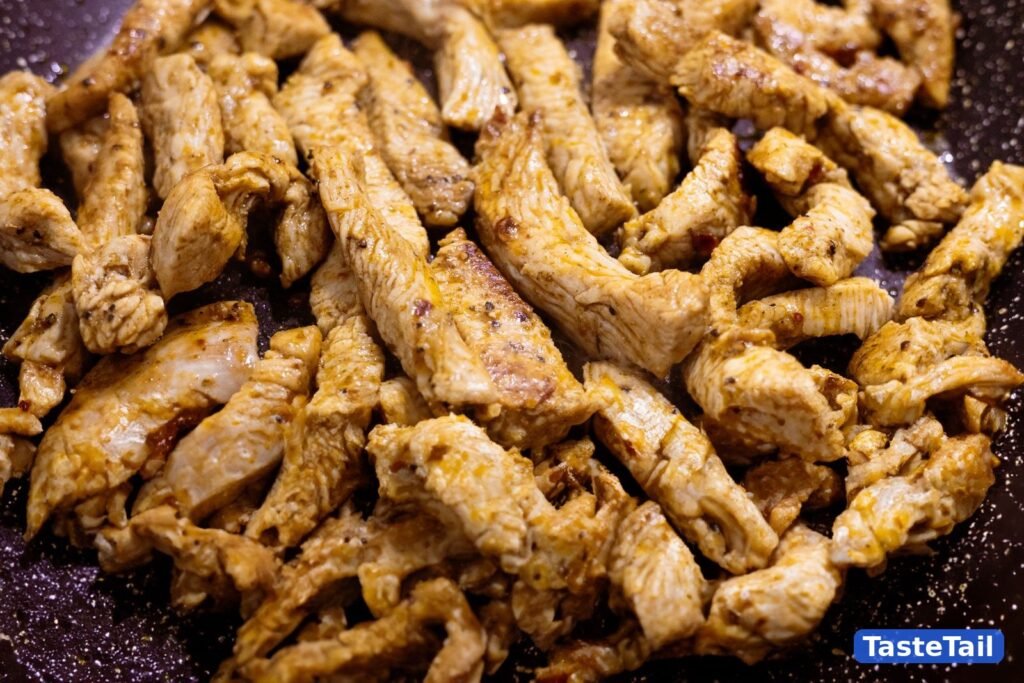
Heat the olive oil and two tablespoons of the butter in a large, deep skillet over medium-high heat. When the butter is foaming and the pan is hot, add the chicken strips in a single layer. Do not crowd the pan — cook in two batches if you need to, because crowded chicken steams instead of browning, and browning is where the flavour lives. Cook for three to four minutes per side, until golden brown and cooked through. The USDA safe minimum internal temperature for chicken is 165°F, and thin strips will reach it quickly. Transfer the cooked chicken to a plate and cover it loosely with foil.
Meanwhile, cook the pasta according to the package directions until it is one minute shy of al dente. It will finish cooking in the sauce, so you want it slightly underdone at this stage. Before you drain it, scoop out at least a cup of the starchy pasta water and set it aside — this liquid gold is your best tool for adjusting the sauce later. Drain the pasta but do not rinse it. Rinsing washes away the starch that helps the sauce cling.
Now build the sauce in the same skillet, without washing it. Lower the heat to medium and add the remaining two tablespoons of butter. When it melts, add the minced garlic and cook for about thirty seconds, stirring constantly, until it smells fragrant. Garlic burns fast, so do not walk away — thirty seconds is enough, and golden garlic is the goal, not brown garlic. Sprinkle in the flour and stir for another thirty seconds to cook out the raw flour taste. This little roux is what gives the sauce its body.
Pour in the chicken broth slowly, scraping the bottom of the pan with a wooden spoon to lift up all those browned bits from the chicken. This is called deglazing, and it is where a huge amount of the flavour comes from. Let the broth bubble for a minute, then pour in the heavy cream and stir. Bring the sauce to a gentle simmer — not a rolling boil — and let it cook for three to four minutes until it thickens enough to coat the back of a spoon. If it seems too thick, add a splash of pasta water. If it seems too thin, give it another minute.
Turn the heat to low and stir in the Parmesan a handful at a time, letting each handful melt before adding the next. Adding it all at once can make the sauce clumpy, and low heat keeps it smooth. Stir in the red pepper flakes if you are using them, and the lemon juice. Taste the sauce now and adjust the salt — the Parmesan and the broth both bring salt, so you may not need much more.
Return the chicken and any juices from the plate to the skillet, then add the drained pasta. Toss everything together with tongs for one to two minutes, until the pasta is coated and has finished cooking in the sauce. If the sauce feels too thick, add pasta water a splash at a time until it loosens to a silky consistency that coats the pasta without pooling at the bottom of the pan. Stir in half the parsley, then serve immediately in warm bowls, topped with the remaining parsley, extra Parmesan, and a good crack of black pepper.
Tips for the Best Creamy Garlic Pasta
The single most common mistake with a cream sauce is heat that is too high. Cream sauces should simmer gently, never boil hard, because high heat can make the sauce separate or the cheese turn grainy. Keep the burner at medium or lower once the cream goes in, and be patient — a gentle simmer thickens the sauce just as well as a boil, and it does it without any drama. If your sauce does split a little, take the pan off the heat and whisk in a splash of cold cream or a spoonful of pasta water; it will often come back together.
Fresh garlic matters here more than in almost any other recipe. Six cloves might sound like a lot, but garlic mellows as it cooks in butter and cream, and the result is warm and sweet rather than sharp. Use a garlic press or mince it finely by hand so it distributes evenly through the sauce. And do not let it brown — garlic that has gone past golden turns bitter, and bitterness is very hard to fix in a cream sauce. Thirty seconds in the butter is all it needs.
Do not skip the pasta water. It sounds like a fussy chef trick, but it is genuinely the most useful thing in this recipe. The starch in the water helps the sauce cling to the pasta and loosens it without thinning the flavour the way plain water would. I keep a mug of it by the stove every time I make pasta, and I use it almost every time. If you forget to save it before draining, you can use a splash of the chicken broth instead, though it will not work quite as well.
Season in layers. The pasta water is salted, the chicken is seasoned, and the sauce gets tasted before serving. This is how you end up with a dish that tastes seasoned all the way through rather than salty on the surface and bland underneath. Taste the sauce before you add the pasta, and adjust the salt and lemon then — once the pasta is in, it is much harder to fix the seasoning evenly.
Serving Ideas
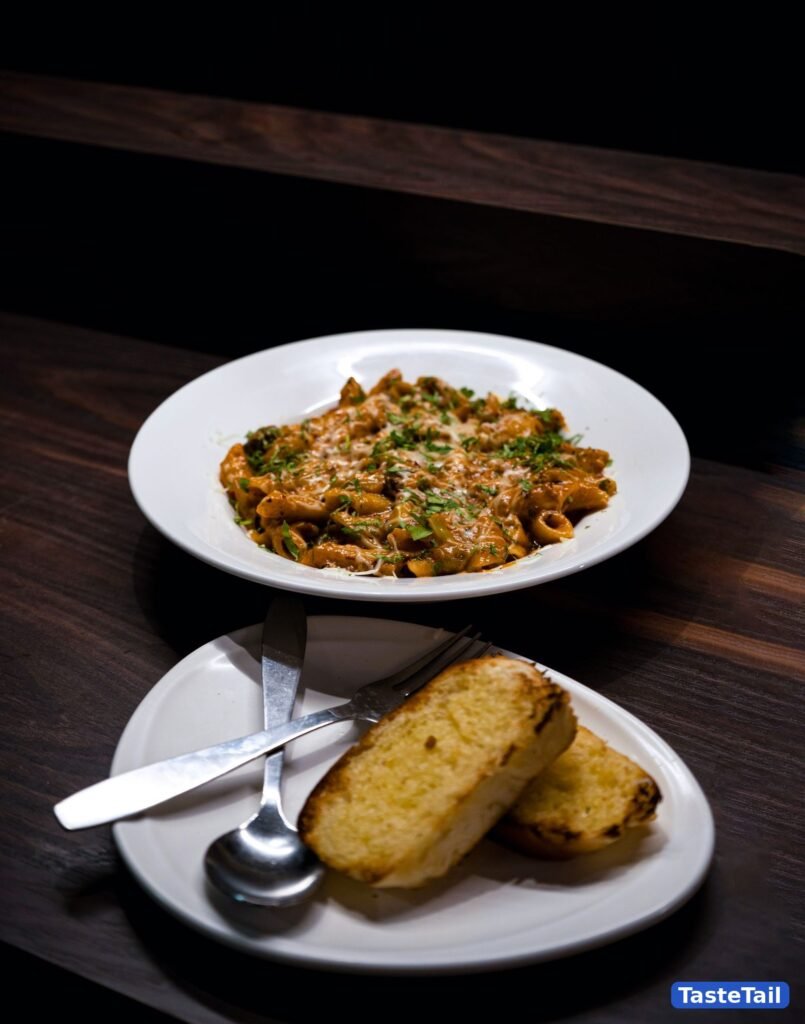
This pasta is a complete meal on its own, but a couple of simple sides turn it into a proper dinner. Garlic bread is the obvious and best choice — warm, buttery, and perfect for wiping up any sauce left in the bowl. A simple green salad with a sharp vinaigrette is the ideal contrast to the richness of the cream sauce; the acidity cuts through the richness and refreshes the palate between bites. Try a mix of lettuce, cucumber, and cherry tomatoes with a lemon dressing, and keep it simple so it does not compete with the pasta.
Roasted or steamed vegetables work well too. Broccoli, green beans, and asparagus are all natural partners for a garlic cream sauce, and you can roast them in the oven while the pasta cooks. If you want to add vegetables directly to the dish, baby spinach wilts beautifully into the sauce in the last minute, and sun-dried tomatoes add a sweet, tangy note that works wonderfully with the garlic and Parmesan. Mushrooms are another good addition — sauté them with the chicken or in the pan before the garlic goes in.
For drinks, keep it simple: sparkling water with lemon, or a crisp white wine if you like. The dish is rich enough that you do not need anything heavy alongside it. And if you are planning a fuller menu, this pasta pairs beautifully with a light starter like bruschetta or a simple soup, though honestly, most nights it is the star of the show all on its own.
If you enjoyed this recipe and want another creamy chicken dinner in your rotation, our one pan chicken Alfredo is a close cousin with an even simpler method. And if you are looking for something quicker on a truly frantic night, our 15-minute chicken dinner comes together in the time it takes to boil water. For a different flavour altogether, try our baked pesto chicken with mozzarella — the herby, cheesy baked version of a weeknight chicken dinner.
Storage and Leftovers
Creamy pasta is best eaten fresh, but leftovers are still very good if you store and reheat them properly. Keep any leftovers in an airtight container in the refrigerator for up to three days. The sauce will thicken as it cools — that is normal, and it loosens again when you reheat it.
To reheat, place the pasta in a skillet over low heat with a splash of milk, cream, or chicken broth, and stir gently until it is warmed through and the sauce is silky again. The extra liquid is important; without it, the sauce will stay thick and clumpy. The microwave works too — heat in short bursts at medium power, stirring between each burst, with a splash of milk added first — but the stovetop gives you a smoother result.
I do not recommend freezing this dish. Cream sauces tend to separate when frozen and thawed, and the pasta can go mushy. If you know you will have leftovers, it is better to store the chicken and sauce separately from the pasta, and to cook fresh pasta when you reheat. That said, the cooked chicken on its own freezes well for up to two months, and you can make a fresh sauce in ten minutes when you are ready to eat.
Variations to Try
This recipe is a wonderful base for variations. Add sliced mushrooms to the pan after the chicken comes out, and let them brown in the drippings before the garlic goes in. Stir in a few handfuls of baby spinach at the end and let it wilt into the sauce. Add sun-dried tomatoes for a sweet, tangy lift, or a handful of peas for colour and sweetness. A pinch of smoked paprika on the chicken gives the whole dish a subtle smokiness that is lovely in winter.
You can also change the protein. Shrimp cooks in just a couple of minutes and is wonderful in this sauce — add it at the end and cook just until pink. Salmon, cut into chunks, works beautifully too. And for a vegetarian version, skip the chicken and double the mushrooms, or add roasted cauliflower and white beans for something hearty and satisfying. The sauce itself is the star, and it is generous enough to carry whatever you put in it.
For a lighter version, use half-and-half instead of heavy cream and keep the heat low so it does not split, or use a little less Parmesan and a little more broth. You can also use whole wheat pasta for extra fibre. And if you want a bit of heat, increase the red pepper flakes or add a diced fresh chilli with the garlic. The recipe bends easily in all of these directions without losing what makes it good.
Frequently Asked Questions
Can I use milk instead of heavy cream?
You can, but the sauce will be thinner and more likely to split, especially once the lemon juice goes in. If you use milk, keep the heat very low, do not let the sauce boil, and consider adding an extra tablespoon of flour to the roux to help it thicken. Half-and-half is a safer swap than whole milk. For the most reliable result, heavy cream is worth using — a little goes a long way, and the sauce stays silky.
How do I keep the sauce from splitting?
Low, gentle heat is the answer. Once the cream goes in, keep the sauce at a gentle simmer, never a hard boil. Add the Parmesan off the highest heat and a handful at a time, stirring until each addition melts. If the sauce does split, take the pan off the heat and whisk in a splash of cold cream or pasta water — it will often come back together. Using heavy cream rather than milk also makes splitting much less likely.
Can I make creamy garlic chicken pasta ahead of time?
You can cook the chicken and make the sauce ahead of time, and store them in the refrigerator for up to two days. When you are ready to eat, cook the pasta fresh, warm the sauce gently over low heat, and toss everything together. Cooking the pasta fresh is the key — pasta that sits in sauce for hours will absorb the liquid and go soft. If you must store the finished dish, reheat it gently with a splash of milk or broth to loosen the sauce.
What pasta shape works best?
Fettuccine and linguine are the classic choices and they twirl beautifully in a creamy sauce. Penne, rigatoni, and farfalle are excellent too, because their shapes catch and hold the sauce. Really, any shape you have will work — the important thing is to cook it one minute shy of al dente and finish it in the sauce, so it absorbs flavour and helps the sauce cling.
Can I add vegetables to this pasta?
Yes, and it is a great way to make the dish more complete. Baby spinach wilts into the sauce in the last minute. Mushrooms can be sautéed in the pan after the chicken comes out. Broccoli florets, asparagus pieces, or peas can be added in the last few minutes of cooking. Sun-dried tomatoes add a sweet, tangy note. Just avoid adding too many watery vegetables at once, or the sauce will thin out.
How do I store leftover creamy garlic chicken pasta?
Store leftovers in an airtight container in the refrigerator for up to three days. Reheat gently on the stovetop over low heat with a splash of milk, cream, or chicken broth, stirring until the sauce is silky again. The microwave works in short bursts at medium power with a splash of milk. I do not recommend freezing this dish, as cream sauces tend to separate when thawed.
Is this recipe good for meal prep?
It can be, with one adjustment: store the sauce and chicken separately from the pasta, and cook fresh pasta when you are ready to eat. The sauce and chicken keep well in the refrigerator for two to three days, and fresh pasta takes ten minutes. This way you get a meal that tastes freshly made, even on a busy day.
One thought on “Creamy Garlic Chicken Pasta”