
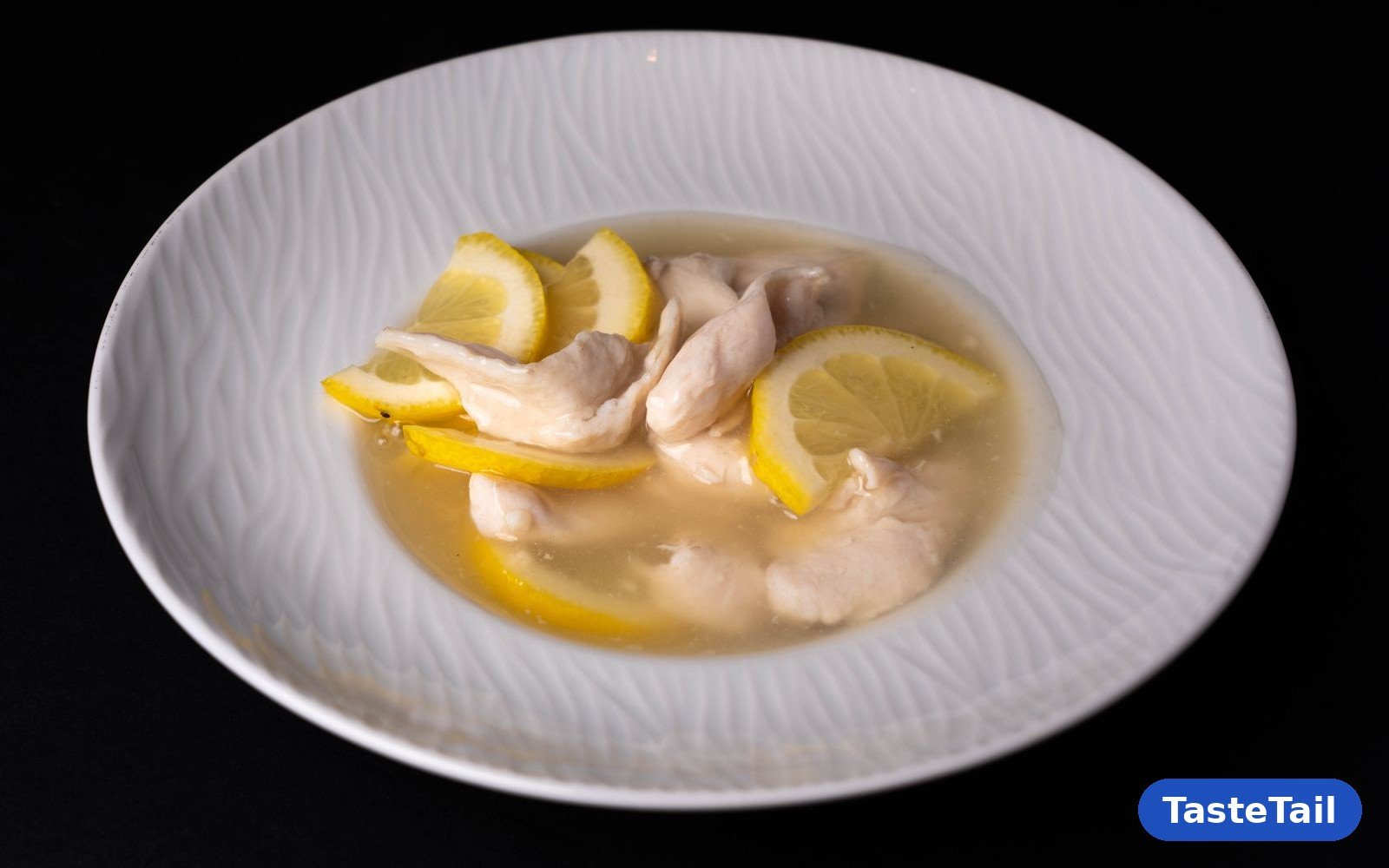
There is a soup that Greek grandmothers make when someone in the house is feeling low, or when the weather turns, or when there is simply a chicken in the fridge and not much else — and it is this one. Avgolemono is not a fancy soup. It is chicken, rice, lemon, and eggs, cooked in a way that turns four ordinary things into something that tastes like it took all afternoon. The broth is silky and bright, the rice is tender, and the lemon wakes everything up in a way that plain chicken soup never quite manages. One spoonful and you understand why this soup has survived for generations.
I first ate avgolemono in a small taverna on a rainy afternoon, the kind of place with paper tablecloths and a cook who had clearly been making the same soup for forty years. I had ordered it because I did not know what else to order, and I remember the first spoonful stopping me mid-sentence. It was not like any chicken soup I had tasted before. There was no heaviness to it, no greasy film, just a clean, lemony brightness and a richness that came from eggs instead of cream. I asked the waitress what was in it, and she laughed and said, “Lemon, egg, chicken. That is all. The rest is patience.” She was right about the patience, but the soup itself is not hard. It just asks you to slow down for one step, and that step is the whole secret.
What makes avgolemono special is the way the eggs are used. They are not dropped into the soup, and they are not scrambled in. They are whisked with lemon juice and then slowly, carefully tempered with hot broth, a ladle at a time, until the egg mixture is warm enough to join the pot without turning into strands. Done right, the eggs disappear into the broth and leave behind a velvety texture and a gentle richness that cream could never match. It is a technique that sounds intimidating the first time you hear it, and I will be honest — the first time I tried it, I rushed, and I got lemony scrambled egg soup. It still tasted fine, but it was not avgolemono. The second time, I took it slowly, and it worked beautifully. If I can learn it, you can too.
This version keeps things traditional but practical. A whole chicken is not required — bone-in, skin-on thighs and drumsticks give you the best broth with the least effort, and they shred beautifully once they are tender. The rice cooks right in the pot, which means one less pan to wash and a soup that thickens naturally as the rice releases its starch. And the lemon is added in two places: a little in the broth while it cooks, and the rest whisked with the eggs at the end, so the flavour is layered rather than sharp. It is the kind of recipe that rewards a relaxed cook, and it is ready in under an hour from the moment you put the pot on the stove.
It is also a soup that fits almost any occasion. It is light enough for a spring lunch and comforting enough for a winter evening. It is gentle on a sore throat and a tired stomach, which is probably why Greek families have trusted it for so long. And it is a genuinely impressive thing to serve to guests, because most people have never had a soup thickened with eggs, and they will ask you how you did it. The answer is simple: you whisked, you ladled, and you waited. That is all there is to it.
Why This Greek Lemon Chicken Soup Works
The first reason is the broth. Avgolemono starts with a real chicken broth, made in the same pot as the soup, from bone-in chicken pieces simmered gently with onion, carrot, and celery. This is not stock from a carton, and the difference is not subtle. Simmering the chicken in the pot gives you a broth with body and flavour that no carton can match, and the chicken itself comes out tender enough to shred with two forks. The vegetables are not there to be eaten — they are there to season the broth — so you do not need to be precious about how you chop them. Rough chunks are fine, and they will have given everything they have to the pot by the time you take them out.
The second reason is the egg-lemon sauce itself, which is the heart of the dish. Avgolemono is both the name of this soup and the name of the sauce — avgolemono literally means egg and lemon — and it is used all over Greek cooking, in soups, in sauces for stuffed vegetables, and over fish. The technique is always the same: whisk the eggs and lemon together, then add hot liquid a little at a time until the mixture is warm, then stir it back into the pot off the heat. The eggs thicken the broth and give it a silky, almost creamy texture without a drop of cream, and the lemon keeps the whole thing bright and fresh. It is one of those techniques that, once you understand it, you will use again and again.
Third, the rice. In avgolemono, the rice is not a side — it is part of the soup’s structure. Short or medium grain rice works best, because it releases more starch as it cooks, which helps thicken the broth and gives the soup its characteristic body. Long grain rice will work too, but it stays more separate and the soup will be a little thinner. Whichever you use, the rice cooks in the broth, absorbing flavour as it goes, so every spoonful tastes seasoned all the way through. And because the rice continues to absorb liquid as the soup sits, leftover avgolemono will be thicker the next day — which most people, myself included, consider a feature rather than a flaw.
Finally, the balance of lemon. Avgolemono should taste lemony, but it should not taste sour. The trick is using enough lemon to make the soup bright and fresh, but not so much that it overwhelms the chicken. I use the juice of two lemons for a pot this size, and I add it in two stages — a little during cooking, and the rest with the eggs at the end. That way the lemon flavour is layered: some of it cooked into the broth, some of it fresh and bright from the final whisking. If you like your soup very lemony, you can always add an extra squeeze at the table. Starting with less and adjusting at the end is always safer than trying to take lemon out.
Ingredients
The list is short, and every ingredient earns its place. Use bone-in chicken if you can — it makes a much better broth than boneless, and the meat stays juicier. For the rice, short or medium grain is traditional; arborio works beautifully if you have it, but ordinary medium grain rice is just as good. And use fresh lemons, not bottled juice. Bottled lemon juice tastes flat and a little bitter in this soup, and since lemon is one of only a few flavours here, it needs to be the real thing.
- 2 pounds bone-in, skin-on chicken thighs and drumsticks (about 900 g)
- 1 tablespoon olive oil
- 1 large onion, peeled and halved
- 2 medium carrots, peeled and cut into large chunks
- 2 celery stalks, cut into large chunks
- 3 cloves garlic, smashed
- 10 cups water (about 2.4 litres)
- 2 bay leaves
- 1 teaspoon kosher salt, plus more to taste
- 1/2 teaspoon black pepper
- 3/4 cup short or medium grain rice, rinsed
- 3 large eggs, at room temperature
- Juice of 2 large lemons (about 1/2 cup), plus extra wedges for serving
- 1/4 cup fresh dill, chopped, plus more for serving
- 1/4 cup fresh parsley, chopped, optional
A note on the eggs: room temperature eggs are important here, and it is worth taking them out of the fridge when you start cooking so they have time to warm up. Cold eggs are more likely to curdle when they meet hot broth, and tempering takes longer. If you forgot, put them in a bowl of warm water for ten minutes while the soup simmers. It is a small detail, but it makes the most delicate step of the recipe noticeably easier, and in a soup with so few ingredients, the small details are what separate a good avgolemono from a great one.
How to Make Greek Lemon Chicken Soup Avgolemono
Start by building the broth. Heat the olive oil in a large, heavy pot over medium-high heat and sear the chicken pieces, skin side down, for three to four minutes until the skin is golden. You are not cooking the chicken through here — you are just browning the skin, which adds a layer of flavour to the broth that you will not get from raw chicken dropped into water. Turn the pieces and brown the other side briefly, then add the onion halves, carrots, celery, and garlic to the pot. Pour in the water, add the bay leaves, salt, and pepper, and bring everything to a gentle boil.
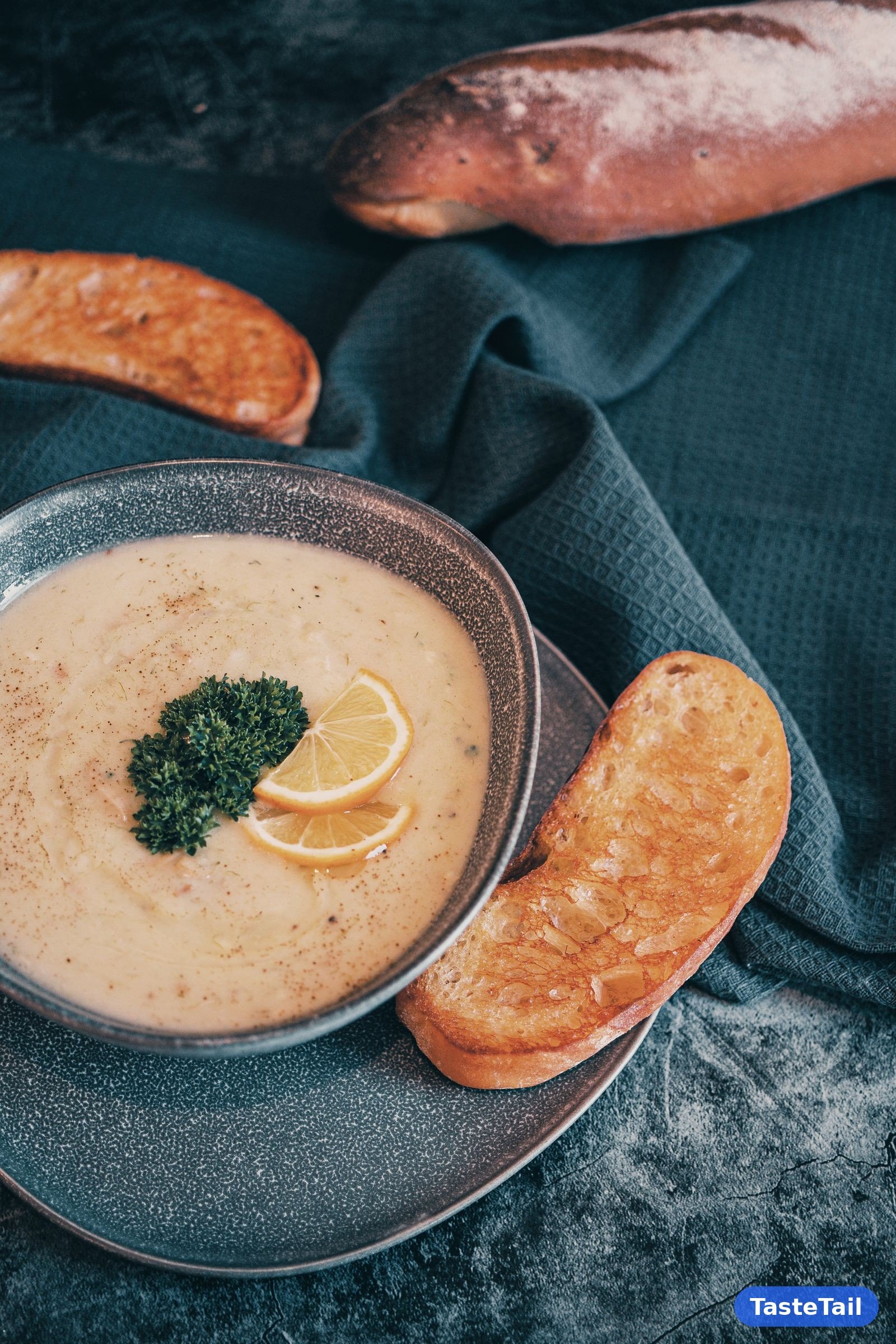
Once the pot boils, turn the heat down so the liquid is at a lazy simmer — just a few bubbles breaking the surface — and skim off any foam that rises. This is the part where patience pays. A hard boil will make the broth cloudy and can toughen the chicken, while a gentle simmer gives you a clear, clean-tasting broth and meat that falls off the bone. Let it simmer, partially covered, for about thirty minutes, until the chicken is completely tender and the meat is starting to pull away from the bone. While it cooks, rinse the rice in a fine sieve under cold water until the water runs clear, and set it aside.
Lift the chicken out of the pot with tongs and set it on a plate to cool for a few minutes. Strain the broth through a fine sieve into a clean bowl or another pot, and discard the vegetables and bay leaves — they have done their job. You should have about eight cups of broth. Pour it back into the pot, bring it back to a gentle simmer, and stir in the rinsed rice. Cook for twelve to fifteen minutes, stirring occasionally, until the rice is tender. The broth will look a little cloudy from the rice starch, which is exactly what you want.
While the rice cooks, shred the chicken. Once it is cool enough to handle, pull the meat off the bones with your fingers or two forks, and discard the skin and bones. Shred the meat into bite-sized pieces — not too fine, or it will disappear into the soup. Set the shredded chicken aside. This is also the moment to take the eggs out if you forgot earlier, or to check that they are at room temperature. Whisk the eggs in a medium bowl until they are pale and frothy, about a minute of steady whisking, then whisk in the lemon juice. The mixture should be smooth and a little foamy on top.
Now comes the tempering, the one step that matters most. Take the pot off the heat entirely — this is important, because the eggs must never meet boiling liquid. Ladle about a cup of the hot broth into the egg and lemon mixture, pouring it in a thin stream while you whisk constantly. Do not stop whisking. Add a second ladleful the same way, and then a third. By now the egg mixture should feel warm to the touch, and it should look slightly thicker and paler than when you started. This slow warming is what keeps the eggs from curdling. If you rush it and pour in too much hot broth at once, the eggs will scramble, and while the soup will still taste fine, it will not have that silky texture you are after.
Pour the warm egg and lemon mixture back into the pot in a slow stream, stirring the soup gently as you go. The broth will turn pale and creamy-looking almost immediately, and it will thicken slightly as you stir. Return the shredded chicken to the pot and stir it in. Do not put the pot back on high heat — if the soup needs warming, use the lowest possible heat and stir constantly, and never let it boil. A gentle warmth is all it needs. Taste the soup and adjust the salt. If you want more lemon, add a squeeze now, a little at a time, tasting as you go. Stir in the chopped dill and parsley, and serve immediately in warm bowls, with extra dill and lemon wedges on the side.
Tips for the Best Avgolemono
The single most important tip is to take the pot off the heat before you add the eggs. I know I have said it twice already, but it is the difference between avgolemono and lemony egg drop soup, and it is the mistake almost everyone makes the first time. The broth should be hot but not boiling, and the pot should be off the burner entirely. If your stove holds a lot of residual heat, move the pot to a cool burner or a trivet while you temper. The eggs will thicken the broth gently from the residual heat alone, and you do not need — or want — any more cooking after they go in.
Temper slowly, and whisk without stopping. Three ladlefuls of broth, added one at a time in a thin stream, is the minimum. If you are nervous, use four or five smaller ladlefuls. There is no penalty for going slowly, and the only penalty for going fast is scrambled eggs. Keep the bowl steady on the counter — a damp cloth underneath stops it sliding around while you whisk with one hand and ladle with the other. It feels awkward the first time, and by the second time it feels completely natural.
Use room temperature eggs. Cold eggs straight from the fridge are more likely to curdle, because the temperature difference between the eggs and the hot broth is greater, and the tempering has to work harder. Take the eggs out when you start cooking, and by the time the soup is ready they will be at room temperature. If you forget, ten minutes in a bowl of warm water does the job. This is a small thing, but in a recipe where the eggs are doing all the thickening, it is worth the tiny bit of planning.
Do not skip browning the chicken. It is tempting to put raw chicken straight into the water and save a step, but the sear adds a depth of flavour to the broth that you cannot get any other way. The golden skin renders a little fat into the pot, and the browned bits on the bottom dissolve into the broth as it simmers. It takes five minutes, and it is the difference between a broth that tastes like chicken and a broth that tastes like hot water with chicken in it.
Season at the end, not the beginning. The salt you add at the start is just a foundation. The final seasoning should happen after the eggs and lemon are in, because the lemon changes how salty the soup tastes, and you cannot judge it properly until the soup is finished. Taste, add a pinch of salt, stir, and taste again. And remember that the rice will keep absorbing liquid and salt as the soup sits, so if you are serving it later, you may need to adjust again before you bring it to the table.
Serving Ideas
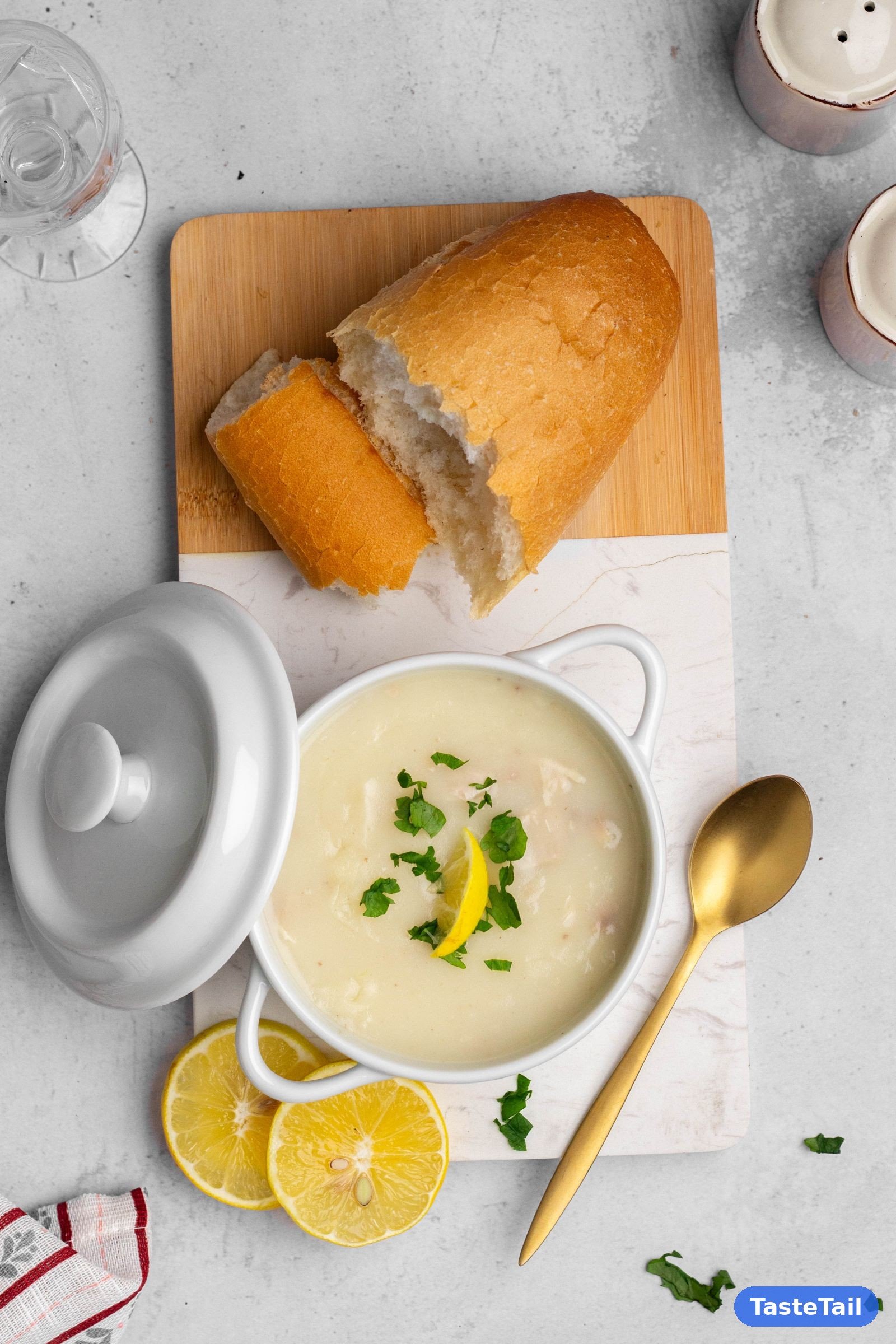
Avgolemono is a complete meal in a bowl, but a few simple things alongside it make it feel like a proper dinner. Crusty bread is the obvious choice, and it is the best one — warm, with a good crust, for dipping into the broth and scooping up the last of the rice. A simple Greek salad with tomatoes, cucumber, red onion, and feta is the classic partner, and its sharp, fresh flavours are a perfect contrast to the rich, lemony soup. If you want to keep things light, a plate of olives and some good bread is all you need.
For a heartier meal, serve the soup as a first course before a main dish. In Greece, avgolemono is often the opening act, followed by roast chicken or lamb and a pile of vegetables. At home, it works beautifully before our herb roasted chicken legs or our baked pesto chicken with mozzarella, especially on a cold evening when you want dinner to feel like an occasion. The soup warms everyone up, and the main course feels like a celebration rather than just another weeknight dinner.
A note on garnishing: a little extra dill on top is traditional, and it is worth doing, because the fresh herb against the pale, creamy broth is both pretty and delicious. A wedge of lemon on the side lets everyone adjust the brightness to their own taste, which is useful because people disagree wildly about how lemony avgolemono should be. A drizzle of good olive oil over each bowl is not traditional, but it is lovely, and a crack of black pepper on top adds a little warmth. Keep it simple, though — this soup does not need much dressing up.
Storage and Leftovers
Avgolemono keeps well in the refrigerator for up to three days, stored in an airtight container. The rice will continue to absorb broth as it sits, so the soup will be noticeably thicker the next day. This is normal, and most people like it even better this way. To serve leftovers, warm the soup gently in a pot over low heat, stirring often, and add a splash of water or chicken broth to loosen it back to the consistency you like. Never let it boil — the eggs will curdle if the soup gets too hot, and there is no fixing it once that happens. A squeeze of fresh lemon at the end wakes the flavour back up beautifully.
I do not recommend freezing avgolemono. Egg-thickened soups do not freeze well — the texture changes, the eggs can separate, and the rice turns mushy when thawed. If you know you will have leftovers, it is better to store the soup in the fridge and eat it within a few days. The broth and shredded chicken, on their own, freeze very well for up to three months, so if you want to make this soup ahead, freeze the broth and chicken without the rice and eggs, then cook fresh rice and temper fresh eggs when you are ready to serve. It takes twenty minutes, and the result tastes freshly made.
If you have leftover shredded chicken from making this soup, it is useful in a dozen other dinners. It is wonderful folded into our creamy garlic chicken pasta on a busy night, or tucked into our spinach and feta stuffed chicken breast filling for a change. Leftover chicken is one of the most useful things a cook can have in the fridge, and this soup gives you plenty of it.
Variations to Try
The classic version uses rice, but orzo is a popular and delicious alternative, and it is what many Greek families use when they want something a little different. Orzo cooks in about eight minutes, and it gives the soup a slightly different texture — smoother, more like a thick porridge. Use the same amount, cook it in the broth the same way, and temper the eggs exactly as described. Some people prefer orzo so much they never go back to rice. I go back and forth depending on my mood, and both are wonderful.
You can also change the herbs. Dill is traditional and, in my opinion, the best choice, but parsley works well too, and a little fresh mint stirred in at the end is surprisingly lovely in summer. A pinch of dried oregano in the broth while the chicken simmers adds a warm, earthy note. And if you like a little heat, a pinch of white pepper instead of black gives the soup a gentle warmth without any visible specks, which keeps the broth looking pale and clean.
For a lighter version, use boneless, skinless chicken breasts instead of thighs and drumsticks, and skim any fat from the surface of the broth before you add the rice. The soup will be a little less rich, but still delicious. You can also use brown rice, though it takes much longer to cook — about forty minutes — so start it earlier and keep an eye on the liquid level, adding a little more water if the pot gets too thick. And for a vegetarian version, a good vegetable broth with white beans and plenty of lemon makes a surprisingly satisfying soup using exactly the same egg-tempering technique. The eggs are the star, and they work in any broth.
If you enjoy this kind of bright, Mediterranean cooking, the avgolemono soup recipe from The Mediterranean Dish is another excellent version worth reading — it uses orzo and a slightly different method, and comparing the two is a good way to find the version that suits your taste. Greek cooking is full of these small variations, and there is no single right way to make avgolemono, only the way your family likes it best.
Frequently Asked Questions
Why did my eggs curdle in the soup?
The eggs curdled because they met liquid that was too hot, too fast. The fix is tempering: whisk the eggs and lemon together, then add hot broth one ladleful at a time, whisking constantly, until the egg mixture is warm. Take the pot off the heat before you stir the eggs back in, and never let the soup boil afterwards. Room temperature eggs also help, because the temperature gap is smaller. If it has already happened, the soup is still safe and tasty to eat — it just will not have the silky texture. Strain it if the strands bother you, and try again next time with slower tempering.
Can I use boneless chicken instead of bone-in?
Yes, you can, but the broth will not be as rich. Bone-in chicken gives the broth body and flavour that boneless meat cannot match, because the bones and skin release gelatin and fat as they simmer. If you use boneless breasts or thighs, the soup will still be good, but consider using a good quality chicken stock instead of plain water to make up some of the difference, and add the chicken later in the cooking so it does not dry out. Bone-in thighs are inexpensive and forgiving, and they are worth using if you can.
Can I make avgolemono ahead of time?
You can make the broth and shred the chicken a day ahead and keep them in the refrigerator. When you are ready to serve, reheat the broth, cook the rice in it, and temper the eggs fresh. I do not recommend making the finished soup — with the eggs already in — ahead of time and reheating it, because the eggs can curdle when the soup is heated again. The rice and egg steps take about twenty minutes, so it is easy to finish the soup fresh even if you did the long simmering the day before.
What rice works best in avgolemono?
Short or medium grain rice is traditional and works best, because it releases more starch and gives the soup its characteristic body. Arborio rice, the kind used for risotto, is an excellent choice. Ordinary medium grain rice is just as good. Long grain rice will work, but the soup will be thinner and the rice will stay more separate. Avoid instant rice, which goes mushy almost immediately, and brown rice unless you are prepared to cook it for forty minutes. Whatever you use, rinse it first — rinsing removes surface starch that can make the broth gummy.
Is avgolemono gluten free?
Yes, as long as you use rice and not orzo. Orzo is a pasta, and it contains wheat, so the orzo version is not gluten free. The rice version has no gluten in it at all — just chicken, rice, eggs, lemon, and vegetables. It is also naturally dairy free, which surprises people, because the soup tastes creamy. That creaminess comes entirely from the eggs, not from cream or butter, which is part of what makes this soup so clever.
Can I freeze leftover avgolemono?
I do not recommend it. Egg-thickened soups do not freeze well — the eggs can separate when thawed, and the rice turns soft and mushy. The soup keeps well in the refrigerator for up to three days, and it is best eaten within that window. If you want to freeze something for later, freeze the broth and shredded chicken before you add the rice and eggs, and finish the soup fresh when you are ready to eat. That way you get all the convenience of a freezer meal without sacrificing the silky texture that makes avgolemono special.
How lemony should avgolemono be?
It should taste clearly of lemon, but the lemon should brighten the soup rather than dominate it. Two lemons for a pot this size is a good starting point, and you can adjust at the table with extra wedges. If you love lemon, add a little more juice at the end, a tablespoon at a time, tasting as you go. If you added too much, a pinch of salt and a little extra broth can soften it, but it is much easier to add lemon than to take it away. Start with the recipe amount, taste, and then decide — your lemons may be larger or juicier than mine, and the only reliable judge is your own spoon.