
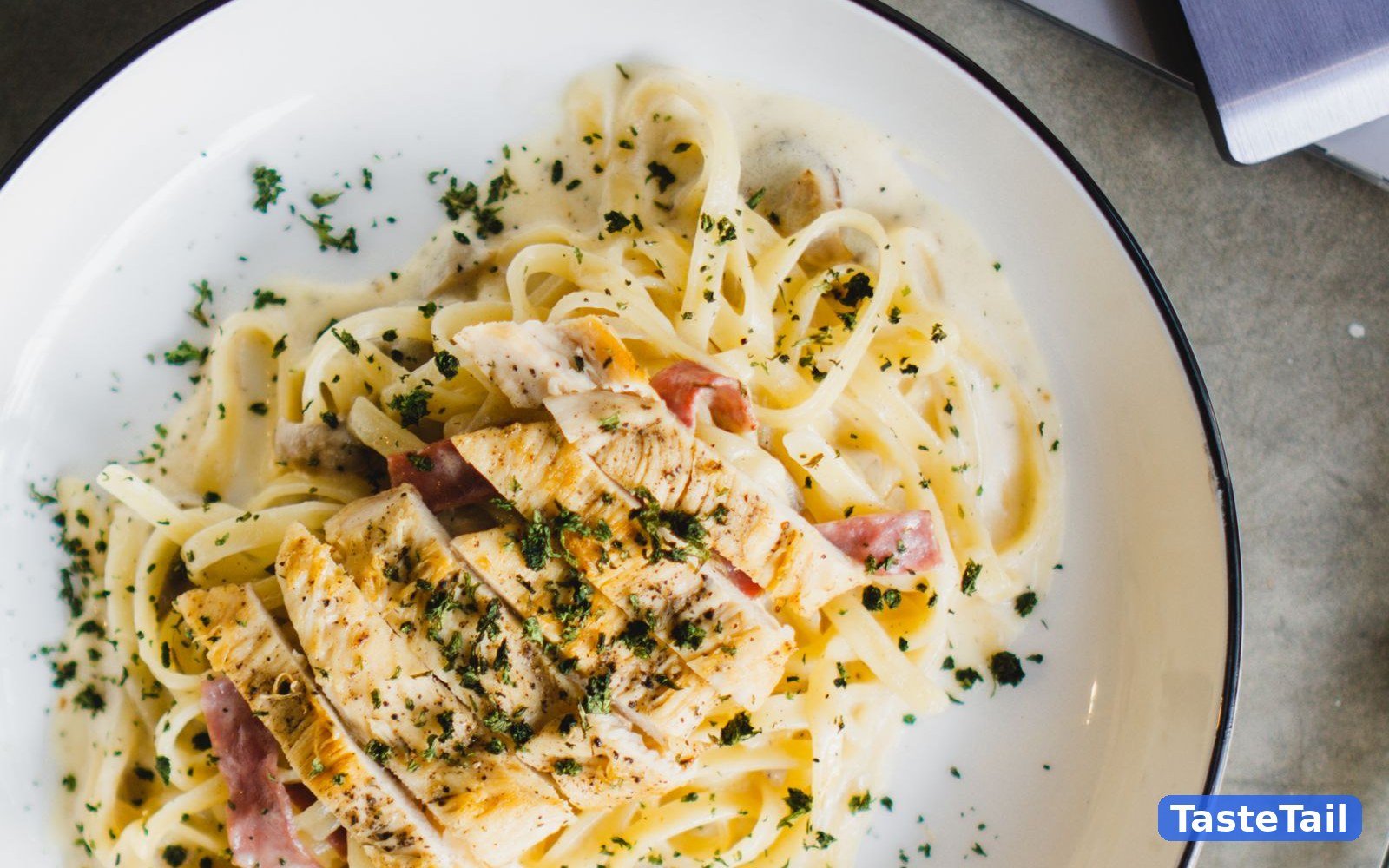
There are some dinners that feel like a small celebration even on an ordinary Tuesday, and this one-pan chicken Alfredo is exactly that kind of meal. It is creamy without being heavy in that cloying way, rich with garlic and Parmesan, and full of tender slices of chicken tucked between ribbons of fettuccine. Best of all, the pasta cooks right in the same pan as the sauce, so every strand soaks up flavour as it softens, and you are left with just one pan to wash at the end of the night.
I first started making Alfredo this way on a night when I had promised my family pasta but had no energy left for a sink full of pots. The chicken was in the fridge, the cream was nearly at its date, and there was a half-used block of Parmesan that needed a purpose. I browned the chicken, built the sauce in the same pan, and stirred the dry pasta straight in. It worked so well that I have barely made it any other way since. The sauce clings to the noodles in a way that a separately boiled pasta never quite manages, because the starch released by the fettuccine thickens everything naturally as it cooks.
What I love most about this recipe is how forgiving it is. You do not need a special pan, a thermometer, or any fancy technique. A large, deep skillet with a lid is enough. If your sauce looks a little thin at first, give it another minute or two and it will come together. If it gets too thick, a splash of warm milk or pasta water loosens it right back up. It is the sort of cooking that rewards paying attention rather than following a timer to the second, and once you have made it twice you will probably stop measuring the garlic altogether.
This is also a genuinely practical weeknight dinner. From the moment you set the pan on the heat to the moment you are sitting down to eat, you are looking at about thirty minutes, and most of that time the pasta is quietly simmering while you set the table or toss together a quick salad. It feeds four generously, it reheats well for lunch the next day, and it is the kind of dish that makes people ask for the recipe before they have finished their first helping.
Why You Will Love This One-Pan Chicken Alfredo
The first reason is the flavour. Cooking the fettuccine directly in the sauce means the pasta absorbs the garlic, butter, and Parmesan as it cooks, so every bite tastes seasoned all the way through instead of just coated on the outside. The chicken, browned first in the same pan, leaves behind those golden bits on the bottom that melt into the sauce and give it a depth you simply cannot get from a jar.
The second reason is the cleanup, or rather the lack of it. One pan, one cutting board, one spoon. On a busy evening that matters more than almost anything else. There is no colander to wash, no second saucepan for the sauce, and no juggling of two things on the hob at once. You can focus on getting the chicken golden and the sauce silky, and the rest takes care of itself.
The third reason is flexibility. This recipe is a solid base that welcomes whatever you have on hand. A handful of spinach stirred in at the end wilts beautifully. Sliced mushrooms, added with the garlic, give it an earthy richness. Sun-dried tomatoes bring a little tang that cuts through the cream. A pinch of chilli flakes wakes the whole thing up. Once you know the method, you can make it a slightly different dinner every time without ever really changing the recipe.
Finally, it is a crowd-pleaser in the truest sense. Children love it because it is creamy pasta with chicken, adults love it because it tastes like something from a good Italian restaurant, and the cook loves it because it is on the table in half an hour. It works for a quiet family dinner, for friends dropping by unexpectedly, and for those nights when you want something comforting but do not want to order takeaway again.
Ingredients
You will need the following ingredients to serve four people. Nothing here is hard to find, and most of it is probably already in your kitchen.
- 2 large boneless, skinless chicken breasts, about 500 grams in total
- 1 teaspoon garlic powder
- 1 teaspoon Italian seasoning
- 1 teaspoon salt, plus more to taste
- 1/2 teaspoon black pepper
- 2 tablespoons olive oil
- 3 tablespoons unsalted butter
- 5 cloves garlic, finely minced
- 1 small onion, finely diced
- 2 tablespoons plain flour
- 1 1/2 cups chicken stock, low sodium if possible
- 1 1/2 cups whole milk
- 1 cup double cream
- 250 grams fettuccine, broken in half if your pan is small
- 1 cup freshly grated Parmesan cheese, plus extra to serve
- 1/4 teaspoon freshly grated nutmeg, optional but lovely
- 2 tablespoons chopped fresh parsley, to serve
- Lemon wedges, to serve, optional
A quick note on the Parmesan: freshly grated makes a real difference here. The pre-grated kind in a tub often contains anti-caking agents that can make a sauce grainy, while a block grated at home melts into the cream smoothly and tastes noticeably better. It only takes a minute with a box grater, and it is worth the effort. The same goes for the chicken stock — a decent low-sodium stock gives you control over the salt, which matters when Parmesan is already in the mix.
How to Make One-Pan Chicken Alfredo
Start by preparing the chicken. Pat the breasts dry with kitchen paper, because dry chicken browns far better than damp chicken, and then slice each breast horizontally into two thinner cutlets. This helps them cook evenly and quickly, and it means you get more golden surface area, which is where the flavour lives. Season both sides generously with the garlic powder, Italian seasoning, salt, and black pepper, pressing the seasoning in lightly with your hands.
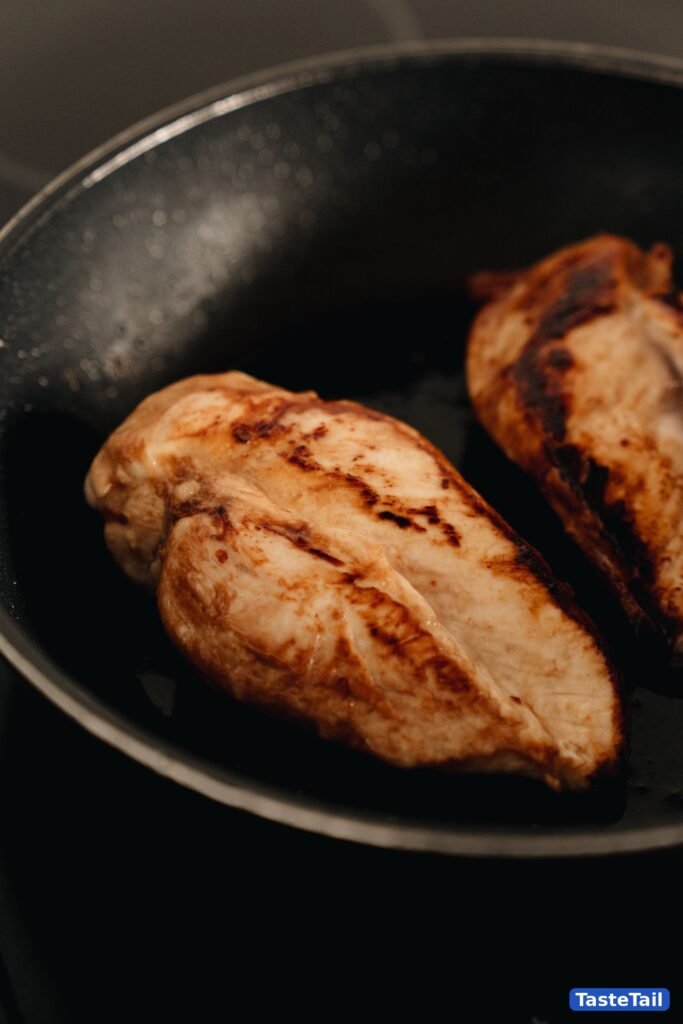
Heat the olive oil in a large, deep skillet over medium-high heat until it shimmers. Lay the chicken cutlets in the pan in a single layer and leave them alone for four to five minutes. Resist the urge to move them around, because that golden crust only forms when the chicken stays in contact with the hot pan. When the underside is deeply golden, flip the cutlets and cook for another four minutes until the second side is browned and the chicken is cooked through. The safest way to check is with a thermometer — chicken is done at 74 degrees Celsius — but if you do not have one, cut into the thickest part and check that the juices run clear and there is no pink left. The USDA guidance on cooking chicken safely explains the temperatures and handling steps in detail, and it is worth a quick read if you cook chicken often. Transfer the chicken to a plate, cover it loosely with foil, and set it aside while you build the sauce.
Lower the heat to medium and add the butter to the same pan. As it melts, use a wooden spoon to scrape up the browned bits stuck to the bottom — that is pure flavour, and it will dissolve into the sauce. Add the diced onion and cook for two to three minutes until it softens and turns translucent, then add the minced garlic and cook for just thirty seconds more. Garlic burns quickly, so keep it moving and take the pan off the heat for a moment if it starts to colour too fast. You want it fragrant and pale gold, not dark brown.
Sprinkle the flour over the onion and garlic and stir constantly for about a minute. This cooks out the raw flour taste and creates a light roux that will help the sauce thicken. Pour in the chicken stock a little at a time, stirring well after each addition so no lumps form, then pour in the milk and cream. Stir everything together and bring the mixture to a gentle simmer. You should see small bubbles around the edges rather than a rolling boil, which can split a cream sauce.
Now add the fettuccine. Lay the strands in the pan, pressing them down gently as they soften so they are mostly submerged in the liquid. It helps to break the pasta in half if your skillet is on the smaller side, because long strands can poke out and cook unevenly. Cover the pan with a lid, reduce the heat to medium-low, and let it simmer for twelve to fourteen minutes. Lift the lid every four to five minutes to give the pasta a good stir, making sure no strands are sticking together or to the bottom of the pan. The pasta is ready when it is tender with just a little bite left in the centre, and the sauce has thickened to a creamy consistency that coats the back of a spoon.
While the pasta cooks, slice the rested chicken into thin strips. Resting matters, because it lets the juices settle back into the meat instead of running out onto the cutting board. Once the pasta is done, remove the pan from the heat and stir in the grated Parmesan a handful at a time, letting each addition melt before you add the next. This keeps the sauce smooth. Add the nutmeg if you are using it, taste, and adjust the salt and pepper. If the sauce feels too thick, stir in a splash of warm milk until it loosens to the consistency you like.
Return the sliced chicken to the pan and fold it gently through the pasta so every piece is coated in sauce. Let everything sit for two minutes off the heat so the flavours settle and the sauce clings properly. Serve straight from the pan, scattered with chopped parsley and extra Parmesan, with lemon wedges on the side for anyone who likes a little brightness. If you want to understand why a proper Alfredo works the way it does, the Serious Eats guide to fettuccine Alfredo is a wonderful read on the balance of butter, cheese, and pasta water.
Tips for the Best One-Pan Alfredo
Do not rush the chicken. A properly browned cutlet gives the whole dish its savoury backbone, and that only happens if the pan is hot enough and the chicken is left undisturbed. If your pan is crowded, the chicken will steam instead of browning, so cook in two batches if you need to. It takes a few extra minutes, but the difference in flavour is enormous.
Watch the heat once the cream goes in. Cream sauces are happiest at a gentle simmer, and a hard boil can cause them to split or turn grainy. If you see the sauce bubbling vigorously, turn the heat down straight away and stir. A split sauce can often be rescued by taking the pan off the heat and whisking in a spoonful of cold cream, but it is much easier to prevent than to fix.
Stir the pasta regularly while it cooks. Because the pasta is simmering in a thickening sauce rather than a big pot of water, the strands are more likely to stick together if they are left alone. A quick stir every few minutes keeps everything moving and helps the pasta cook evenly. A pair of tongs works well for this, letting you lift and separate the strands without breaking them.
Grate your own Parmesan and add it off the heat. Freshly grated cheese melts cleanly, and adding it after the pan comes off the heat protects the sauce from overheating. If you add the cheese while the sauce is still bubbling hard, it can clump or turn oily. Patience for those last two minutes makes the difference between a silky sauce and a grainy one.
Taste before you serve. Parmesan is salty, stock varies, and the amount of salt you need will change every time. Taste the sauce after the cheese goes in, then add salt a pinch at a time. A squeeze of lemon at the end is not traditional, but a little acidity brightens the richness beautifully, especially if you are serving this with a green salad.
Variations to Try
For a lighter version, swap the double cream for an equal amount of whole milk and add an extra tablespoon of flour to the roux so the sauce still thickens. It will not be quite as rich, but it will still be creamy and satisfying. You can also use half chicken stock and half milk if you want to cut the richness further without losing flavour. If you are looking for a pasta dish that skips the cream altogether, this chicken pasta without heavy cream is a great lighter alternative that still feels indulgent.
Add vegetables to make it a complete one-pan meal. A couple of handfuls of baby spinach stirred in at the very end will wilt in the residual heat in under a minute. Sliced mushrooms can go in with the onion and cook down until golden. Frozen peas, stirred in for the last three minutes of the pasta cooking time, add colour and sweetness. Broccoli florets, blanched separately for two minutes, are another easy addition that turns this into a proper family dinner with vegetables built in.
Change the protein if you like. Sliced Italian sausage, browned in the pan before the sauce, gives the dish a spicier, heartier character. Cooked prawns, added at the very end just to warm through, turn it into a seafood Alfredo that feels a little bit special. For a vegetarian version, leave out the chicken entirely and double the mushrooms, or add a tin of drained butter beans for protein. The sauce method stays exactly the same.
Play with the cheese. Half Parmesan and half Pecorino Romano gives a sharper, saltier edge that some people prefer. A small handful of grated Gruyère melted in with the Parmesan adds a nutty depth. Just keep the total amount of cheese the same so the sauce stays balanced, and always grate it fresh.
Serving Ideas
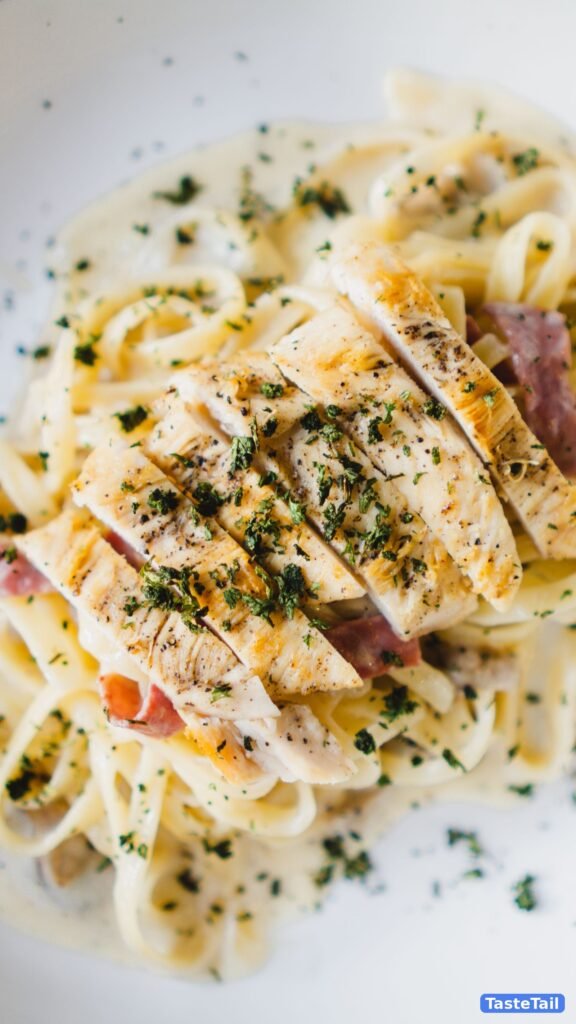
This Alfredo is rich and satisfying on its own, so the best accompaniments are simple ones that add freshness and contrast. A crisp green salad with a sharp lemon vinaigrette is my first choice, because the acidity cuts through the cream and cleanses the palate between bites. Garlic bread is the classic partner, and for good reason — there is always sauce left in the pan that deserves to be mopped up. Steamed green beans with a little butter and lemon are another easy side that adds colour to the plate.
For a fuller meal, start with a light soup or a simple tomato salad while the pasta cooks. The contrast of something bright and fresh before a creamy main course makes the whole dinner feel more considered without adding much work. If you are serving this to guests, a chilled glass of white wine and a bowl of olives on the table turns a weeknight recipe into something that feels like a small occasion.
Portion it generously but not enormously, because this is a rich dish and a moderate serving with a good salad is more enjoyable than a mountain of pasta. If you have ever made a creamy garlic chicken pasta, you will know the feeling — the first serving disappears fast, and people always come back for a little more.
Storage and Reheating
Let any leftovers cool to room temperature, then transfer them to an airtight container and refrigerate for up to three days. Cream sauces thicken as they cool, so the pasta will look much firmer in the fridge than it did in the pan. That is completely normal, and it loosens up again with a little liquid when you reheat it.
To reheat, place a portion in a pan over low heat with a splash of milk or chicken stock, and stir gently until it is hot all the way through. The microwave works too — heat in short bursts of forty-five seconds, stirring between each one, with a spoonful of milk added before you start. Avoid reheating on high heat, which can make the sauce split or the chicken dry out.
I do not recommend freezing this dish, because cream sauces tend to separate when thawed and the pasta can turn soft and mushy. It is best enjoyed fresh or within a few days from the fridge. If you do need to plan ahead, you can cook the chicken a day in advance and refrigerate it, then make the sauce and pasta fresh on the day. That cuts the cooking time down to about fifteen minutes and still gives you a dinner that tastes freshly made.
If you love skillet dinners that reheat well, this easy chicken and rice skillet is another good one to keep in your rotation, and a one-pan chicken dinner without an oven is perfect for nights when you want something juicy and flavourful from the stovetop alone.
Frequently Asked Questions
Can I use a different pasta shape?
Yes, absolutely. Fettuccine is traditional for Alfredo, but penne, rigatoni, or farfalle all work well in a one-pan recipe, and they are actually easier because they fit neatly into the pan and cook evenly. Short shapes may need a minute or two less cooking time, so start checking a couple of minutes early. Avoid very thin pasta like angel hair, which can overcook and fall apart in the sauce before the sauce has thickened properly.
Why is my Alfredo sauce grainy?
A grainy sauce usually means the cheese was added while the pan was too hot, or the cheese was pre-grated and contained anti-caking agents. To fix it, take the pan off the heat and stir in a splash of warm milk while whisking gently. To prevent it next time, use freshly grated Parmesan, add it a handful at a time off the heat, and keep the sauce at a gentle simmer rather than a boil while the pasta cooks.
Can I make this without cream?
Yes, you can use all milk instead of cream, but the sauce will be thinner and less rich. To compensate, add an extra tablespoon of flour to the roux and let the pasta simmer a minute or two longer so the starch thickens the sauce. A spoonful of cream cheese stirred in at the end also helps give a milk-based sauce a little more body. It will not be identical to the full-cream version, but it will still be creamy and delicious.
How do I know the chicken is cooked through?
The most reliable way is a food thermometer inserted into the thickest part of the meat — it should read 74 degrees Celsius. Without a thermometer, cut into the thickest piece and check that the meat is white all the way through with no pink, and that the juices run clear. Because the chicken is sliced into thin cutlets, it cooks quickly, usually in four to five minutes per side.
Can I add vegetables to this recipe?
Yes, and it is a great way to make the meal more complete. Spinach, peas, mushrooms, and broccoli all work well. Add mushrooms with the onion so they have time to brown, stir peas in during the last three minutes of cooking, and fold spinach in at the very end so it just wilts. Avoid watery vegetables like courgette, which can release liquid and thin the sauce.