
The first time I ate proper chicken souvlaki, it was not in a restaurant with white tablecloths. It was standing up, on a busy street, holding a warm pita in one hand and trying not to drop anything. The man behind the counter had been grilling skewers of chicken over charcoal all day, and the whole place smelled of lemon and oregano and smoke. He took the chicken straight off the skewer, piled it into a pita with a big spoonful of tzatziki, some sliced tomato and onion, and handed it over wrapped in paper. I ate it in about four minutes, standing there, and then I went back and ordered another one. That is what souvlaki does to you. It is simple food, but it is the kind of simple food that makes you wonder why you ever bother with anything complicated.
Souvlaki is one of those dishes that has been around so long that nobody really owns it anymore. It belongs to Greece, to street vendors and family barbecues and summer evenings, and the idea behind it has barely changed in decades: small pieces of meat, marinated in lemon, olive oil, garlic, and oregano, grilled over high heat until the edges char, and eaten with bread and something cool and creamy. The version with chicken is the one most of us make at home, because chicken takes to the marinade beautifully, it cooks fast, and it is the kind of thing everyone at the table will eat without argument. You do not need a charcoal grill or a special occasion. A regular grill pan, or even a hot cast iron skillet, will do the job on a Tuesday night.
What I love most about this recipe is how little it asks of you. The marinade takes five minutes to mix. The chicken needs half an hour in it, though longer is better, and then it cooks in about ten minutes. The tzatziki is just yogurt, cucumber, garlic, and lemon, stirred together in a bowl. The pita goes on the grill for thirty seconds a side to warm up. That is the whole recipe, more or less, and yet the result tastes like something you spent the whole afternoon on. There is a lesson in that, I think. A lot of the best food I know works this way: a few good ingredients, treated properly, and nothing getting in their way.
The other thing worth saying is that souvlaki is forgiving in a way that a lot of grilled chicken is not. Chicken breast has a reputation for drying out, and it earns that reputation most of the time, but the marinade here does real work. The lemon juice and the olive oil keep the meat moist, the salt seasons it all the way through, and the high heat means the chicken spends very little time on the grill — it cooks fast, gets a good char on the outside, and stays juicy inside. Cut the chicken into even pieces, do not walk away from the grill, and take it off the moment it is done. That is the whole secret, and it is not much of a secret at all.
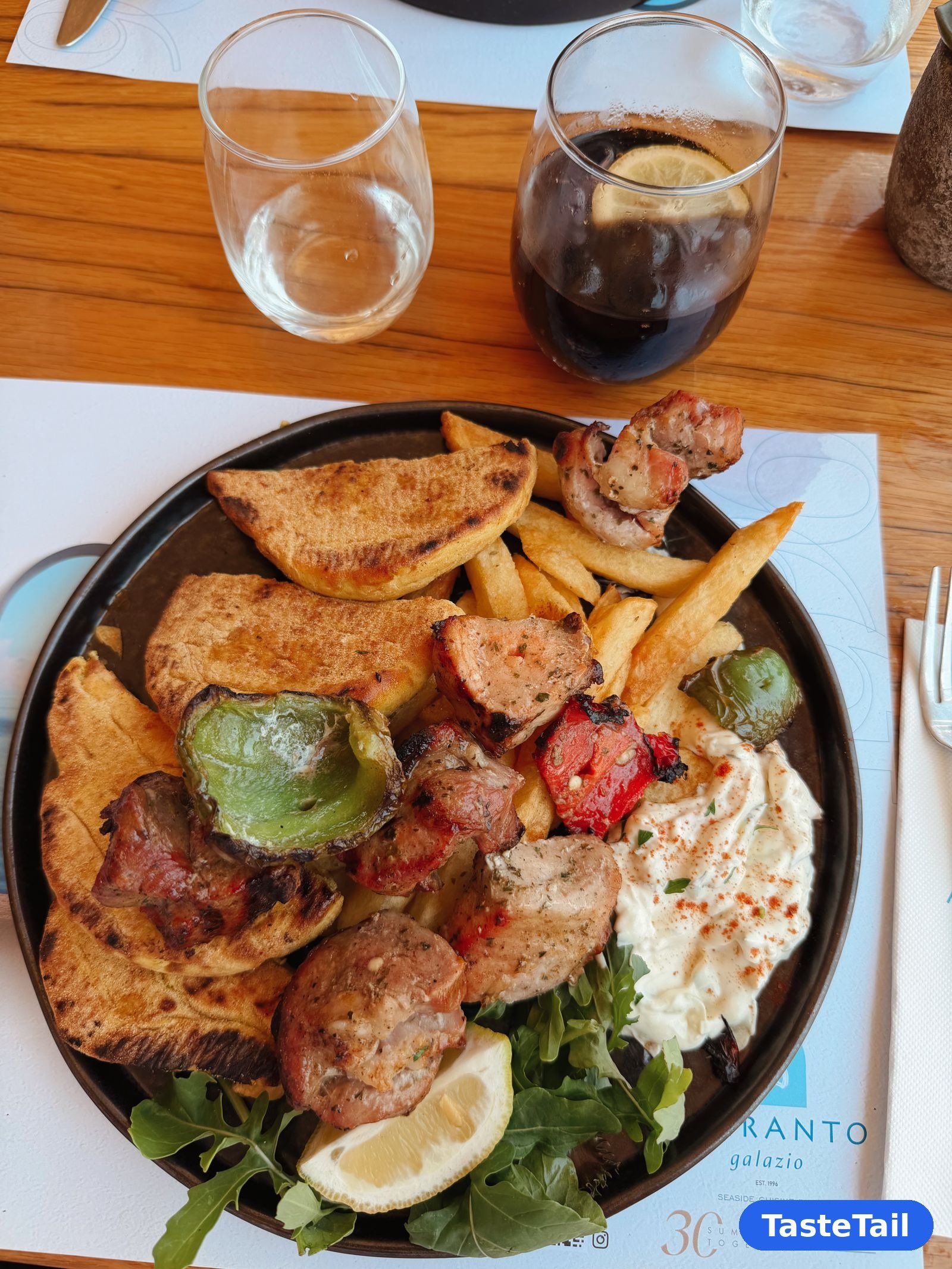
Why This Chicken Souvlaki Works
The first reason is the marinade, and it is worth taking seriously even though it is simple. Lemon juice, olive oil, garlic, dried oregano, salt, and pepper — that is all there is to it. The lemon does two jobs: it brightens the flavour, and its acidity starts to tenderise the chicken, so the meat comes off the grill softer than it went on. The olive oil carries the flavour of the garlic and the oregano into every piece, and it helps the chicken brown instead of sticking to the grill. The oregano is the flavour that makes it taste Greek. Not fresh oregano, which is softer and greener, but dried Greek oregano, which is earthy and peppery and a little bit wild. If you have ever wondered why your homemade Greek food never quite tastes like the food from a Greek restaurant, the oregano is very often the reason. Buy the good stuff, the kind sold on the stem if you can find it, and rub it between your palms as you add it to the marinade so the oils wake up.
The second reason is the cut of the chicken. I use boneless, skinless chicken thighs for this, and I would argue for them over breast every time. Thighs have a little more fat, which means they stay juicy on a hot grill, they forgive you if you leave them on for a minute too long, and they have a deeper flavour that stands up to the lemon and garlic. Chicken breast works, and I have made this recipe with breast plenty of times, but you have to be more careful with it — a minute too long and it goes dry, and there is no coming back from dry. If you do use breast, cut the pieces a little bigger and pull them off the grill the second they hit 165°F (74°C) inside. Thighs will take care of themselves a little more. Either way, cut the pieces evenly, about an inch and a half across, so they cook at the same speed. Uneven pieces are the reason one skewer comes out perfect and the next one has a piece that is still pink in the middle.
Third, the tzatziki. A lot of people treat tzatziki as an afterthought, something to buy in a tub and put on the table, but making it yourself takes five minutes and it is so much better that there is no real comparison. The trick is the cucumber. Grate it, salt it, and squeeze the water out of it — really squeeze it, in a clean tea towel or with your hands over the sink — because cucumber is mostly water, and if you skip this step your tzatziki will be thin and runny by the time you sit down to eat. Thick Greek yogurt, a clove of garlic, a squeeze of lemon, a drizzle of olive oil, and a pinch of salt. That is it. Let it sit for ten minutes while the chicken grills, and it will taste like it was made by someone who knows what they are doing. If you want to read more about where tzatziki comes from, the tzatziki page is a good place to start, but the recipe itself is simple enough that you will have it memorised after making it twice.
Fourth, the heat. Souvlaki is cooked hot and fast, and that matters. A grill that is not hot enough will steam the chicken instead of searing it, and you will end up with pale, rubbery pieces that taste boiled. A properly hot grill — hot enough that you can only hold your hand above it for a couple of seconds — gives you charred edges and a smoky flavour in about four minutes a side, while the inside stays juicy. If you are cooking indoors, a cast iron grill pan on high heat does a fine job, and so does a regular cast iron skillet, though you will not get the grill marks. Either way, do not crowd the pan. If the pieces are packed together, they will steam. Give them space, let them sit still long enough to brown, and only turn them once or twice. Every time you move a piece of chicken before it is ready, you lose a little bit of that crust.
Finally, the pita. Warm pita is not a garnish. It is half the meal. A cold pita is stiff and flat and tears when you try to fold it. A warm pita, brushed with a little olive oil and held over the grill for thirty seconds a side, becomes soft and pliable, and it soaks up the lemony juices from the chicken and a little of the tzatziki in a way that is genuinely wonderful. If you are buying pita, get the thick, soft kind, not the thin, papery kind that cracks. And if you can find pita from a bakery rather than a supermarket shelf, buy that. It makes a difference you can taste. Warm the pita right at the end, while the chicken rests, so it is still warm when you sit down.
Ingredients
Everything here is easy to find, and most of it is probably already in your kitchen. The chicken is the main purchase, and it is worth buying good chicken — free-range if you can afford it, because it tastes better, though regular chicken works fine too. The yogurt for the tzatziki needs to be full-fat Greek yogurt, not the low-fat kind and definitely not regular yogurt, which is too thin and too sour. Full-fat Greek yogurt is thick enough to hold its shape on a spoon, and it is what makes the tzatziki creamy instead of runny.
For the chicken souvlaki:
- 800 g (about 1 3/4 lb) boneless, skinless chicken thighs, cut into 4 cm (1 1/2 inch) pieces
- 3 tablespoons extra virgin olive oil
- Juice of 1 large lemon (about 3 tablespoons)
- 4 cloves garlic, finely minced or grated
- 1 tablespoon dried oregano, preferably Greek
- 1 teaspoon fine sea salt
- 1/2 teaspoon freshly ground black pepper
- 1/2 teaspoon sweet paprika (optional, for colour)
- Wooden or metal skewers, soaked in water for 30 minutes if wooden
For the tzatziki:
- 1 cup (240 g) full-fat Greek yogurt
- 1/2 large cucumber, grated and squeezed dry
- 1 clove garlic, finely grated
- 1 tablespoon lemon juice
- 1 tablespoon extra virgin olive oil
- 1/2 teaspoon fine sea salt
- 1 tablespoon fresh dill, chopped (optional but lovely)
To serve:
- 4 large pita breads, thick and soft
- 2 medium tomatoes, sliced
- 1 small red onion, thinly sliced
- Lemon wedges, for squeezing over the top
- Extra dried oregano and olive oil, for finishing
How to Make Chicken Souvlaki with Tzatziki and Pita
Start with the marinade, because the chicken needs time in it. Put the olive oil, lemon juice, garlic, oregano, salt, pepper, and paprika in a large bowl and whisk them together until they look combined. The mixture will not be smooth — the oil and lemon juice will separate a little, and that is fine. Add the chicken pieces and toss them with your hands until every piece is coated. You want the marinade on all sides, not sitting in a puddle at the bottom of the bowl. Cover the bowl with cling film and put it in the fridge for at least 30 minutes. Two hours is better, and overnight is best of all, because the longer the chicken sits in the lemon and garlic, the more flavour it picks up. If you are marinating overnight, use a little less lemon juice, because the acid will start to change the texture of the meat if it sits too long.
While the chicken marinates, make the tzatziki. Grate the cucumber on the coarse side of a box grater, put it in a clean tea towel or a few layers of paper towel, and squeeze it hard over the sink until no more water comes out. You will be surprised how much water comes out of half a cucumber — it is a lot, and every drop of it is water that would have ended up thinning your tzatziki. Put the squeezed cucumber in a bowl with the yogurt, garlic, lemon juice, olive oil, salt, and dill if you are using it. Stir it together, taste it, and adjust the salt and lemon until it tastes bright and garlicky. Cover it and put it in the fridge while the chicken grills. It will keep in the fridge for two days, and it actually tastes better the second day, once the garlic has had time to mellow into the yogurt.
When the chicken has marinated, thread it onto skewers. Leave a little space between the pieces — not a big gap, but enough that the heat can get around each piece instead of steaming the ones pressed together. If you are using wooden skewers, soak them in water for half an hour first, or the ends will burn on the grill. Four skewers, with about five pieces of chicken on each, is about right for this amount of meat. Brush the grill or grill pan lightly with oil, and get it properly hot before the chicken goes on. You should hear a sizzle the moment the skewers touch the heat. If you do not hear it, the grill is not hot enough yet, and you should wait.
Grill the skewers for about four minutes a side, turning them once or twice, until the chicken is charred at the edges and cooked through. Thighs are forgiving, so you have a little room here, but do not walk away — four minutes goes by fast, and the difference between charred and burnt is about ninety seconds. The chicken is done when it reaches 165°F (74°C) in the thickest piece, or when you cut into a piece and the juices run clear. Take the skewers off the grill and let them rest for five minutes before you slide the chicken off. Resting matters, even for small pieces of chicken, because it lets the juices settle back into the meat instead of running out onto the cutting board the moment you cut into it.
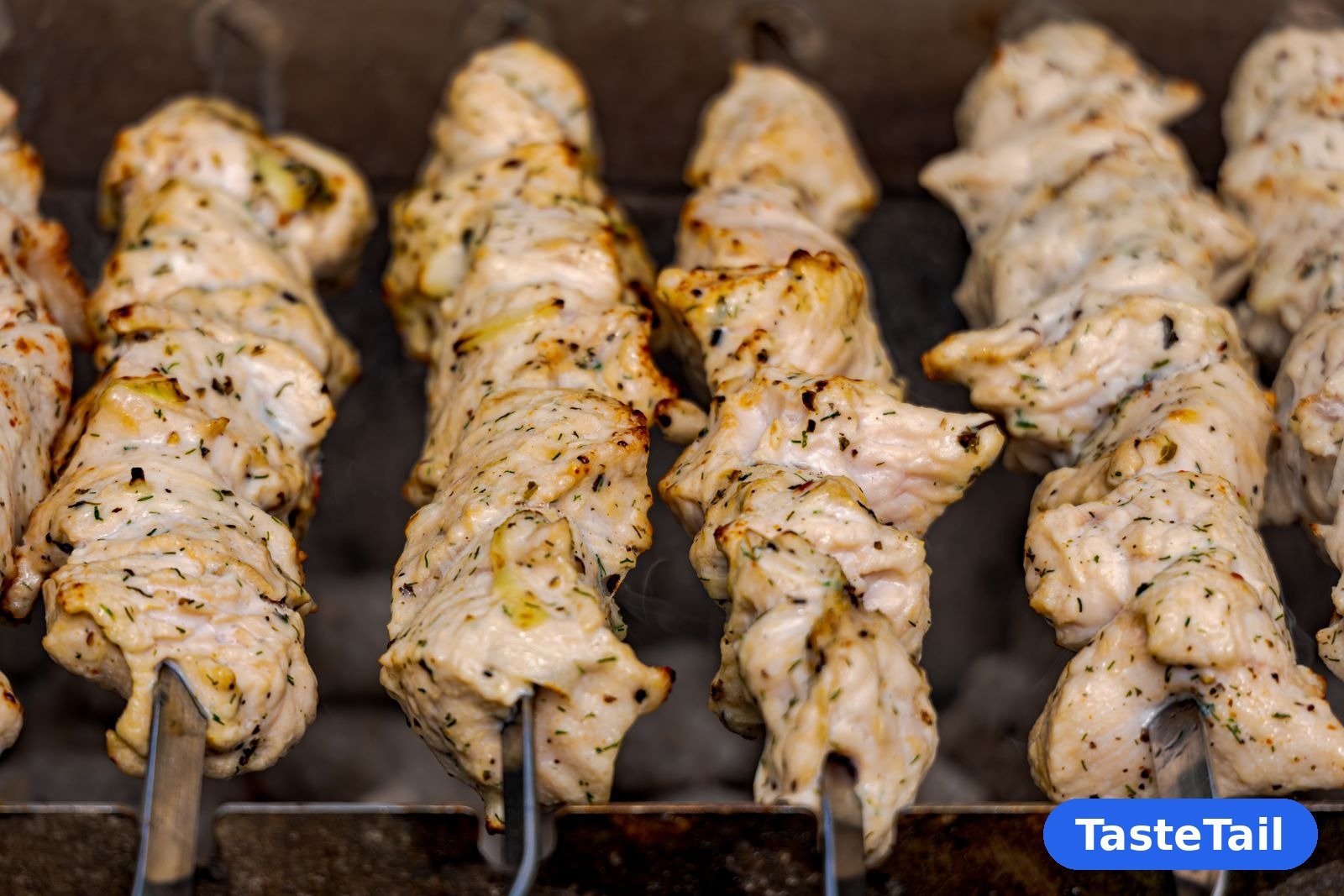
While the chicken rests, warm the pita. Brush each pita lightly with olive oil on both sides and put it on the grill, or in the same pan you used for the chicken, for about thirty seconds a side. You want it warm and soft, with a few light grill marks, not crisp. If the pita starts to puff up, that is a good sign — it means it is fresh and the heat is doing its job. Stack the warm pitas on a plate and cover them with a clean tea towel so they stay warm while you set the table.
To serve, pile the chicken onto a platter or straight into the pita. The traditional way is to slide the chicken off the skewer and into the pita, add a generous spoonful of tzatziki, a few slices of tomato and red onion, and a squeeze of lemon, then fold the pita around it and eat it with your hands. There is no wrong way to do this, and half the pleasure is in building your own. Put everything on the table — the platter of chicken, the bowl of tzatziki, the warm pita, the tomatoes and onions — and let people help themselves. It is a meal that works best when it is a little bit messy, a little bit hands-on, and nobody is worrying about cutlery.
Tips for the Best Souvlaki
Do not skip the marinating time. Thirty minutes is the minimum, and the difference between thirty minutes and two hours is real — the chicken will be more flavourful, more tender, and more lemony after a longer marinade. If you know you are making souvlaki tomorrow, marinate the chicken tonight and leave it in the fridge overnight. Just remember to use a little less lemon juice for an overnight marinade, because the acid will start to firm up the outside of the meat if it sits too long.
Cut the chicken evenly. This sounds like a small thing, and it is, but it is the difference between a skewer where every piece is perfectly cooked and a skewer where one piece is burnt and another is still pink in the middle. Aim for pieces about an inch and a half across, and trim off any big pieces of fat or gristle before you marinate. You do not need to be precise about it — just roughly the same size, so they cook at the same speed.
Let the grill get properly hot before the chicken goes on. This is the mistake I see most often, and I have made it myself plenty of times. You put the chicken on a grill that is only half hot, and instead of searing, the chicken sits there and steams in its own juices. It comes out pale and rubbery, and no amount of extra time will fix it. Wait until the grill is hot — hot enough that you can only hold your hand a few inches above it for two or three seconds — and then put the chicken on and leave it alone for a few minutes. Let it brown before you turn it.
Squeeze the cucumber for the tzatziki properly. I have said this already, and I am saying it again, because it is the single most common reason homemade tzatziki goes wrong. If you grate the cucumber and stir it straight into the yogurt, your tzatziki will be watery within half an hour. Grate it, salt it, squeeze it hard in a tea towel until it is almost dry, and only then stir it in. It takes an extra minute, and it is the difference between tzatziki that holds its shape on a spoon and tzatziki that runs off the pita and onto your plate.
Rest the chicken before you eat it. Five minutes is enough. I know it is tempting to slide the chicken straight off the skewer and into a pita the second it comes off the grill, but if you wait five minutes, the juices settle and the chicken will be noticeably juicier. Use those five minutes to warm the pita and set the table. The chicken will still be hot when you sit down, I promise.
Serving Ideas
The simplest way to serve chicken souvlaki is the way I first ate it: in a warm pita, with tzatziki, tomato, and red onion, eaten with your hands. That is genuinely enough, and it is how I eat it most often. But it also works beautifully as a plated meal, and it is one of the most useful grilled chicken recipes to have in your rotation because it goes with almost everything. Serve the skewers on a platter with a big bowl of tzatziki, a pile of warm pita, and a salad on the side, and you have a dinner that feels like a small celebration without any extra effort.
The most natural partner for souvlaki is a Greek salad, and our Greek salad with feta and Kalamata olives is the one I make most often with it. The cool, salty, sharp flavours of the salad are exactly what the warm, smoky chicken needs, and the two dishes together, with warm pita and tzatziki, are a proper Greek table. Add a bowl of lemony potatoes, or some roasted vegetables, and you have a meal that will feed a crowd without anyone standing over a stove for hours. If you want something to start the meal with, our Greek lemon chicken soup avgolemono makes a lovely first course — it is light, bright, and lemony in the same way the souvlaki is, so the meal feels like it belongs together.
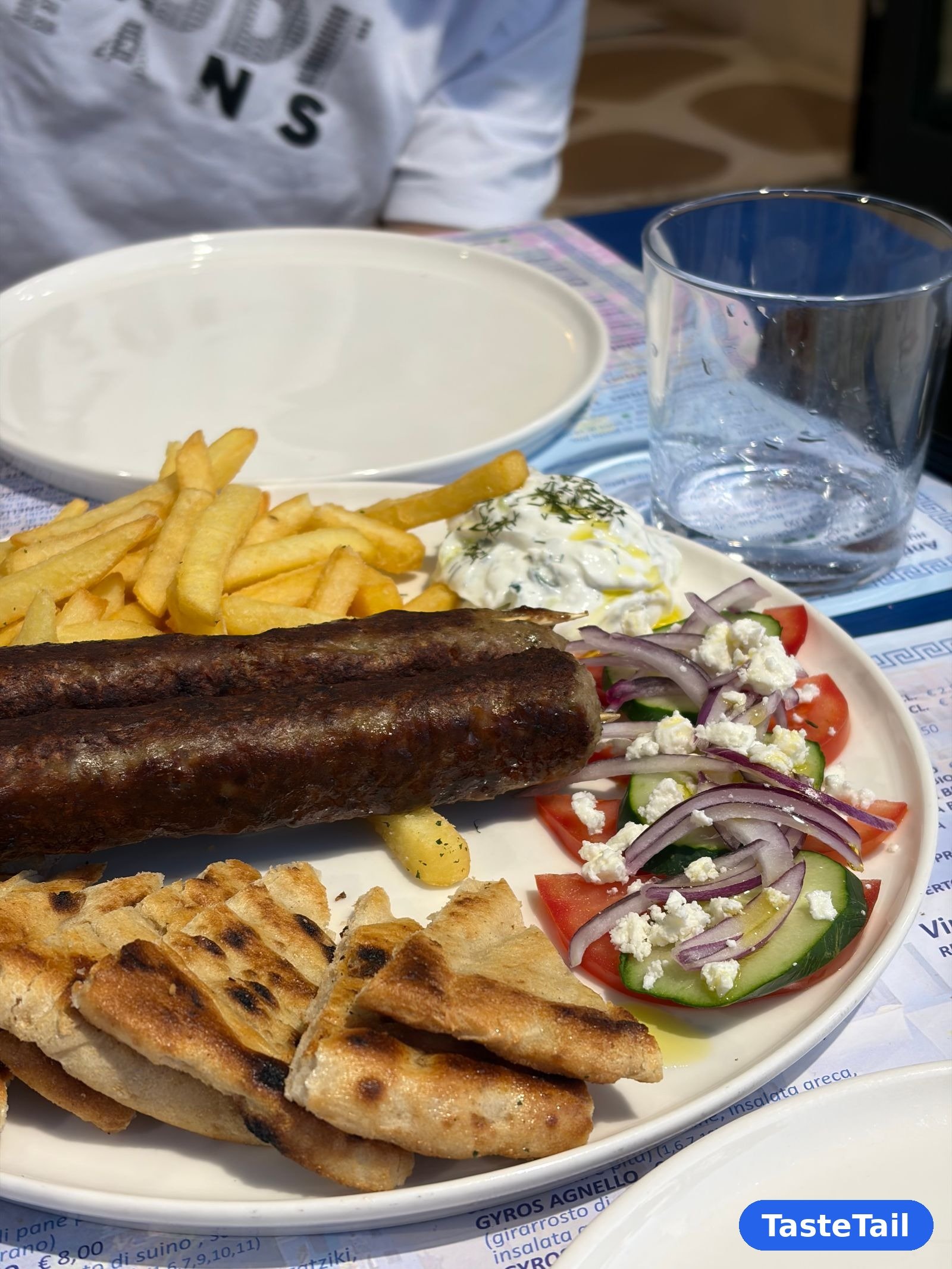
For a bigger meal, build the table the way a Greek taverna would. Put the souvlaki in the middle, with tzatziki, warm pita, a Greek salad, a plate of olives, and a dish of roasted vegetables, and let everyone help themselves. It is the kind of meal that does not need a formal structure, and it is better for it — people eat slowly, they go back for more chicken, they tear more pita, and the conversation goes on longer than it does at a plated dinner. If you are feeding a crowd, make the marinade in a double batch and grill the chicken in two rounds, keeping the first batch warm in a low oven while the second one cooks. A double batch of tzatziki is never a mistake either, because it always disappears faster than you expect.
Variations to Try
Once you have made the classic version, there are a few honest variations that keep the spirit of the dish while changing it enough to be interesting. The most obvious one is to swap the chicken for pork, which is the traditional souvlaki meat in Greece. Pork shoulder, cut into the same sized pieces and marinated the same way, is wonderful on the grill — it has more fat than chicken, so it stays juicy, and it takes on a beautiful char. Lamb works too, though it is richer and more expensive, and it is best saved for a special occasion. If you are cooking for someone who does not eat meat, halloumi and vegetables on skewers, marinated in the same lemon and oregano mixture, are a genuinely good substitute — the halloumi chars beautifully and holds its shape on the grill.
You can also change the way you serve it. Instead of pita, serve the chicken over rice with tzatziki and a chopped salad, the way a souvlaki bowl is served in a lot of modern Greek restaurants. Or make a souvlaki wrap, rolling the chicken, tzatziki, and vegetables up in a large flatbread and cutting it in half. Or serve the chicken on its own, straight off the skewer, as part of a barbecue spread, next to our herb-roasted chicken legs if you are cooking for a crowd and want two kinds of chicken on the table. The marinade and the tzatziki are the constants. Everything else is up to you.
The tzatziki can change too. A spoonful of chopped fresh mint, stirred in at the end, gives it a cool, fresh note that is lovely in summer. A pinch of smoked paprika on top, instead of the usual drizzle of olive oil, adds a little warmth. And if you like heat, a finely chopped green chilli, stirred into the yogurt, turns it into something with a proper kick. What I would not do is add mayonnaise, or sour cream, or anything that makes it heavy. Tzatziki is meant to be light and cool and sharp, and that is what makes it the perfect partner for hot, smoky chicken.
Storing and Making Ahead
Chicken souvlaki is at its best fresh off the grill, and that is the honest truth about it. The char, the smoke, the heat — all of that is best eaten within minutes of cooking. That said, the parts can be prepared ahead of time, and that is how I handle it when I am cooking for guests. Marinate the chicken the night before, make the tzatziki in the morning, slice the tomatoes and onions and keep them covered in the fridge, and then all you have to do when people arrive is grill the chicken and warm the pita. It takes fifteen minutes, and it looks like you have been cooking all day.
If you do have leftover chicken, do not throw it away. Slice it thinly and keep it in the fridge for up to three days. It makes a wonderful sandwich filling, cold, with tzatziki and salad in a pita or on good bread. It is also excellent chopped up and tossed through a salad, or stirred into cooked orzo or rice with a little lemon and olive oil. The tzatziki will keep in the fridge for two days, and it is good on almost anything — grilled vegetables, roast potatoes, even as a dip for raw vegetables. Just do not try to reheat the chicken on a high heat, because it will dry out. Warm it gently, in a pan over a low heat with a splash of water, or eat it cold. Cold souvlaki chicken, sliced thin over a salad, is genuinely one of my favourite leftovers.
Frequently Asked Questions
How long should I marinate chicken souvlaki?
At least 30 minutes, and two hours is better. The lemon juice, garlic, and oregano need time to flavour the meat, and the longer it sits, the better it tastes. Overnight is the best option, though if you are marinating overnight, use a little less lemon juice, because the acid will start to change the texture of the chicken if it sits too long. Four hours is about the sweet spot for most people — long enough to get real flavour, short enough that you can start it in the afternoon and grill it for dinner.
Can I use chicken breast instead of chicken thighs?
Yes, you can, and it works well, but you need to be more careful with it. Chicken breast dries out faster than thigh, so cut the pieces a little bigger, do not leave them on the grill a minute longer than you need to, and take them off the moment they reach 165°F (74°C) inside. Thighs are more forgiving, which is why I use them, but breast is leaner and a lot of people prefer it. Either way, cut the pieces evenly, and let the chicken rest for five minutes before you eat it. That rest matters even more with breast than it does with thigh.
Do I need a grill to make souvlaki?
No. A charcoal or gas grill gives you the best flavour, because of the smoke and the high heat, but a cast iron grill pan on the stove works very well, and so does a regular cast iron skillet. You will not get the same smoky flavour indoors, but you will still get the char, and the marinade and the tzatziki do most of the work anyway. If you are using a pan, make sure it is properly hot before the chicken goes in, do not crowd it, and work in batches if you need to. An air fryer also works — 200°C (400°F) for about 12 minutes, turning halfway — though the pieces will not char quite the same way.
Why is my tzatziki watery?
Almost always, because the cucumber was not squeezed properly. Cucumber is mostly water, and if you grate it and stir it straight into the yogurt, that water will thin the tzatziki out within half an hour. Grate the cucumber, salt it lightly, and squeeze it hard in a clean tea towel or with your hands until no more water comes out. Then stir it into thick, full-fat Greek yogurt — not low-fat yogurt, and not regular yogurt, which is too thin. If your tzatziki still turns out thinner than you like, stir in a spoonful of extra yogurt and let it sit in the fridge for an hour. It will thicken up as it chills.
Can I make chicken souvlaki ahead of time?
You can prepare everything ahead of time, but you should grill the chicken just before you eat it. Marinate the chicken the night before, make the tzatziki in the morning, and slice the tomatoes and onions a few hours ahead. Then, when you are ready to eat, grill the chicken, warm the pita, and assemble everything. It takes about fifteen minutes from the moment the chicken hits the grill to the moment you sit down. Leftover grilled chicken will keep in the fridge for three days and is excellent cold in salads and sandwiches, but it will never be quite as good as it is fresh off the grill.
What should I serve with chicken souvlaki?
A Greek salad and warm pita are the classic partners, and they are all you really need. Our Greek salad with feta and Kalamata olives is the one I make most often, because the cool, salty salad is exactly what the hot, smoky chicken needs. Roasted potatoes with lemon and oregano are another natural fit, and so are grilled vegetables or a simple rice pilaf. For a lighter meal, serve the chicken over a big chopped salad with tzatziki drizzled over the top. And if you are building a whole Greek table, our one-pan shrimp scampi with linguine makes a lovely second main — it is not Greek, but it is the kind of simple, lemony, garlicky dish that sits happily next to souvlaki on the same table.
Is chicken souvlaki healthy?
Yes, and it is one of the healthier grilled chicken recipes you can make. The chicken is lean protein, the marinade is olive oil, lemon, and herbs, and the tzatziki is yogurt and cucumber. Served with a salad and pita, it is a balanced, satisfying meal with plenty of protein, good fats from the olive oil, and fresh vegetables. If you want to keep it lighter, use chicken breast instead of thigh, go easy on the pita, and load up on the salad and tzatziki. The dish is naturally gluten-free if you skip the pita or use a gluten-free flatbread, and it is a good source of protein, vitamin C from the lemon, and calcium from the yogurt.
Final Thoughts
Chicken souvlaki with tzatziki and pita is one of those recipes that I come back to all summer, and then all year, because it never lets me down. It takes half an hour of marinating and ten minutes on the grill, and it tastes like a holiday — smoky, lemony, cool, and generous. The secret is not a trick or a technique. It is a good marinade, a hot grill, and tzatziki made properly, with the cucumber squeezed dry. Do those three things and the souvlaki will take care of itself. Make it on a weeknight when you want something quick, make it on a weekend when friends are coming over, and make it the way it is meant to be eaten — warm pita, cool tzatziki, hot chicken straight off the skewer, eaten with your hands. And if you are planning a full table, start with our Greek lemon chicken soup avgolemono and finish with something sweet. But first, make the souvlaki. Cut the chicken evenly, get the grill properly hot, and do not forget the lemon wedges.