
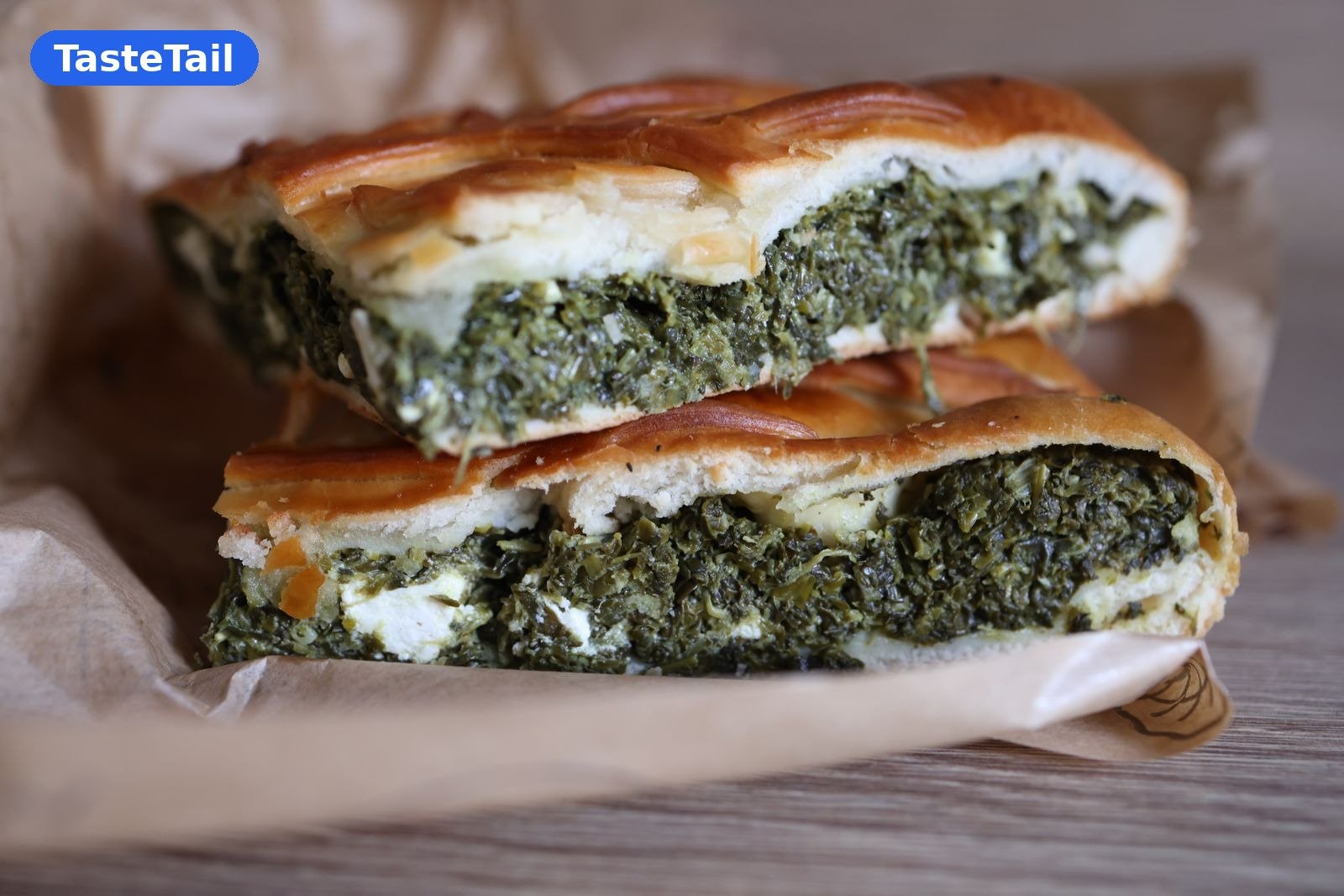
Why These Spanakopita Bites Work
The first reason is the filling, and it starts with the spinach. The single biggest mistake in spanakopita is wet spinach, and it ruins everything downstream. Spinach is mostly water, and if that water ends up in the filling, it soaks through the phyllo from the inside and no amount of hot air will crisp it back up. So the spinach has to be cooked down and then squeezed dry — really dry, in handfuls, over the sink, or wrapped in a clean tea towel and wrung out until almost nothing comes out. It feels like too much effort the first time, and then you see the difference in the finished bite and you never skip it again. The filling should feel moist and hold together when you squeeze it, but it should never drip.
The second reason is the feta. Feta is the flavour that makes this dish taste Greek, and the kind you buy matters. A block of feta, crumbled by hand into rough pieces, has a creaminess and a saltiness that the pre-crumbled kind in a tub never quite matches. The pre-crumbled stuff is often dry and a little sour, and it does not melt into the filling the same way. A good block of feta, ideally one sold in brine, will soften in the heat and bind the spinach together into something rich and savoury. Use the full amount, and do not be tempted to use less cheese to make it lighter — the feta is not just flavour here, it is structure, and without enough of it the filling falls apart.
Third, the phyllo itself. Phyllo is a strange ingredient to work with the first time. It is paper-thin, it tears if you look at it wrong, and it dries out in minutes if you leave it uncovered. But those are also the qualities that make it so good in the air fryer. Because it is so thin, it crisps in minutes, and because it is layered, you get that shattering, flaky texture that is impossible to achieve with puff pastry or shortcrust. The trick is to keep the stack covered with a damp tea towel while you work, to brush each layer lightly with olive oil rather than drowning it, and to accept that a few tears do not matter at all. A torn sheet folded into a triangle will still crisp and still taste wonderful, and nobody will ever know.
Fourth, the air fryer. In a regular oven, a tray of spanakopita triangles can take twenty minutes or more, and the bottoms often stay pale while the tops brown. In the air fryer, the hot air circulates around every side of each bite, so they brown evenly and the bottoms crisp just as well as the tops. You use a fraction of the oil that deep frying would need, there is no tray of oil to clean up, and you can cook a batch in about ten minutes while you fold the next one. It is, quite simply, the right tool for this job. If you want to know more about how the air fryer works and how to get the most out of it, The Kitchn’s air fryer tips are a good place to start, and most of them apply directly to these bites.
Finally, the herbs. Spanakopita without dill is just spinach and cheese in pastry, and it is fine, but it is not spanakopita. Dill is the flavour that lifts the whole thing, that bright, slightly aniseedy note that makes the filling taste fresh rather than heavy. Fresh dill is worth finding if you can, and you need more of it than you think — a generous handful, chopped fine. Alongside it, a little mint and a little parsley, and a good amount of black pepper, and the filling goes from simple to something that tastes like it came from a Greek kitchen. The herbs are cheap, they take thirty seconds to chop, and they are the difference between a snack and a dish people ask about.
Ingredients
Everything here is easy to find in a normal supermarket, and most of it keeps well, so this is a good recipe to make on a Friday evening with a shop bought that morning. The phyllo is the one ingredient worth planning for, because it usually lives in the freezer aisle, and it needs time to defrost in the fridge — overnight is best, and a few hours on the counter works too, though it is more likely to tear if it is rushed. Buy a standard packet of phyllo, about 450 grams, and you will have plenty. You will use roughly half of it for this batch, and the rest will keep in the fridge for a few days wrapped tightly.
The spinach is the other thing to think about. Fresh spinach is best, and you will need a large bag, about 300 grams, because it cooks down to almost nothing. If you only have frozen spinach, it works too, and in some ways it is easier, because it is already wilted — just defrost it fully and squeeze it very dry. Either way, the squeezing is the part that matters. And buy the feta as a block in brine if you can find it, rather than the dry crumbled kind, because it makes a real difference to the texture.
For the filling:
- 300 g fresh spinach (or 250 g frozen spinach, fully defrosted)
- 200 g feta cheese, crumbled by hand
- 100 g ricotta cheese
- 1 small onion, very finely diced
- 2 spring onions, finely sliced
- 2 cloves garlic, minced
- 1 large egg, lightly beaten
- A large handful of fresh dill, finely chopped (about 30 g)
- A small handful of fresh mint leaves, finely chopped
- A small handful of flat-leaf parsley, finely chopped
- Zest of 1 lemon
- 1/2 teaspoon black pepper
- A pinch of nutmeg
- Salt, only if needed — taste the feta first
For the pastry:
- 10–12 sheets phyllo pastry, defrosted
- 60 ml (about 4 tablespoons) extra virgin olive oil, for brushing
- 1 tablespoon sesame seeds, optional, for sprinkling
You will also need a pastry brush, a clean tea towel, and a little patience for the folding. The air fryer basket should be lightly oiled or lined with a piece of parchment cut to fit, with a few holes poked in it so the air can circulate.
How to Make Air Fryer Spanakopita Bites
Start with the spinach. If you are using fresh spinach, put it in a large pan over a medium heat with just the water clinging to the leaves after washing, and cook it for two or three minutes, stirring, until it has completely wilted down. It will look like far too much spinach at first, and then it will collapse into a small, dark green pile, which is normal. Tip it into a colander and leave it to cool for a few minutes. When it is cool enough to handle, take it up in handfuls and squeeze it as hard as you can over the sink. Then put it in a clean tea towel, twist the towel tight, and squeeze again. You will be surprised how much water comes out on the second squeeze, and that is exactly the water that would have made your pastry soggy. Chop the squeezed spinach roughly and put it in a large bowl.
While the spinach cools, soften the onion. Heat a tablespoon of olive oil in a small pan, add the finely diced onion, and cook it gently for about five minutes until it is soft and translucent but not browned. Add the garlic and cook for one more minute, just until you can smell it. Tip the onion and garlic into the bowl with the spinach, and leave it to cool for a few minutes. If you add the egg while the mixture is still hot, it will start to scramble, so this short wait matters.
Now build the filling. Add the crumbled feta, the ricotta, the spring onions, the egg, the dill, mint, parsley, lemon zest, black pepper, and nutmeg to the bowl. Mix it all together with a fork or your hands until it is evenly combined. It should hold together in a rough ball when you squeeze a handful, and it should smell bright and herby. Taste a little and decide whether it needs salt. Feta is already salty, so you may not need any at all, and it is better to under-salt here than to over-salt, because the phyllo adds nothing to balance it. Set the filling aside.
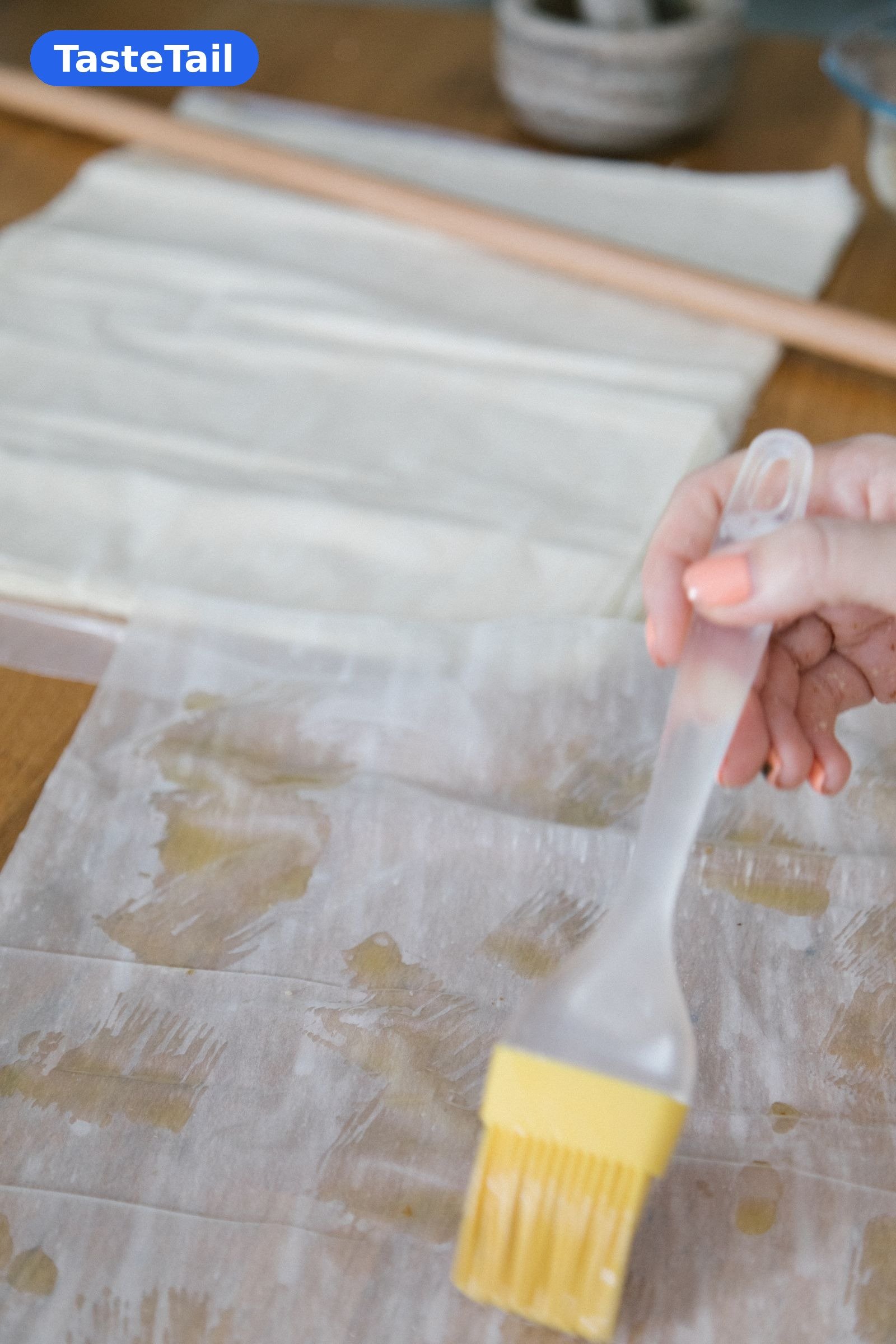
Now the phyllo. Lay out a clean, dry work surface and unroll the phyllo sheets. Keep the stack covered with a damp tea towel at all times, and only take out one sheet at a time. Lay a sheet flat, brush it lightly all over with olive oil, and lay a second sheet on top of it. Brush that one too. Now cut the doubled sheet lengthways into four long strips, each about seven or eight centimetres wide. You will have a strip that is long and narrow, two layers thick, lightly oiled. That is your starting point for one triangle.
Take a heaped tablespoon of filling and put it at the bottom end of a strip, about two centimetres up from the edge, shaping it into a rough triangle. Now fold the bottom corner up and over the filling, diagonally, so the edge of the strip meets the opposite side and forms a triangle. Then fold that triangle up, then across, then up again, like folding a flag, until you reach the end of the strip. Brush the last fold with a little oil to seal it. That is your first spanakopita bite. It will probably look a little uneven, and that is completely fine. Put it seam-side down on a plate, cover it with the tea towel, and make the next one. You should get about sixteen to twenty bites from this amount of filling, depending on how generous you are with each spoonful.
The folding sounds complicated when you read it, and the first one always feels awkward, but it is genuinely one of those things that clicks after the second or third attempt. The key is not to overthink it. Keep the strip straight, keep the folds tight, and do not worry about the shape being perfect. A slightly wonky triangle that is sealed well will cook just as crisply as a perfect one, and once it is golden and on a plate, nobody is measuring the angles.
Preheat the air fryer to 180°C (355°F) for three minutes. While it heats, brush the tops of the bites lightly with olive oil and sprinkle with sesame seeds if you are using them. Place the bites in the basket in a single layer, leaving a little space between each one so the air can move around them. Do not stack them, and do not crowd the basket — cook in two batches if you need to, because a crowded basket steams instead of crisping, and that is the one thing that will undo all your good work on the filling.
Cook for 9 to 11 minutes, turning them once halfway through, until they are deep golden brown and crisp all over. The exact time depends on your air fryer, so check the first batch at eight minutes and adjust from there. When they come out, let them sit for two or three minutes before serving, because the filling is very hot inside and needs a moment to settle. Serve them warm, with lemon wedges and a bowl of tzatziki or plain yogurt for dipping, and watch them disappear.
Tips for the Crispiest Bites
The first tip is the one I have already said twice, because it matters more than anything else: squeeze the spinach dry. If your bites come out soggy, nine times out of ten this is the reason. The spinach should feel almost dry in your hands when you chop it, and if you are using frozen spinach, squeeze it twice. It is the least glamorous part of the recipe and the most important.
The second tip is about the oil. Brush the phyllo lightly, do not pour or soak it. A thin, even layer of olive oil is what makes the layers crisp and separate. Too much oil makes the pastry heavy and greasy, and it pools in the bottom of the basket. A pastry brush is the right tool, and if you do not have one, a folded piece of kitchen paper dabbed in oil works surprisingly well. You want the sheets to look glossy, not wet.
Third, keep the phyllo covered. Phyllo dries out in minutes in open air, and once a sheet has dried out it cracks and tears instead of folding. Work with one sheet at a time, keep the rest under a damp tea towel, and cover the finished triangles the same way while you fold the rest. If a sheet does tear, do not throw it away — layer it with another sheet and use it anyway, or cut around the tear. Phyllo is much more forgiving than people think, and the air fryer hides a multitude of small imperfections.
Fourth, do not overfill. A heaped tablespoon of filling is the right amount for a strip this size. More than that, and the triangle will not seal properly, the filling will leak out in the basket, and the pastry will be stretched thin and tear. Less than that, and the bite is mostly pastry. It is tempting to be generous, especially when the filling tastes so good, but restraint here pays off in the finished shape.
Finally, cook in batches and serve in batches. A single layer with space between the bites will always beat a full basket. The first batch will be eaten while the second one cooks, and that is exactly how it should be. If you need to keep a finished batch warm, put it on a wire rack in a low oven at 120°C (250°F) for a few minutes, never in a covered container, because the steam trapped inside a container will soften the pastry in minutes.
What to Serve With Spanakopita Bites
These bites are flexible in a way that makes them useful all year round. As a starter, serve them with a simple Greek salad and some warm pita, and you have a light lunch that feels like a holiday. The salad I make with them is the same one I wrote about in my Greek salad with feta and Kalamata olives — tomatoes, cucumber, red onion, olives, and a block of feta, with a lemon and oregano dressing. The two dishes share the same flavours, the same feta and the same dill, and together they taste like a proper Greek meal rather than two separate recipes.
As a party snack, they sit beautifully on a platter with other small things: olives, a bowl of tzatziki, some lemon wedges, and a few slices of cucumber. They are the kind of food people eat standing up, with a drink in one hand, and they hold up well at room temperature for an hour or so, though they are best warm. If you are planning a spread, they work well alongside other air fryer snacks, and I often make them on the same evening as my air fryer arancini with marinara sauce — the two together give people a choice, and both cook at similar temperatures, so the air fryer never stops.
For a fuller meal, serve the bites with a big salad and a main dish, and let them be the thing that starts the meal rather than the meal itself. They are wonderful before chicken souvlaki with tzatziki and pita, because the flavours match — lemon, garlic, dill, yogurt — and the meal builds from something small and crisp to something warm and filling. Or keep it simple and serve them on their own, with a cold drink and nothing else, as a late afternoon snack. There is no wrong way to eat them.
Variations Worth Trying
Once you have made the classic version, the filling is easy to change, and a few small swaps give you a different bite without changing the method at all. The most useful variation is a spinach and feta version with sun-dried tomatoes, chopped small and stirred into the filling, which adds a sweet, savoury depth that works especially well in winter. Another is to add a handful of toasted pine nuts, which give the filling a little crunch and a nutty flavour that pairs beautifully with the dill.
If you want a richer filling, swap the ricotta for a little more feta and add an extra egg yolk, which makes the inside creamier and more set. If you want a lighter version, leave out the ricotta altogether and add a little more spinach, though the bites will be slightly less creamy. For a vegan version, use a firm tofu crumbled with nutritional yeast and lemon juice in place of the feta and ricotta, and brush the phyllo with olive oil as usual — the pastry itself is usually vegan, but check the packet, because some brands add butter or milk.
You can also change the shape. If the triangle folding feels like too much on a busy evening, cut the phyllo into squares instead, put a spoonful of filling in the centre, and pinch the corners together into a little purse. They cook in the same time, they look charming on a plate, and they are much quicker to make. Or make one large tray version in the air fryer basket, layering the phyllo and filling like a small pie, though you will need to cook it longer and check the middle carefully.
For a spicier bite, add a pinch of chilli flakes or a little finely diced fresh chilli to the filling. It is not traditional, and a Greek grandmother would probably raise an eyebrow, but it works, especially if you are serving the bites with drinks. And if you have leftover filling, it makes a wonderful stuffing for mushrooms, or a filling for an omelette the next morning, so nothing goes to waste.
Making Ahead and Storing
Spanakopita bites are at their best fresh from the air fryer, but they are also one of the easier party foods to prepare ahead of time, which is part of why I make them so often. You can fold the triangles up to a day in advance, lay them in a single layer on a tray lined with parchment, cover them tightly with cling film, and keep them in the fridge. Brush them with oil just before cooking, because the oil will soak in if it sits overnight, and cook them straight from the fridge, adding a minute or two to the cooking time.
You can also freeze them, folded but uncooked, which is genuinely useful if you want to make a big batch for a party and cook them in rounds. Lay them on a tray in the freezer until they are solid, then transfer them to a freezer bag, where they will keep for up to a month. Cook them from frozen at the same temperature, adding about four minutes to the cooking time, and turning them once halfway through. They come out just as crisp as the fresh ones, and nobody will know the difference.
Leftover cooked bites will keep in the fridge for two days in an airtight container, though they will lose their crispness. To bring them back, reheat them in the air fryer at 170°C (340°F) for three to four minutes, and they will crisp up again surprisingly well. Do not reheat them in the microwave, because the steam will make the pastry soft and chewy, and that is the one thing you do not want. And if you have any filling left over, it keeps in the fridge for two days and makes a wonderful topping for toast, or a filling for a sandwich with a little extra feta on top.
Why This Recipe Belongs in Your Air Fryer Rotation
There are a lot of air fryer recipes out there, and many of them are variations on the same few ideas — chicken, potatoes, and things coated in breadcrumbs. Spanakopita bites are different. They bring a whole other cuisine into the air fryer, they use an ingredient most people are a little bit nervous about, and they turn out better in the air fryer than they do in the oven, which is not something you can say about every recipe. They are also the kind of food that makes people think you have made a real effort, when in fact you have spent twenty minutes folding triangles and ten minutes cooking them.
They are also endlessly adaptable. The filling can be changed with the seasons — more herbs in spring, sun-dried tomatoes in winter, a little chilli when you want heat — and the bites work as a starter, a snack, a party food, or a light lunch. They are vegetarian, they are easy to make vegan, and they are the kind of thing that even people who do not like spinach will eat, because the spinach is cooked down and mixed with feta and herbs until it tastes like something else entirely.
If you are building an air fryer routine, these bites sit well next to the other recipes I make most often. They cook at a similar temperature to my air fryer sweet potato wedges, so you can cook a batch of each and have a small feast on the table in half an hour. And once you are comfortable with phyllo, you will find yourself using it for other things too — little pies, tarts, and pastries that all benefit from the same hot, fast air. That is the real value of a recipe like this one. It does not just give you a dish, it gives you a technique, and a technique is something you will use again and again.
Spanakopita itself has a long history in Greek cooking, and if you are curious about where it comes from, the history of spanakopita is worth a read — it is a dish that has been made in Greek homes for generations, in countless variations, and every family has its own version of the filling. This one is mine, adapted for the air fryer, and I hope it becomes one of yours too.
Frequently Asked Questions
Can I use frozen spinach instead of fresh?
Yes, and in some ways it is easier. Defrost it completely, then squeeze it very dry — even drier than you think you need to, because frozen spinach holds a lot of water. You will need about 250 grams of frozen spinach to replace 300 grams of fresh, because it is already wilted down. The flavour is the same, and the filling comes together in exactly the same way.
Why did my spanakopita bites come out soggy?
Almost always, the spinach was not dry enough. The filling should feel moist but never wet, and it should not drip when you squeeze a handful. The other common cause is crowding the air fryer basket, which traps steam around the bites and stops the pastry from crisping. Cook in a single layer with space between each bite, and make sure the air fryer is fully preheated before the first batch goes in.
Can I make spanakopita bites ahead of time?
Yes. Fold them up to a day ahead, keep them covered in the fridge, and brush with oil just before cooking. You can also freeze them uncooked for up to a month — lay them on a tray until solid, then transfer to a freezer bag, and cook from frozen with about four extra minutes. Cooked leftovers reheat well in the air fryer for three to four minutes at 170°C.
Do I have to use phyllo pastry, or can I use puff pastry?
Phyllo is what makes these bites crisp and light, and puff pastry will give you a very different result — heavier, softer, and more like a pie than a crisp bite. If you do use puff pastry, cut it into squares, seal the edges well, and expect a longer cooking time. It will still taste good, but it will not be the same dish, and I would recommend trying the phyllo version first.
How do I stop the phyllo from tearing?
Keep the stack covered with a damp tea towel and work with one sheet at a time. If a sheet tears, layer it with another sheet and use it anyway, or cut around the tear — a small tear in a folded triangle will not show and will not affect the cooking. Do not try to work with phyllo in a draughty kitchen or near an open window, because the air dries it out quickly.
What should I serve with spanakopita bites?
Tzatziki or plain yogurt is the classic accompaniment, with lemon wedges on the side. They also work well with a Greek salad, warm pita, and olives as part of a larger spread, or on their own as a snack. For a fuller meal, serve them as a starter before a grilled main dish, and let the lemon, dill, and feta flavours carry through the whole meal.