
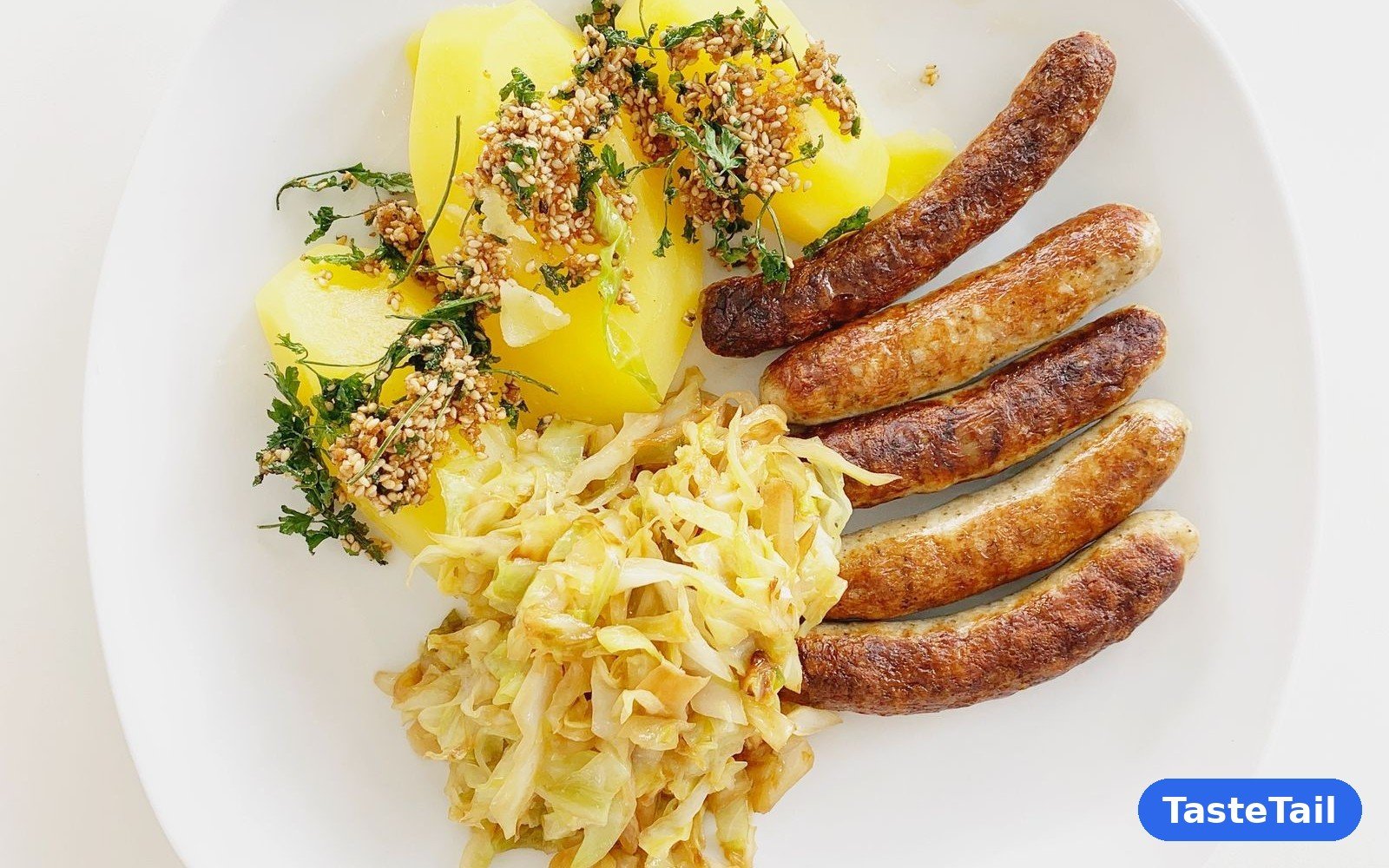
There are weeks when dinner needs to be simple, and this is the recipe I reach for on those weeks. Smoked sausage, sliced and browned until the edges are crisp, then a whole head of cabbage wilted down in the same pan with onion, garlic, and a splash of vinegar at the end. That is the whole dish, really. It takes about thirty minutes, it uses one pan, and it tastes like something that simmered for hours on a farmhouse stove. The cabbage goes sweet and silky as it cooks, the sausage seasons everything it touches, and the vinegar at the finish wakes the whole pan up.
I first made sausage and cabbage on a cold evening when the fridge held almost nothing: half a cabbage, a ring of smoked sausage, one onion, and a few pantry basics. I expected a plain, forgettable supper. What came out of the pan surprised me. The sausage fat rendered out and coated the cabbage as it wilted, the onion went soft and sweet, and the whole thing smelled like the kind of cooking my grandmother used to do — unhurried, practical, and generous. I have made it dozens of times since, and I have never once wished I had cooked something fancier instead.
The trick with cabbage is that most people either undercook it or boil the life out of it. In this skillet it gets neither treatment. It goes into a hot pan with the browned sausage and its drippings, gets covered for a few minutes so it steams and wilts, and then finishes uncovered so the edges catch a little colour. Cooked this way, cabbage is not the soggy, apologetic vegetable people remember from school dinners. It is sweet, buttery, and tender, with just enough bite left to be interesting.
What I love most about this recipe is how forgiving it is. The sausage is already cooked and seasoned, so the timing is hard to get wrong. The cabbage tells you when it is ready — it collapses, turns glossy, and starts to catch golden edges. If you like it softer, give it five more minutes under the lid. If you like it with more bite, take it off the heat sooner. There is no sauce to split, no pasta to overcook, and no cheese to burn. It is the kind of cooking that lets you relax, which is exactly what a weeknight dinner should do.
If you are feeding a family on a budget, this one is hard to beat. A head of cabbage and a ring of sausage cost very little, and the pan feeds four people easily, six if you add potatoes or bread. It is naturally low in carbs, it reheats beautifully, and it is one of those rare dinners that tastes even better the next day, once the flavours have had a night to settle. Serve it with mustard on the table and good bread for mopping up the pan juices, and nobody at the table will ask what else there is.
Why This Sausage and Cabbage Skillet Works So Well
The first reason is the sausage. Smoked sausage — kielbasa, Polish sausage, or any good smoked ring — brings two things to the pan: fat and flavour. When you brown the slices first, the fat renders out and stays in the pan, and that fat is what the cabbage cooks in. It carries the smoky, garlicky seasoning of the sausage into every strand of cabbage. This is why the dish tastes so much richer than its ingredient list suggests. You are not just cooking sausage and cabbage side by side; you are cooking the cabbage in the sausage.
The second reason is the cabbage itself, and specifically the way it changes as it cooks. Raw cabbage is crisp, peppery, and a little sharp. Given ten minutes in a covered pan, it collapses into something sweet and silky, almost like noodles. Given a few more minutes uncovered, the edges start to brown and caramelise, and that browning adds a nutty, toasty flavour that plain steamed cabbage never has. The dish works because it uses both stages: the steaming makes the cabbage tender, and the browning makes it interesting.
Third, the vinegar at the end matters more than it looks. A tablespoon or two of apple cider vinegar, stirred in right before serving, does two jobs at once. It cuts through the richness of the sausage fat, so the dish feels bright instead of heavy, and it sharpens the sweetness of the cabbage so the flavours stay balanced. Without it, the skillet is good. With it, the skillet is the kind of thing people ask for the recipe for. Do not skip it, and do not add it too early — vinegar added at the start cooks off and loses its edge.
Finally, the whole thing is genuinely one pan, and that is not a small thing on a busy night. The sausage browns in the skillet, the onion and garlic go into the same fat, the cabbage wilts in the same pan, and dinner comes to the table in the pan it cooked in. One pan to wash, one cutting board, one knife. I know that sounds like a small detail, but on the nights when cooking feels like a chore, the difference between one pan and three is the difference between cooking dinner and ordering takeaway.
Ingredients
You do not need anything fancy for this recipe, and most of it is probably already in your kitchen. The list is short on purpose. When a dish has two strong flavours — smoky sausage and sweet cabbage — you do not need a long supporting cast. Buy a good smoked sausage if you can, because it is doing most of the seasoning work here, and pick a cabbage that feels heavy for its size, with tight, crisp leaves and no brown spots.
- 1 pound (450 g) smoked sausage, such as kielbasa or Polish sausage, sliced into 1/2-inch rounds
- 1 tablespoon olive oil or butter
- 1 medium yellow onion, thinly sliced
- 3 cloves garlic, minced
- 1 small head green cabbage (about 2 pounds / 900 g), cored and chopped into bite-sized pieces
- 1 teaspoon caraway seeds, optional
- 1/2 teaspoon smoked paprika
- 1/4 teaspoon red pepper flakes, optional
- 1/2 teaspoon salt, or to taste
- 1/2 teaspoon black pepper, freshly ground
- 1/2 cup (120 ml) chicken broth or water
- 1 tablespoon apple cider vinegar, plus more to taste
- 1 teaspoon Dijon mustard, optional
- 2 tablespoons fresh parsley, chopped, for serving
- Whole-grain mustard, for the table
How to Make One-Pan Sausage and Cabbage Skillet
Start by getting everything ready, because once the pan is hot this dish moves fast. Slice the sausage into rounds about half an inch thick. Cut the cabbage in half, cut out the hard core, and chop the leaves into bite-sized pieces — not too fine, because the cabbage shrinks a lot as it cooks and you want distinct pieces, not shreds. Slice the onion thinly and mince the garlic. Having it all ready before you start means you are cooking, not chopping with a hot pan waiting.
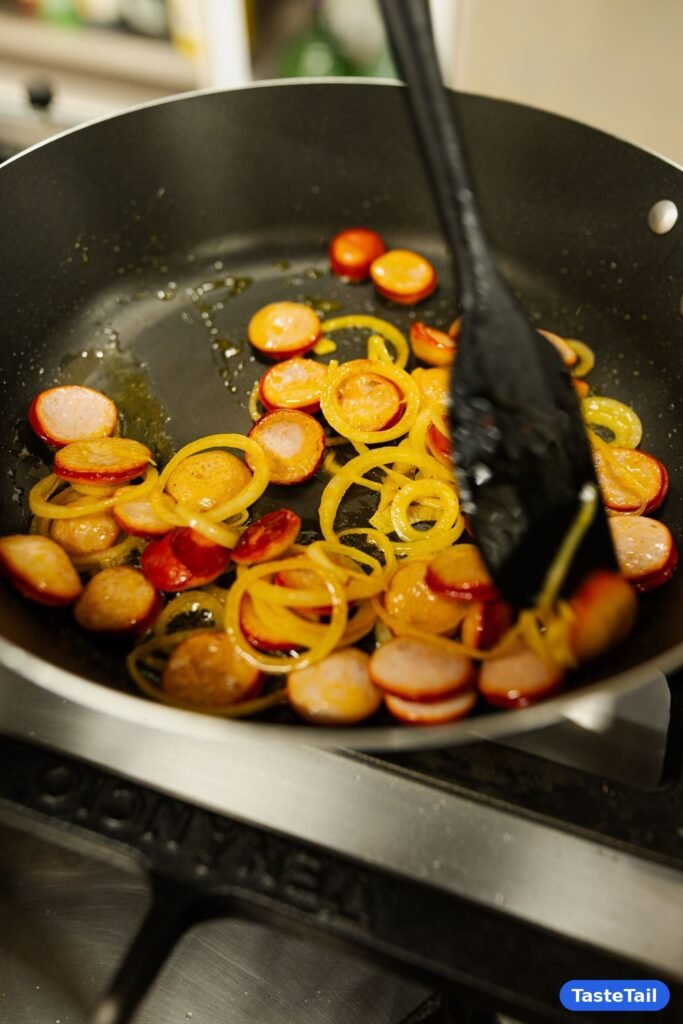
Heat the olive oil in a large, deep skillet over medium-high heat. Add the sausage slices in a single layer and cook them for three to four minutes on each side, until they are well browned and the edges are crisp. Do not crowd the pan — if the slices are piled on top of each other, they will steam instead of browning, and you will lose the crisp edges that make this dish so good. Cook them in two batches if you need to. When they are browned, lift them out onto a plate and leave the fat in the pan. That fat is flavour, and you are going to cook everything else in it.
Turn the heat down to medium and add the sliced onion to the same pan. Cook for three or four minutes, stirring now and then, until the onion is soft and starting to turn golden at the edges. Add the garlic, caraway seeds if you are using them, smoked paprika, and red pepper flakes, and cook for another thirty seconds until fragrant. The spices will bloom in the hot fat and smell wonderful — this is the moment the kitchen starts to smell like dinner.
Now add the cabbage. It will look like far too much for the pan, mounded up high over the rim, and that is normal. Cabbage collapses dramatically as it cooks. Add it in two handfuls if you need to, stirring each handful down before adding the next. Pour in the chicken broth, season with salt and pepper, and give everything a good stir so the cabbage is coated in the seasoned fat. Put the lid on and cook for eight to ten minutes, stirring once halfway through, until the cabbage has wilted down and is tender.
Take the lid off and stir the browned sausage back into the pan. Cook uncovered for another five to seven minutes, stirring now and then, until the cabbage is tender and starting to catch golden-brown edges in places, and most of the liquid has cooked away. This uncovered finish is what keeps the dish from being watery, and it is where the cabbage picks up those toasty, caramelised bits. Taste a piece of cabbage and a slice of sausage together and adjust the seasoning.
Finish the dish off the heat. Stir in the apple cider vinegar and the Dijon mustard if you are using it, and toss everything together so the vinegar reaches every part of the pan. The vinegar should brighten the whole dish without making it taste sour — start with one tablespoon, taste, and add a little more if you like it tangier. Scatter the chopped parsley over the top and serve straight from the skillet, with whole-grain mustard on the table for anyone who wants it.
Tips for the Best Sausage and Cabbage Skillet
Brown the sausage properly. This is the single most important tip in the whole recipe, and it is the one people get wrong most often. Sausage that is just warmed through adds almost nothing to the dish. Sausage that is genuinely browned, with crisp, darkened edges, brings smoky depth and rendered fat that seasons the entire pan. Hot pan, a little oil, and enough space for the slices to brown instead of steaming is what you need. If your pan is crowded, the sausage will release water and steam rather than brown. The same principle applies to the one-pan sausage and peppers, where properly browned sausage is what makes the dish taste like it came from a good kitchen rather than a rushed one.
Do not chop the cabbage too fine. Shredded cabbage cooks down to almost nothing and turns soft and stringy. Bite-sized pieces, roughly an inch across, hold their shape, stay tender without going mushy, and give you something to bite into. They also wilt more evenly, because the pieces are roughly the same size. Take the extra minute to chop the cabbage into proper pieces instead of shredding it — it makes a real difference to the finished dish.
Use the lid, then lose it. The two-stage cooking is what makes the cabbage turn out right. The covered stage steams the cabbage down quickly and evenly, so a huge mound of raw cabbage becomes a manageable panful in under ten minutes. The uncovered stage then lets the liquid cook away and lets the cabbage catch some colour. If you skip the lid, the cabbage takes much longer and dries out. If you never take the lid off, the cabbage stays pale and a little watery. Both stages matter, and neither takes long.
Choose your sausage with care. Smoked sausage is the right choice here because it is already seasoned and cooked, so it brings flavour without needing a long cooking time. Kielbasa and Polish sausage are the classics, and they are what I use most often. Italian sausage also works, but it is raw, so you need to cook it through and break it into pieces rather than slicing it, and the flavour is different — more fennel, less smoke. Avoid plain, unseasoned sausage, because the sausage is seasoning the whole pan, and a bland sausage makes a bland dinner.
Do not add the vinegar too early. Vinegar added at the start of cooking mostly cooks off, and you lose the bright finish it is meant to give. Stirred in at the very end, off the heat, it keeps its edge and lifts the whole dish. The same goes for the mustard — it is a finishing flavour, not a cooking one. Taste the finished skillet before you serve it. If it tastes rich and a little flat, it needs another splash of vinegar. If it tastes bright and balanced, it is ready.
Variations to Try
For a heartier version, add potatoes. Thinly sliced waxy potatoes, cooked with the onion for five minutes before the cabbage goes in, turn this into a full one-pan meal that needs nothing on the side. The potatoes soak up the sausage drippings as they cook, and the starch helps thicken the pan juices slightly. Use about a pound of potatoes, sliced thin so they cook through in the same time as the cabbage. This is the version I make when the people at the table are very hungry and there is no bread in the house.
For a spicier version, use hot smoked sausage or andouille and add an extra half teaspoon of red pepper flakes with the garlic. A diced jalapeño, seeds removed, cooked with the onion adds a fresh heat that is different from the dried flakes. Serve it with a cooling side, like a simple cucumber salad, and the contrast is lovely. If you want another take on the same idea, the sausage cabbage skillet from Taste of Home adds green pepper and potatoes for a slightly different spin on the dish.
For a German-style version, add a sliced apple with the cabbage and a teaspoon of caraway seeds, and finish with a spoonful of whole-grain mustard stirred through the pan instead of just served on the side. The apple softens into the cabbage and adds a gentle sweetness that works beautifully with the smoky sausage, and the caraway gives it that unmistakable deli flavour. A splash of beer instead of chicken broth, added with the cabbage, makes it even more like the braised cabbage you find in a German kitchen.
For a lighter version, use chicken or turkey sausage and swap half the cabbage for sliced savoy cabbage or even shredded Brussels sprouts, which cook in about the same time. The dish stays just as satisfying, but it is noticeably lighter, and the Brussels sprouts add a slightly bitter edge that balances the sweetness of the cabbage. If you are looking for more ways to use cabbage, the cabbage recipes from BBC Good Food are a good place to start, with everything from slaws to soups.
Serving Ideas
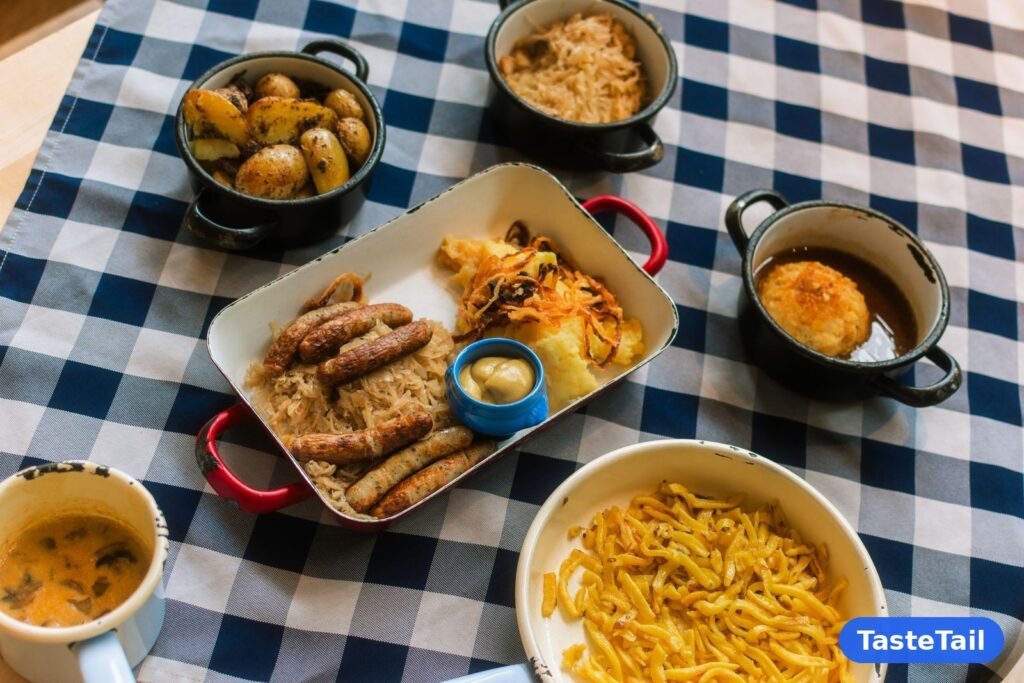
Sausage and cabbage is a complete meal in a pan, but it is even better with a couple of simple things alongside it. I like to serve it with a basket of crusty bread, because the bread is for mopping up the pan juices and because a meal like this deserves something to scoop with. A spoonful of whole-grain mustard on the side is almost essential — the sharpness of the mustard against the sweet cabbage and smoky sausage is one of the best flavour combinations in this kind of cooking. A simple green salad keeps the plate from feeling too heavy.
For a full family dinner, serve the skillet in the middle of the table, family-style, with mashed potatoes or buttered boiled potatoes on the side. People serve themselves straight from the pan, go back for seconds, and nobody is in a hurry to leave the table. It is the kind of meal that turns an ordinary evening into a small gathering, and it pairs beautifully with the one-pan garlic butter steak bites if you are feeding a crowd and want two mains on the table.
Leftovers are wonderful the next day, and some people — me included — think sausage and cabbage tastes even better reheated, because the flavours have had a night to come together. A single portion reheated in a skillet with a little extra vinegar makes a lunch that feels far more generous than most leftovers. It also packs well for work lunches, and it is one of the few vegetable-heavy dishes that survives reheating without going soft or grey.
Storage and Reheating
Leftover sausage and cabbage keeps in the fridge for three to four days in an airtight container, or in the pan itself covered tightly with foil. To reheat, warm it in a skillet over medium heat for five to seven minutes, stirring now and then, until it is hot all the way through. A splash of water or chicken broth stirred in before reheating keeps the cabbage from drying out. The microwave works for single portions — about two minutes, stirred halfway — but the skillet gives you a better result, because it lets the cabbage catch a little colour again.
You can also make this dish a day ahead, which is useful if you are cooking for guests. Cook it fully, let it cool, and keep it in the fridge, then reheat it in the skillet when you are ready. Add a fresh splash of vinegar and a scatter of parsley just before serving, so it tastes freshly made. Sausage and cabbage freezes well too, for up to three months. Freeze it in portions in airtight containers, thaw overnight in the fridge, and reheat in a skillet. The cabbage will be slightly softer after freezing, but the flavour is just as good, and it makes a wonderful emergency dinner.
Frequently Asked Questions
What kind of sausage is best for this skillet?
Smoked sausage is the best choice, because it is already cooked and seasoned, so it brings flavour to the pan without needing a long cooking time. Kielbasa and Polish sausage are the classics, and either one works beautifully. Smoked pork sausage from the butcher counter is also excellent. Italian sausage works too, but it is raw, so you need to cook it through and break it into crumbles rather than slicing it. Avoid plain, unseasoned sausage — the sausage is seasoning the whole dish, and a bland sausage makes a bland dinner.
Why is my cabbage watery?
The most common reason is cooking the cabbage covered for too long without an uncovered finish. Cabbage releases a lot of water as it wilts, and if the lid stays on, that water has nowhere to go. The fix is simple: after the cabbage is tender, take the lid off and cook for another five to seven minutes, stirring now and then, until most of the liquid has cooked away and the cabbage starts to catch golden edges. Chopping the cabbage into bite-sized pieces rather than shredding it also helps, because shredded cabbage releases water faster and turns soft more quickly.
Can I make this with red cabbage instead of green?
Yes, you can, and it looks beautiful — the pan turns a deep, jewel-like purple. Red cabbage is a little tougher and slightly more bitter than green cabbage, so give it a few extra minutes under the lid, and you may want an extra teaspoon of vinegar at the end to balance the bitterness. A sliced apple cooked with the red cabbage works particularly well. One thing to know: red cabbage will stain the sausage and the pan juices purple, which is harmless but worth knowing before you serve it to guests who might be surprised.
Do I need to add potatoes?
No, potatoes are optional. The skillet is a complete meal on its own, especially with bread on the side. But if you want to make it heartier, thinly sliced waxy potatoes added with the onion work very well, and they soak up the sausage drippings as they cook. Give them about five minutes with the onion before the cabbage goes in, so they have time to cook through. If you want another one-pan dinner for the week, the one-pan chicken Alfredo uses the same single-pan approach with a creamy sauce, and the one-pan vegetable fried rice is another easy one-pan meal that comes together in about the same time.
Can I make sausage and cabbage ahead of time?
Yes, and it is one of those dishes that actually improves overnight. Cook it fully, let it cool, and keep it in the fridge for up to four days. Reheat it in a skillet over medium heat, with a splash of water or broth if it looks dry, and add a fresh splash of vinegar and a scatter of parsley just before serving. You can also freeze it for up to three months in portions. Thaw it overnight in the fridge and reheat it in a skillet — the cabbage will be slightly softer, but the flavour will be just as good.
Is sausage and cabbage healthy?
It can be, depending on the sausage you choose. Cabbage itself is very nutritious — high in fibre and vitamin C, low in calories — and the dish is naturally low in carbohydrates. The sausage is the part to watch: smoked sausage is higher in fat and sodium, so if you are keeping an eye on those, use chicken or turkey sausage instead, and go easy on the added salt. Either way, you are eating a vegetable-heavy dinner made from real ingredients in one pan, which is a good place to start.