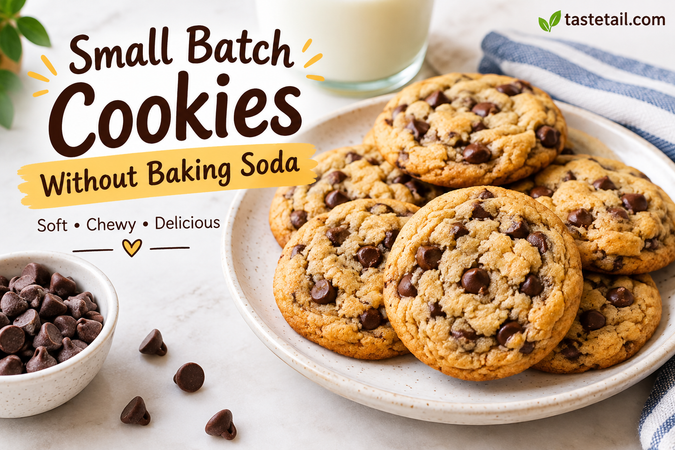
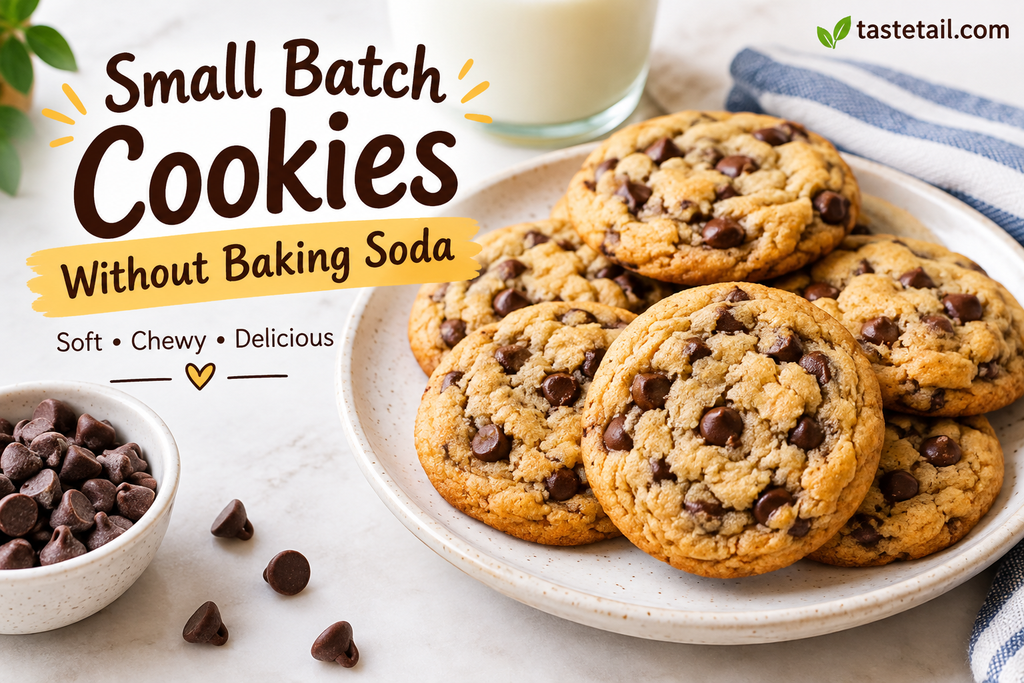
Sometimes you want a few homemade cookies without making a huge batch. Maybe you are baking for yourself, sharing dessert with one or two people, or simply do not want a container full of leftovers sitting on the counter. That is exactly where these small batch cookies without baking soda come in handy.
These cookies are simple, buttery, lightly crisp around the edges, and soft in the center. The best part is that you do not need baking soda to make them. With a few everyday ingredients and one bowl, you can have warm homemade cookies ready in a short amount of time.
Leaving out baking soda does not mean your cookies have to be flat, hard, or disappointing. The texture depends on the balance of flour, butter, sugar, and egg, along with how you mix and bake the dough. For a small batch, this recipe keeps everything in proportion so you can make just enough cookies for a quick treat.
Why Make Small Batch Cookies Without Baking Soda?
There are plenty of reasons to make cookies without baking soda. You may have opened your pantry and realized that you are out of it. Perhaps you prefer a cookie with a slightly denser texture, or you simply want a recipe that uses fewer ingredients.
A small batch recipe is also perfect when you do not want to commit to a full dozen or two dozen cookies. Depending on the size of your scoops, this recipe makes about 8 to 10 cookies.
These cookies are especially useful when you want:
- A quick homemade dessert
- Cookies for one or two people
- A recipe without baking soda
- A small amount of cookies
- A simple beginner-friendly baking recipe
- A buttery cookie with crisp edges
- A dessert made from common pantry ingredients
What Do Cookies Without Baking Soda Taste Like?
Baking soda can affect both the spread and browning of cookies. When it is left out, cookies can have a slightly different texture and appearance. Instead of relying on baking soda for lift, this recipe uses careful ingredient proportions and proper baking technique.
The finished cookies are buttery and sweet, with lightly crisp edges and a tender middle. They are not meant to be cakey. Instead, think of them as simple homemade cookies with a classic, slightly dense bite.
If you like cookies that are not overly puffy, you may actually enjoy this version more than a traditional recipe.
Ingredients for Small Batch Cookies Without Baking Soda
The ingredient list is intentionally short. You probably already have most of these items in your kitchen.
Butter
Use softened unsalted butter if possible. Butter provides richness, flavor, and helps create a tender texture.
Softened butter is important because it blends more easily with the sugar. You do not want melted butter for this recipe unless the recipe specifically calls for it.
Granulated Sugar
Regular white granulated sugar gives these cookies sweetness and helps create lightly crisp edges.
Because there is no brown sugar in this basic version, the cookies have a clean, buttery sweetness rather than a strong caramel-like flavor.
Egg Yolk
A single egg yolk works beautifully for a small batch. It adds richness without adding too much moisture.
Using the yolk instead of a whole egg also helps keep the recipe small and prevents the dough from becoming unnecessarily wet.
Vanilla Extract
A little vanilla extract makes a noticeable difference. It adds warmth and brings out the buttery flavor of the cookies.
All-Purpose Flour
All-purpose flour provides the structure. Measure it carefully because adding too much flour is one of the easiest ways to make homemade cookies dry.
For the most reliable results, spoon the flour into your measuring cup and level the top rather than packing flour directly into the cup.
Salt
Even sweet cookies benefit from a small amount of salt. It balances the sugar and makes the buttery flavor stand out.
Simple Ingredient Measurements
For a small batch of approximately 8 to 10 cookies, you can use:
- 4 tablespoons softened unsalted butter
- 1/4 cup granulated sugar
- 1 egg yolk
- 1/2 teaspoon vanilla extract
- 1/2 cup plus 2 tablespoons all-purpose flour
- 1/8 teaspoon salt
You can also add a handful of chocolate chips if you want to turn these into small batch chocolate chip cookies without baking soda.
How to Make Small Batch Cookies Without Baking Soda
Making these cookies is straightforward, even if you are new to baking.
1. Prepare the Oven
Preheat your oven to 350°F (175°C).
Line a small baking sheet with parchment paper. If you do not have parchment paper, lightly grease the baking sheet.
Preheating is important. Cookies placed into a cold oven can spread differently and may not bake evenly.
2. Cream the Butter and Sugar
Place the softened butter and granulated sugar in a mixing bowl.
Beat them together with a spoon, hand mixer, or electric mixer until the mixture looks creamy and slightly lighter.
You do not need to spend several minutes doing this for a small batch. Just make sure the butter and sugar are well combined.
3. Add the Egg Yolk and Vanilla
Add the egg yolk and vanilla extract.
Mix until smooth and combined. Scrape down the sides of the bowl if necessary.
The mixture may look creamy and slightly glossy at this stage.
4. Add the Dry Ingredients
Add the flour and salt.
Mix gently until the flour disappears and a soft cookie dough forms. Avoid overmixing. Once you no longer see dry flour, stop mixing.
Overworking the dough can develop more gluten, which may result in cookies that are tougher than you want.
5. Add Chocolate Chips If Desired
If you want chocolate chip cookies, fold in about 1/4 cup of chocolate chips.
You can use milk chocolate, semisweet, dark chocolate, or even white chocolate chips.
Chopped chocolate also works well and gives the cookies a more homemade appearance.
6. Shape the Cookies
Divide the dough into 8 to 10 portions.
Roll each portion into a rough ball and place them on the prepared baking sheet. Leave enough space between them because the cookies will spread as they bake.
For thicker cookies, chill the dough for about 20 to 30 minutes before baking.
7. Bake
Bake the cookies for approximately 9 to 12 minutes.
The edges should look lightly golden while the centers may still appear slightly soft.
Do not wait for the entire cookie to become deeply golden. Cookies continue to firm up as they cool.
8. Cool Before Serving
Let the cookies rest on the baking sheet for about 5 minutes.
Then transfer them to a cooling rack.
They may seem soft when they first come out of the oven, but they will become firmer as they cool.
Why Don’t These Cookies Need Baking Soda?
Baking soda is a leavening ingredient, but it is not automatically required in every cookie recipe.
Some cookies are designed to have a denser, more buttery texture. By controlling the amount of flour, fat, sugar, and egg, you can create a delicious cookie without adding baking soda.
The key is not to expect the exact same result as a cookie recipe that contains baking soda. These cookies have their own texture and character.
They are ideal if you enjoy cookies that are:
- Tender
- Buttery
- Slightly crisp around the edges
- Soft in the middle
- Not overly puffy
- Simple and lightly sweet
Tips for the Best Small Batch Cookies
A few small details can make a big difference.
Use Room-Temperature Butter
Softened butter blends with sugar much more easily than cold butter.
If you forgot to soften the butter, cut it into small pieces and let it sit at room temperature for a little while.
Avoid completely melting the butter unless you are intentionally using a recipe designed for melted butter.
Do Not Add Too Much Flour
Extra flour can quickly turn a soft cookie into a dry one.
Measure carefully and add only as much as needed to bring the dough together.
If your dough looks slightly soft, that is usually better than adding lots of additional flour.
Chill the Dough for Thicker Cookies
Because these cookies do not contain baking soda, their final texture is influenced heavily by the dough consistency.
Chilling the dough helps solidify the butter. This can reduce excessive spreading during baking and give you thicker cookies.
Even 20 minutes in the refrigerator can help.
Do Not Overbake
This is one of the most important tips.
Take the cookies out when the edges are lightly golden but the centers still look a little soft.
If you bake until the centers look completely done, the cookies may become too firm after cooling.
How to Make These Cookies Chewy
If you prefer a softer and chewier cookie, avoid overbaking.
You can also slightly underbake the cookies and allow them to cool on the baking sheet. The residual heat will continue cooking the centers without drying them out.
Using an egg yolk also contributes richness and a tender texture.
For an especially soft cookie, store completely cooled cookies in an airtight container.
How to Make Them Crispy
For crispier cookies, flatten the dough balls slightly before baking and allow the edges to become a little more golden.
A slightly longer baking time can also increase crispness, but watch them carefully during the final minutes.
Keep in mind that cookies become firmer as they cool.
Can I Make Chocolate Chip Cookies Without Baking Soda?
Absolutely.
To turn this recipe into small batch chocolate chip cookies without baking soda, simply fold chocolate chips into the finished dough before shaping.
About 1/4 cup of chocolate chips is a good starting point for a small batch.
For an extra chocolatey cookie, sprinkle a few additional chocolate chips on top of the dough balls before baking.
This small change gives you a classic chocolate chip cookie flavor without requiring baking soda.
Can I Use Salted Butter?
Yes.
If salted butter is all you have, you can use it. In that case, reduce or skip the additional salt in the recipe.
Salt levels vary between butter brands, so the safest approach is to taste the finished dough only if you are comfortable doing so and the ingredients are safe to eat raw. Otherwise, simply use less added salt.
Can I Use Brown Sugar?
Yes, although it will change the flavor and texture.
Brown sugar contains molasses, which gives cookies a deeper caramel-like flavor and can contribute to a softer texture.
If you have brown sugar available, you can replace part of the granulated sugar with it. However, the basic recipe uses white sugar because it keeps the ingredient list simple.
Can I Make These Cookies Without Eggs?
Yes, but you will need a small adjustment.
The egg yolk provides fat, moisture, and binding. If you remove it completely, the dough may become crumbly.
A small amount of milk can sometimes help bring an eggless cookie dough together, but the final texture will be different.
If you specifically need small batch cookies without eggs and baking soda, it is better to use a recipe designed around those two omissions rather than simply removing the egg yolk.
Can I Freeze the Cookie Dough?
Yes.
Freezing cookie dough is especially convenient when you are making a small batch because you can bake only what you need.
Shape the dough into individual portions and place them on a tray. Freeze until firm, then transfer the portions to a freezer-safe container or bag.
When you want fresh cookies, bake the frozen dough portions with a little extra baking time. Keep an eye on the first batch because ovens and dough portions can vary.
How to Store Small Batch Cookies
Once the cookies have completely cooled, place them in an airtight container.
They can generally stay at room temperature for several days while maintaining good texture.
If you want to keep them longer, freezing the baked cookies is another option. Wrap them well and place them in a freezer-safe container.
When you want one, let it thaw at room temperature.
Common Mistakes to Avoid
Using Melted Butter
Melted butter can cause cookies to spread more than expected. Unless the recipe specifically accounts for melted butter, softened butter is the safer choice.
Packing the Flour
Too much flour makes cookies dry and crumbly.
Use the spoon-and-level method when measuring with cups.
Overmixing
Once the flour has been incorporated, stop mixing. There is no need to keep beating the dough.
Overbaking
A cookie that looks perfectly baked in the oven may become too hard once it cools.
Light golden edges are usually enough.
Skipping the Preheat
Starting cookies in a cold oven can change their spreading and baking time. Always give the oven time to reach the correct temperature.
Easy Variations
One of the best things about a small batch cookie recipe is that you can experiment without wasting a large amount of ingredients.
Chocolate Chip
Fold in semisweet chocolate chips for a classic variation.
Cinnamon Sugar
Add a little ground cinnamon to the dough and sprinkle the tops with cinnamon sugar before baking.
Double Chocolate
Replace a small portion of the flour with unsweetened cocoa powder and add chocolate chips.
White Chocolate
Use white chocolate chips for a sweeter, creamy variation.
Nutty Cookies
Add finely chopped walnuts, pecans, or almonds.
Coconut
A little shredded coconut can add chewiness and a subtle tropical flavor.
What to Serve With These Cookies
Warm cookies are delicious on their own, but they also pair well with simple drinks and desserts.
Try serving them with:
- A glass of cold milk
- Coffee
- Hot chocolate
- Tea
- Vanilla ice cream
- Fresh berries
- Yogurt
For a quick dessert, place a warm cookie in a bowl and add a small scoop of vanilla ice cream on top.
Frequently Asked Questions
What can I use instead of baking soda in cookies?
The answer depends on the recipe. Baking powder is a common alternative in some cookie recipes, but it does not produce exactly the same result as baking soda. In this recipe, no leavening agent is necessary.
Will cookies rise without baking soda?
They may not rise in the same way as cookies made with baking soda. These cookies are designed to be relatively dense and tender rather than tall and cakey.
Why did my cookies spread too much?
The butter may have been too warm, the dough may have been too soft, or the baking sheet may have been warm. Chilling the dough before baking can help.
Why are my cookies hard?
Overbaking is one of the most common reasons. Too much flour can also make cookies hard or dry.
How many cookies does this recipe make?
This recipe makes approximately 8 to 10 small-to-medium cookies, depending on how you portion the dough.
Can I double this recipe?
Yes. If you need more cookies, simply double the ingredients. Keep in mind that larger quantities of dough may require slightly more preparation time.
Final Thoughts
These small batch cookies without baking soda are proof that homemade cookies do not have to be complicated. With a handful of basic ingredients, you can make a warm, buttery dessert without preparing a large batch or relying on baking soda.
The recipe is flexible enough to customize with chocolate chips, nuts, cinnamon, coconut, or chopped chocolate. You can also chill the dough if you prefer thicker cookies or bake them slightly longer for crispier edges.
Whether you are out of baking soda or simply looking for a small dessert recipe, these cookies are an easy option to keep in your recipe collection. They are quick enough for a weeknight craving, simple enough for beginners, and small enough that you do not have to worry about ending up with dozens of leftovers.
Sometimes a few homemade cookies are all you need—and this recipe gives you exactly that.